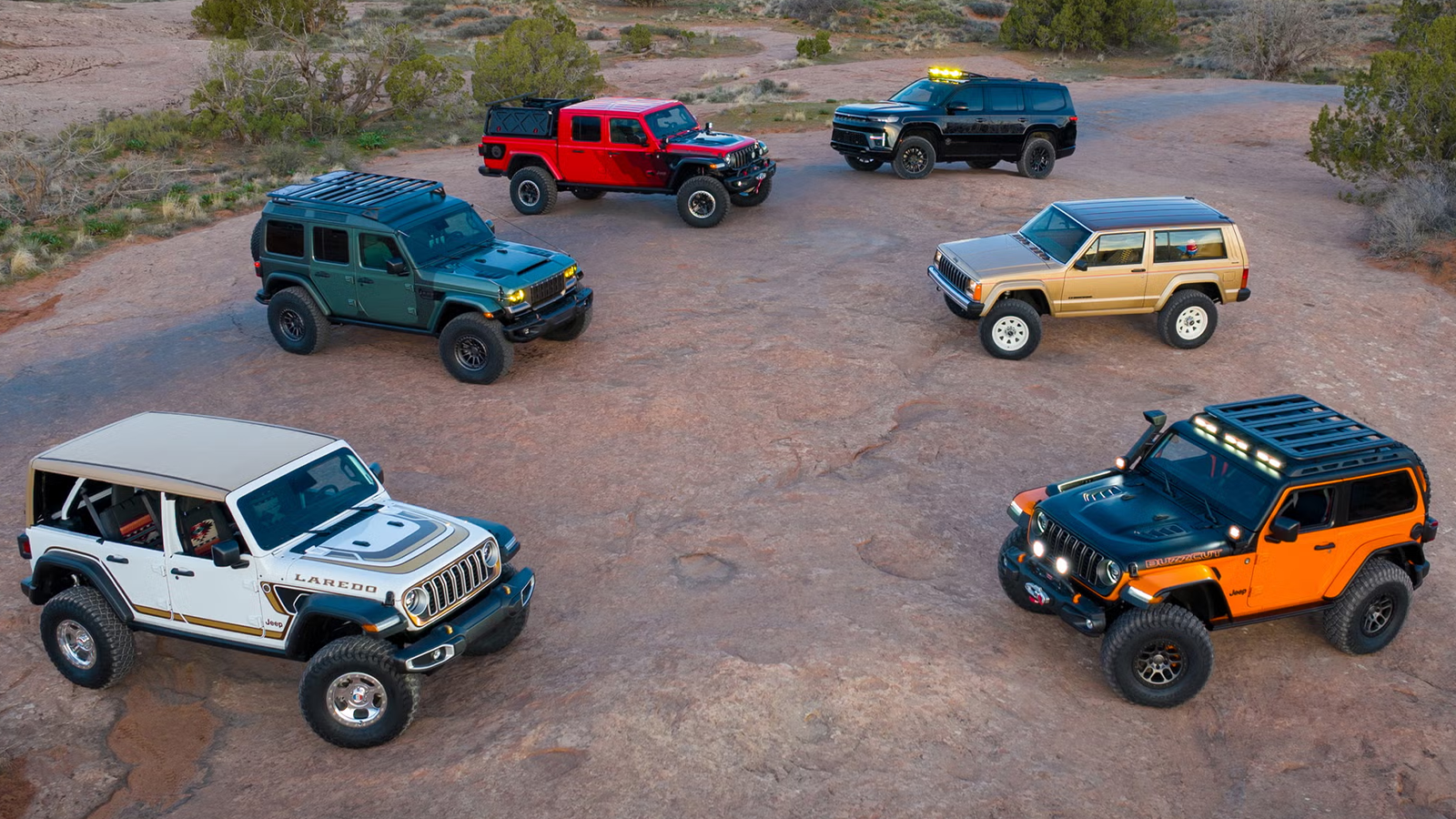
The lineup includes military-inspired Wranglers, a preserved XJ Cherokee restomod, and a purpose-built Gladiator designed to maintain Moab’s famous trails.
Moab Tradition
Every spring, thousands of off-road enthusiasts gather in Moab for the annual Easter Jeep Safari, a weeklong trail event that has become one of the most important gatherings in the Jeep community. To mark the festival’s 60th anniversary, Jeep brought six concept vehicles showcasing different ideas for the brand’s off-road future. The convoy included three Wrangler-based builds, a modified Jeep Gladiator, a ruggedized Jeep Grand Wagoneer, and a nostalgic take on the classic Jeep Cherokee (XJ).
Anvil 715
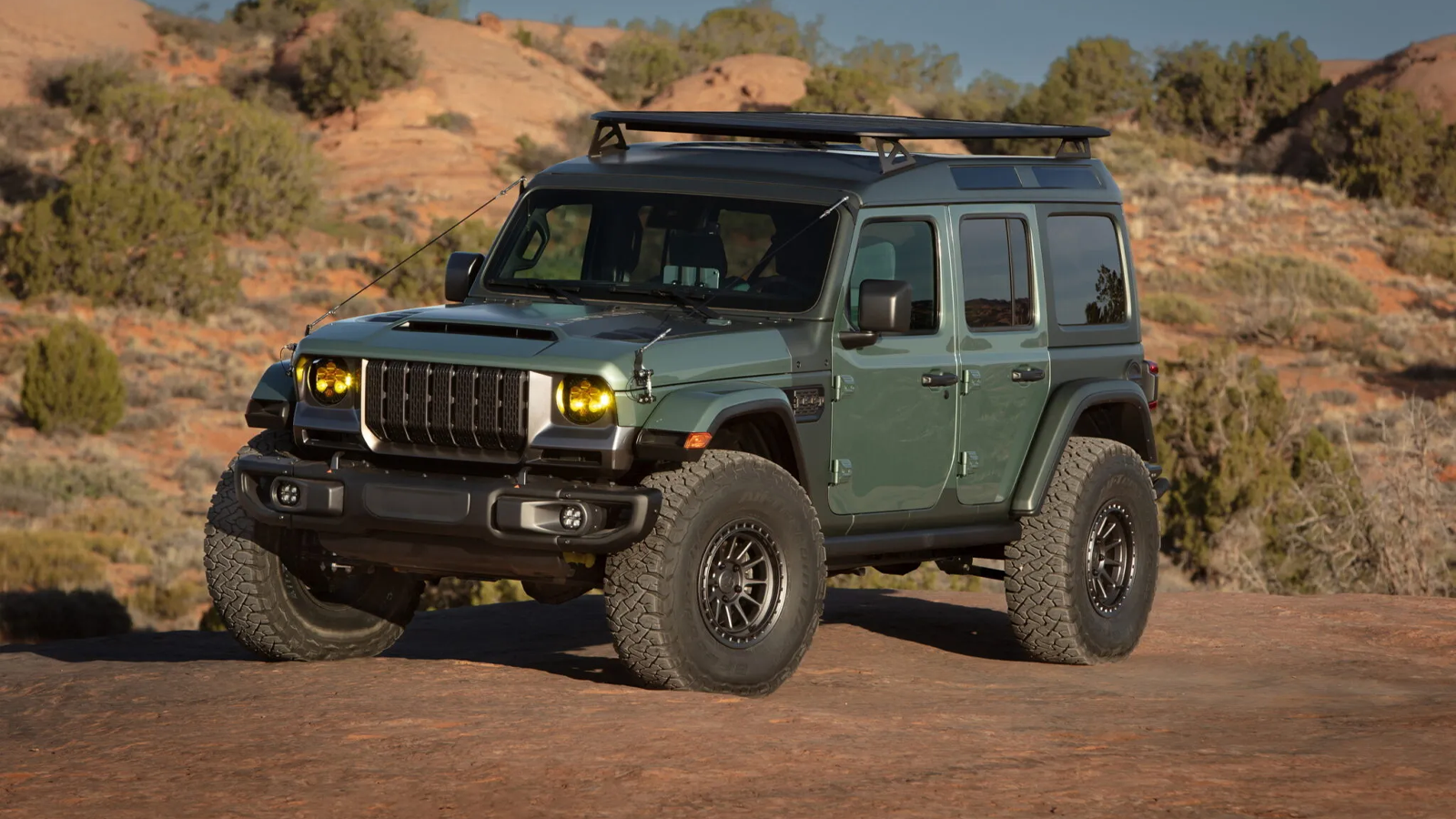
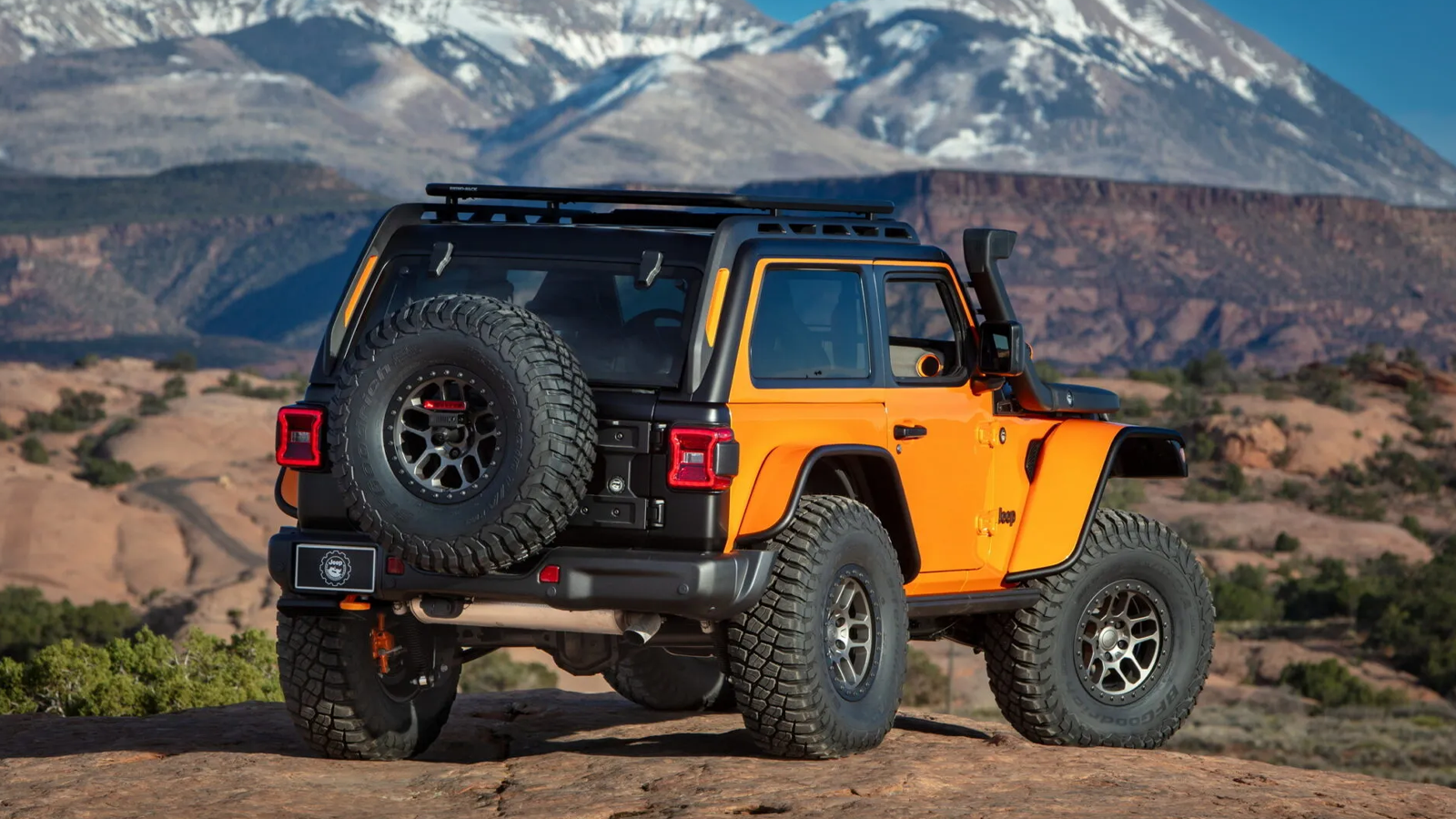
The most ambitious concept in the group is the Wrangler Anvil 715, a military-themed overlanding build inspired by the Kaiser Jeep M715. Designers reshaped everything forward of the windshield, extending the front end roughly four inches and tilting the grille forward to echo the M715’s distinctive “rhino” nose.
Anvil 715
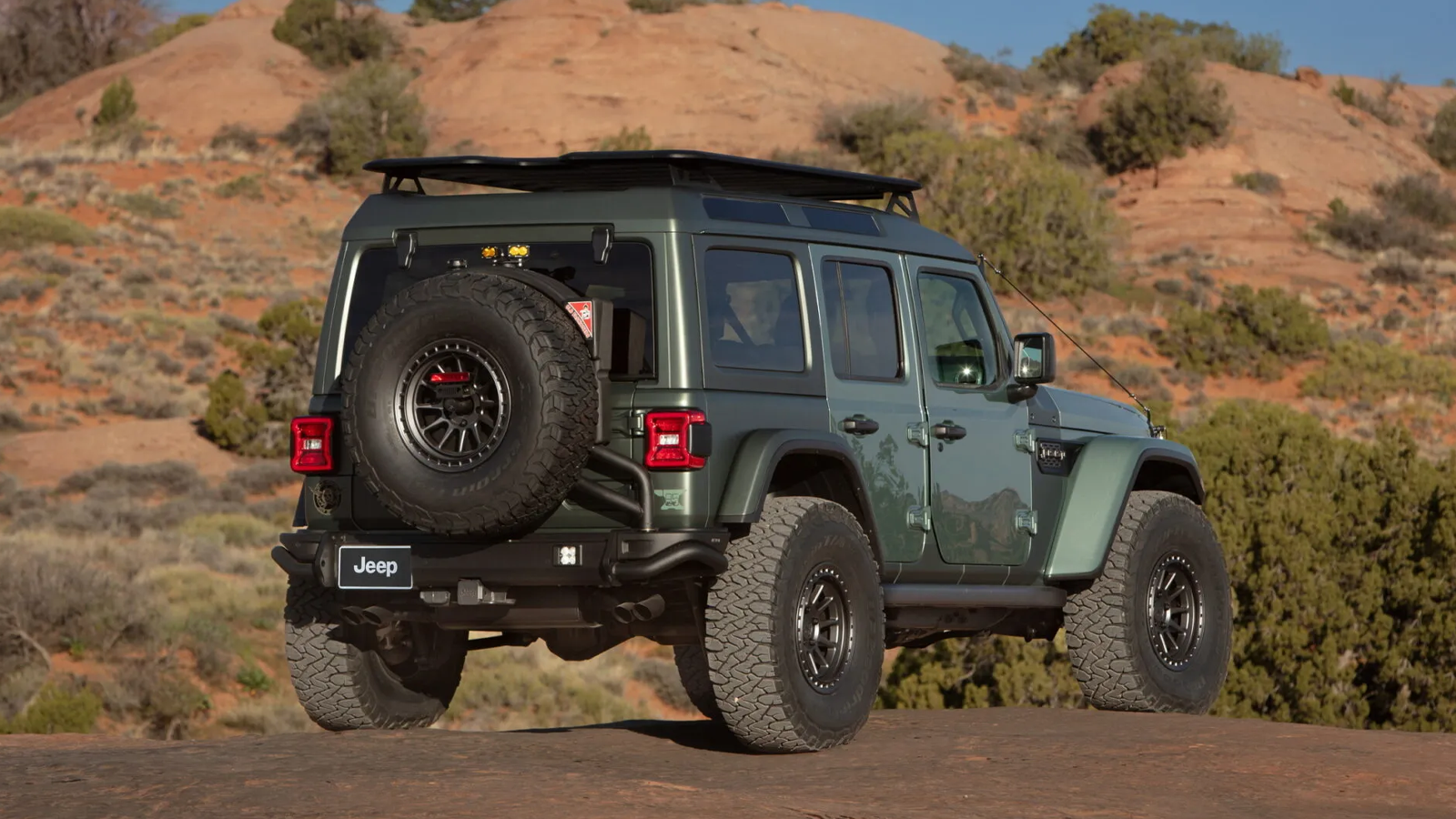
The concept rides on the chassis of a Jeep Wrangler Rubicon 392, powered by a 470-horsepower 6.4-liter V-8. A fixed roof adds about four inches of headroom and incorporates four skylights, giving the interior a more expedition-style layout. Heavy-duty steel bumpers, rock rails, and 37-inch BFGoodrich Mud-Terrain tires prepare it for trail use, while auxiliary lighting and an onboard air system help with night driving and tire-pressure adjustments.
Anvil 715
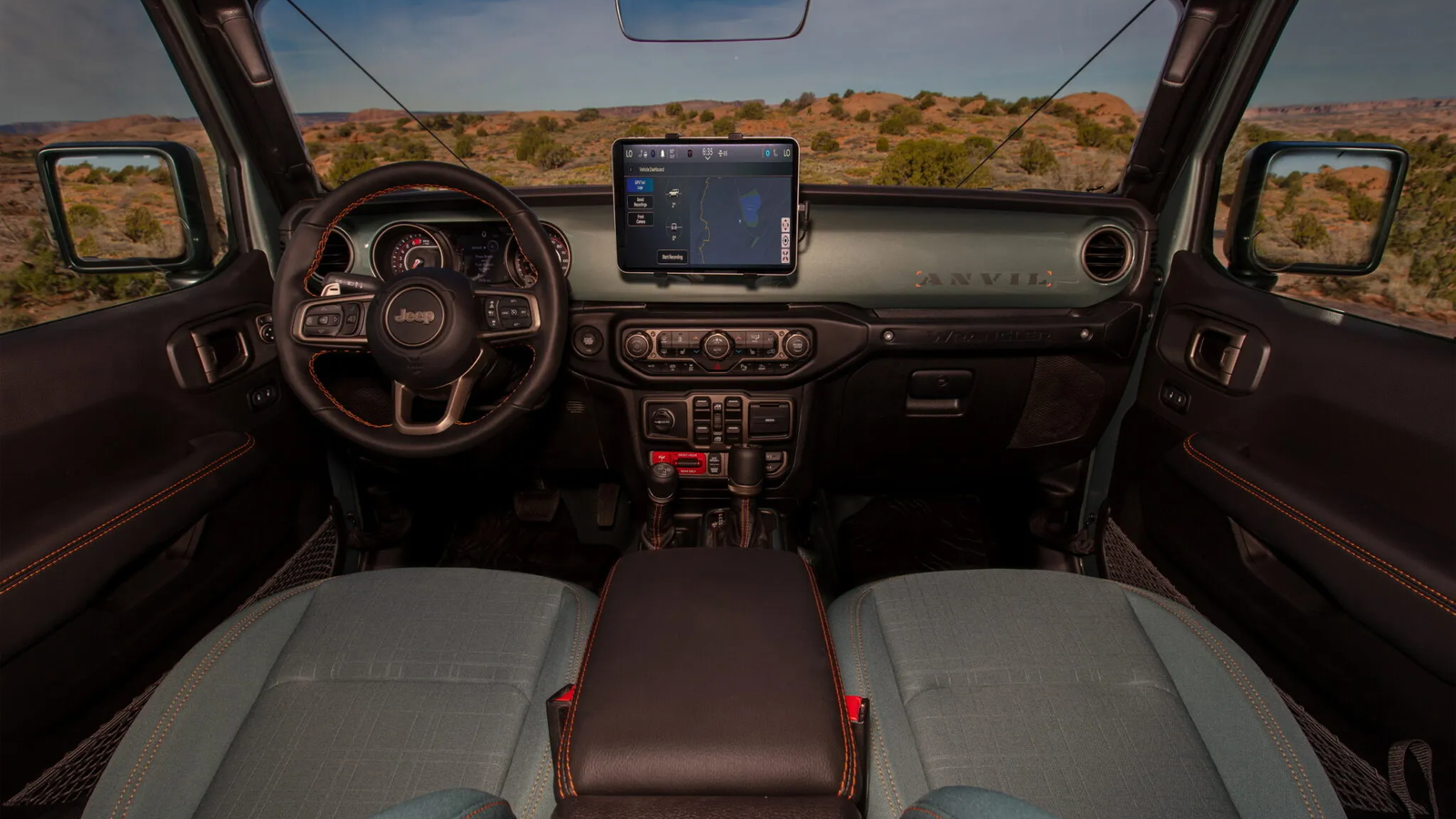
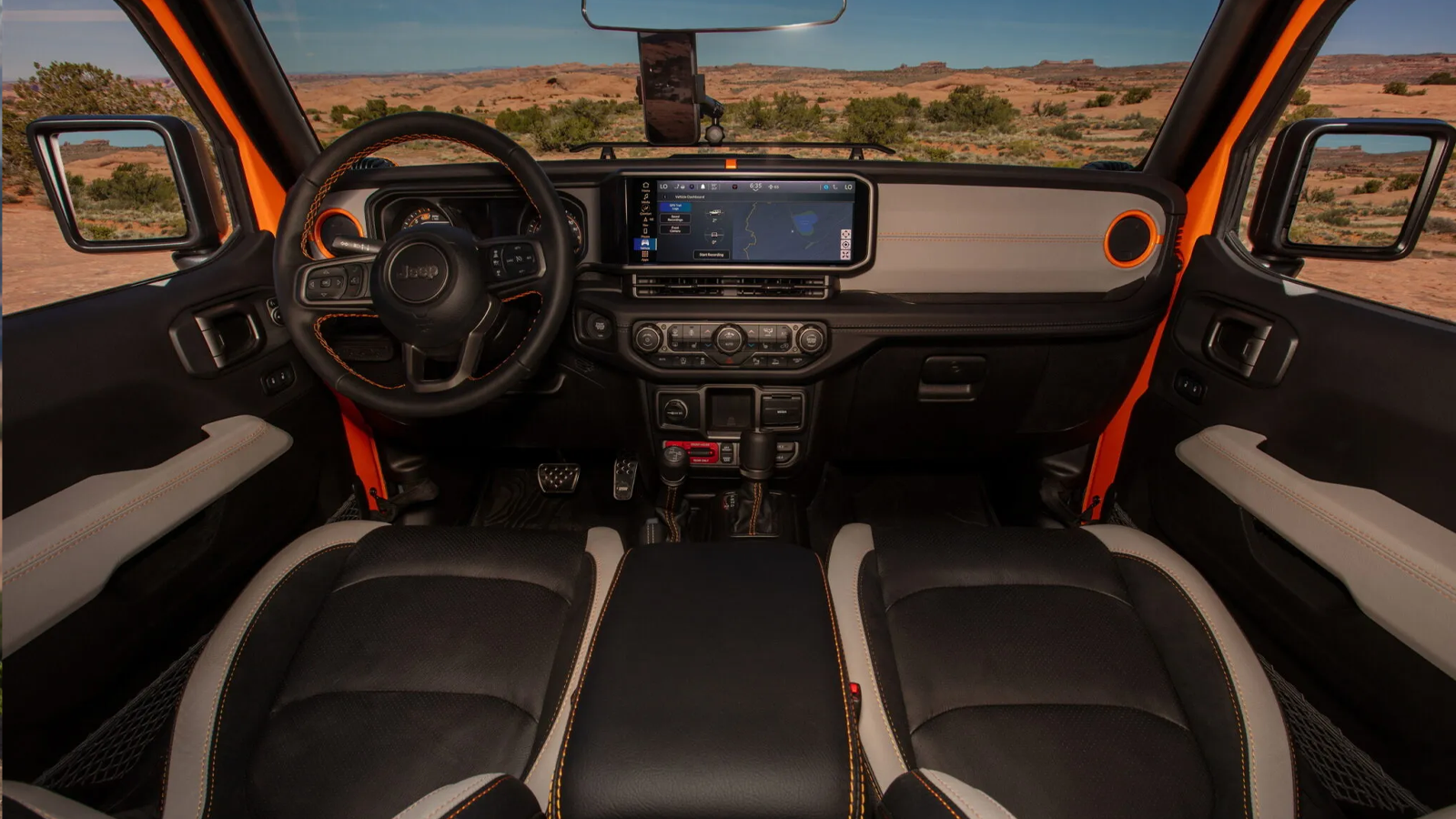
Inside, a driver-oriented tablet replaces the traditional infotainment display and runs trail mapping software. Designers intentionally left some areas unfinished to encourage personalization. As Jeep design manager Chris Piscitelli explained, “We wanted to keep it a little bit of a blank canvas… so enthusiasts can imagine how they’d outfit it themselves.”
XJ Pioneer
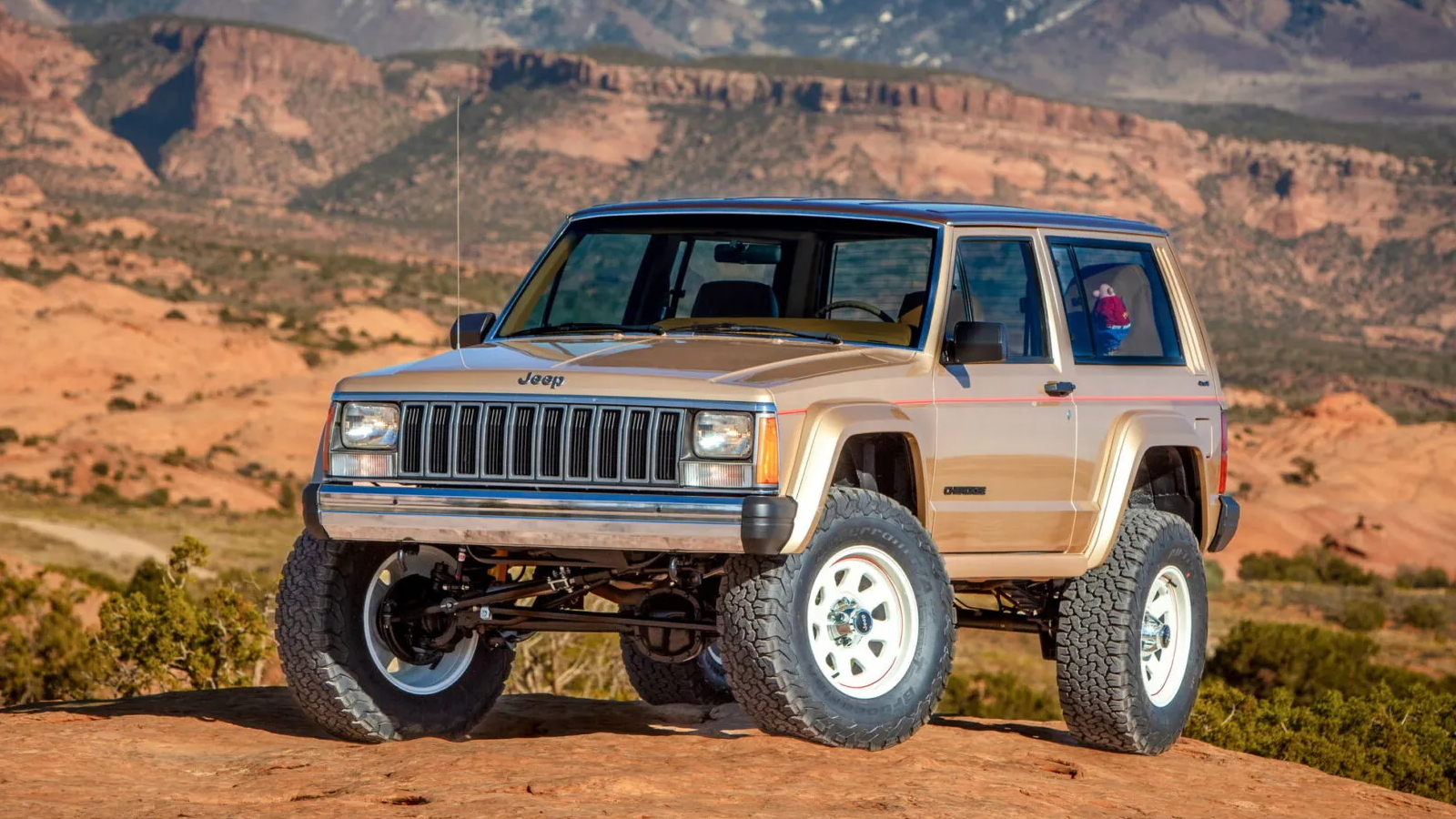
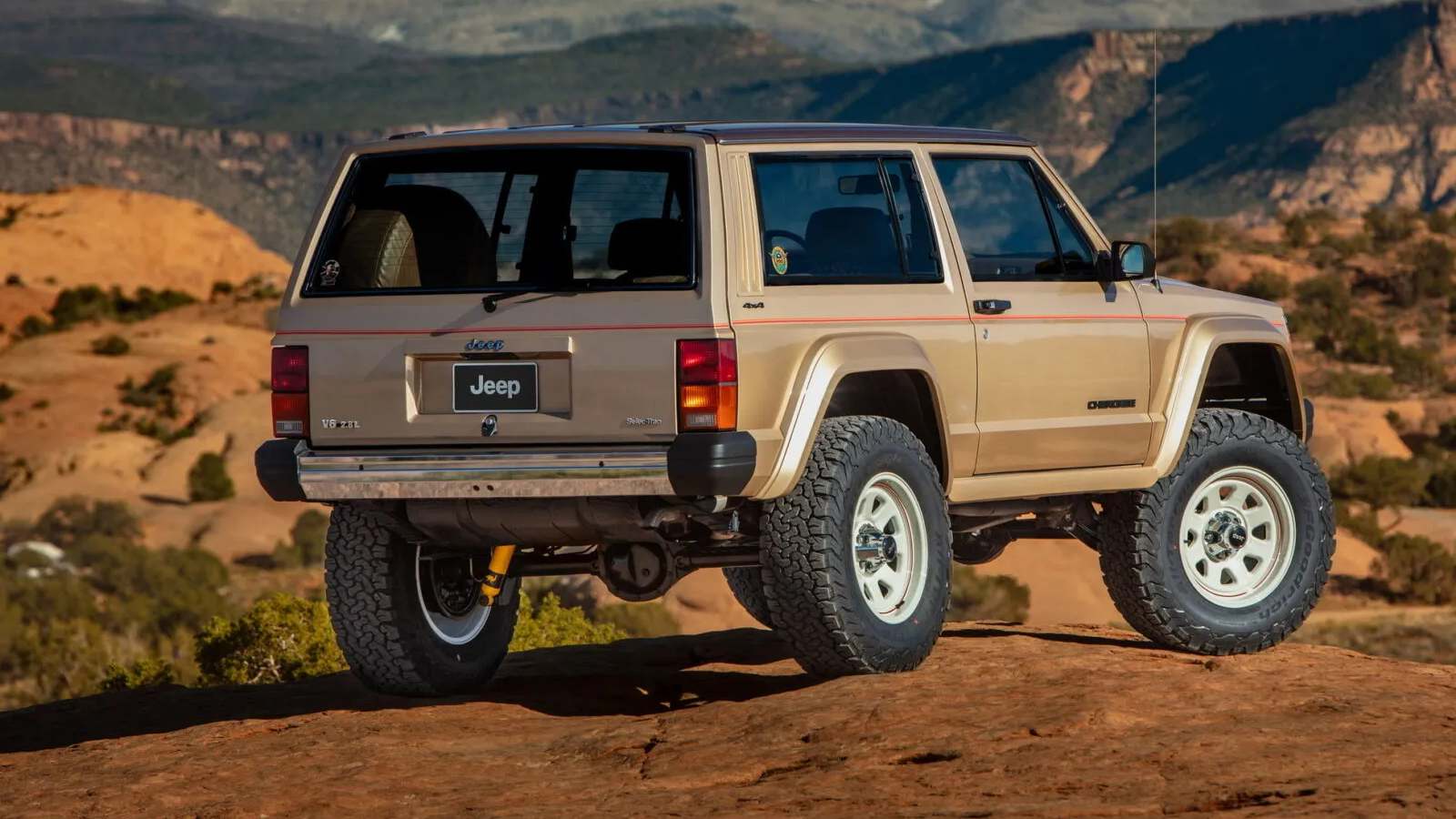
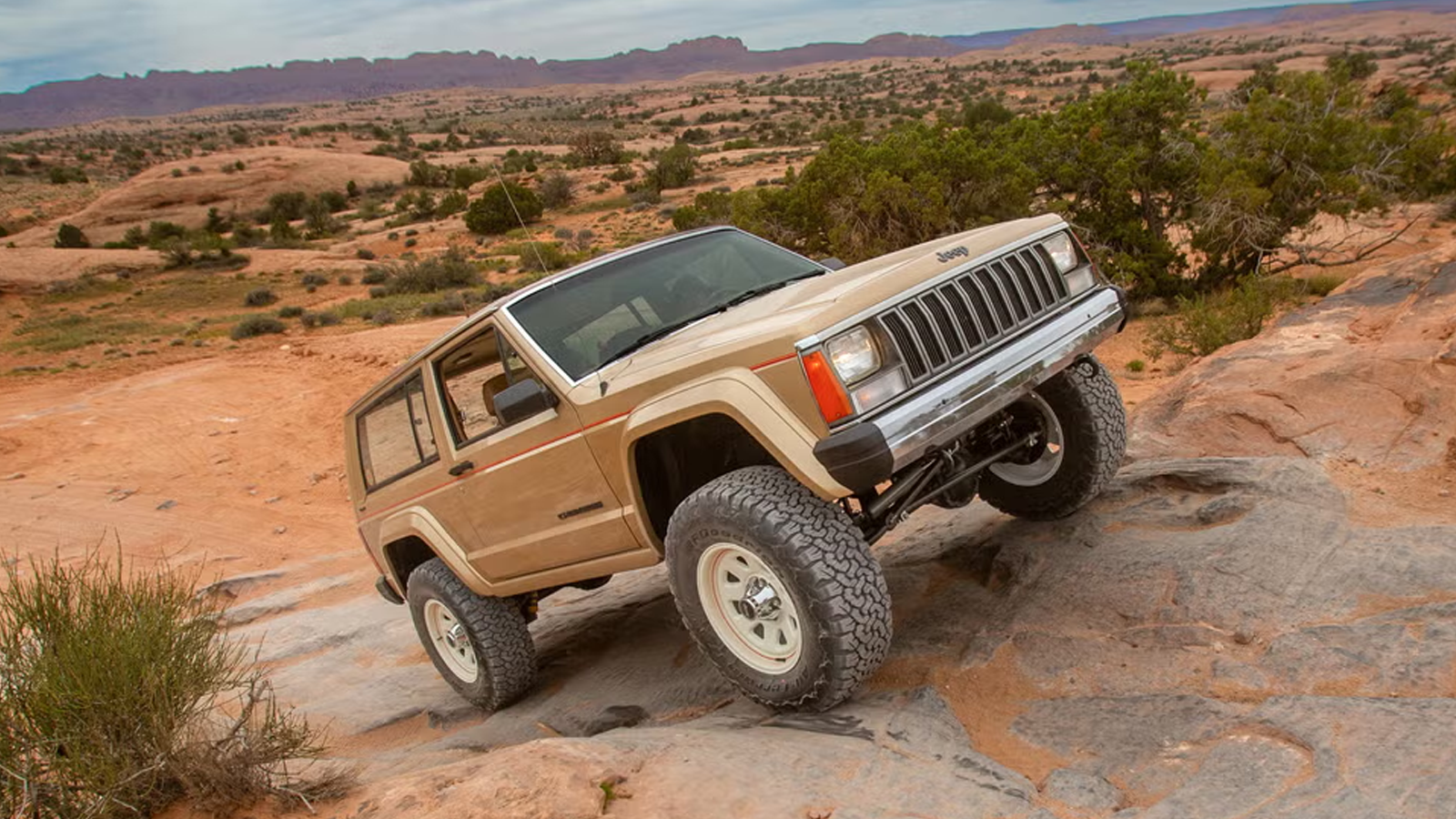
One of the most nostalgic concepts is the XJ Pioneer, a lightly modified restomod built from a two-door Jeep Cherokee (XJ) originally sold in Reno in the mid-1980s. The donor vehicle had just 80,000 miles and came with meticulous records documenting every fuel fill-up over decades of ownership. Because the SUV was so well preserved, Jeep’s design team kept the factory Champagne gold paint and the original 2.8-liter V-6.
XJ Pioneer
Modifications were intentionally subtle. The Pioneer gained trimmed fenders, carbon-fiber flares, a 2-inch lift with ARB coil springs, a disconnecting anti-roll bar, and 33-inch BFGoodrich all-terrain tires mounted on 17-inch wheels styled after the originals. Custom rock rails add durability without altering the vehicle’s classic proportions.
XJ Pioneer
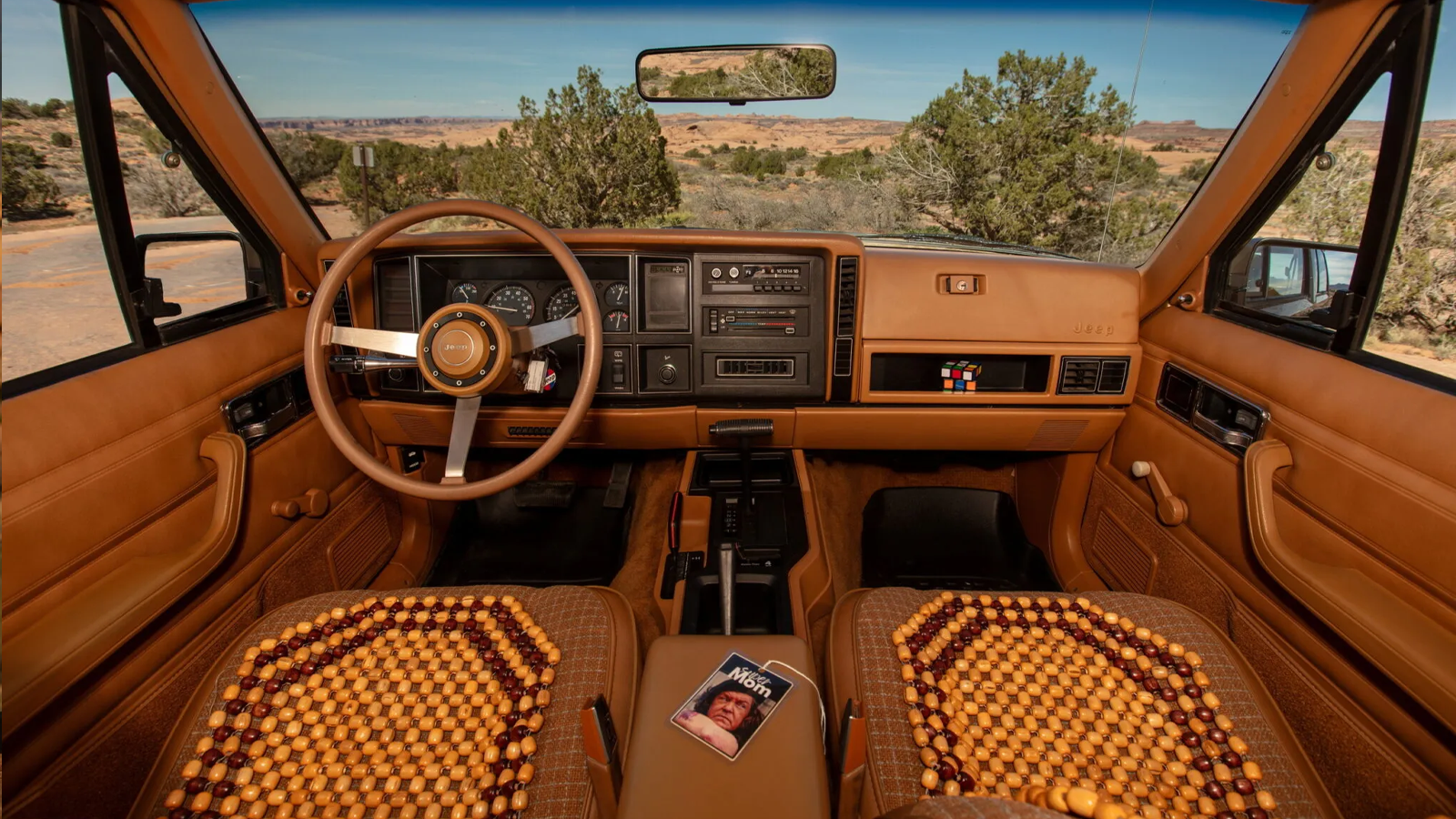
The cabin remains largely untouched, preserving the period dashboard and upholstery. Designers added a few playful details, including wooden bead seat covers, a vintage Apple Macintosh Plus box converted into a cooler, and other era-appropriate accessories that reinforce the vehicle’s 1980s theme.
Buzzcut Wrangler
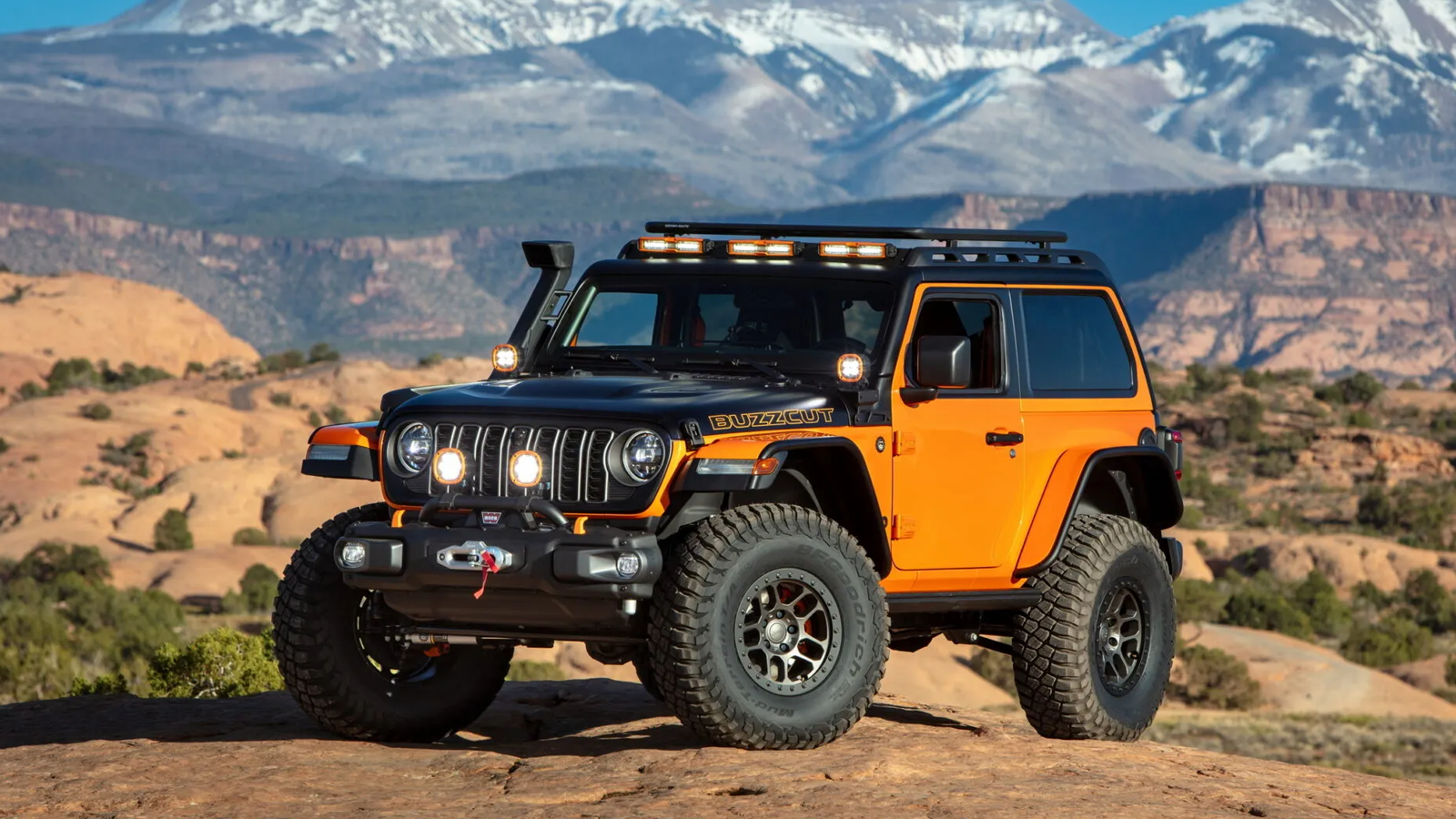
The Wrangler Buzzcut concept focuses on aftermarket customization. Developed with Mopar, the two-door build features a roof chopped two inches lower than stock and a windshield laid back for a more aggressive stance. Combined with a 2-inch suspension lift and 37-inch tires, the result is a squat, muscular look highlighted by flat fenders and steel bumpers.
Buzzcut Wrangler
Under the hood is the turbocharged 2.0-liter inline-four producing around 270 horsepower, paired with an eight-speed automatic transmission. The engine also receives a Mopar cold-air intake.
Buzzcut Wrangler
The interior swaps the Wrangler’s factory seats for bucket seats borrowed from the Dodge Charger, retrimmed in leather and suede. The rear seats were removed to create a cargo area with lockable storage drawers and gear mounting panels, while various Jeep Performance Parts, including a tailgate table, compressor, and accessory rails, demonstrate the customization options available through the brand’s parts catalog.
Wrangler Laredo
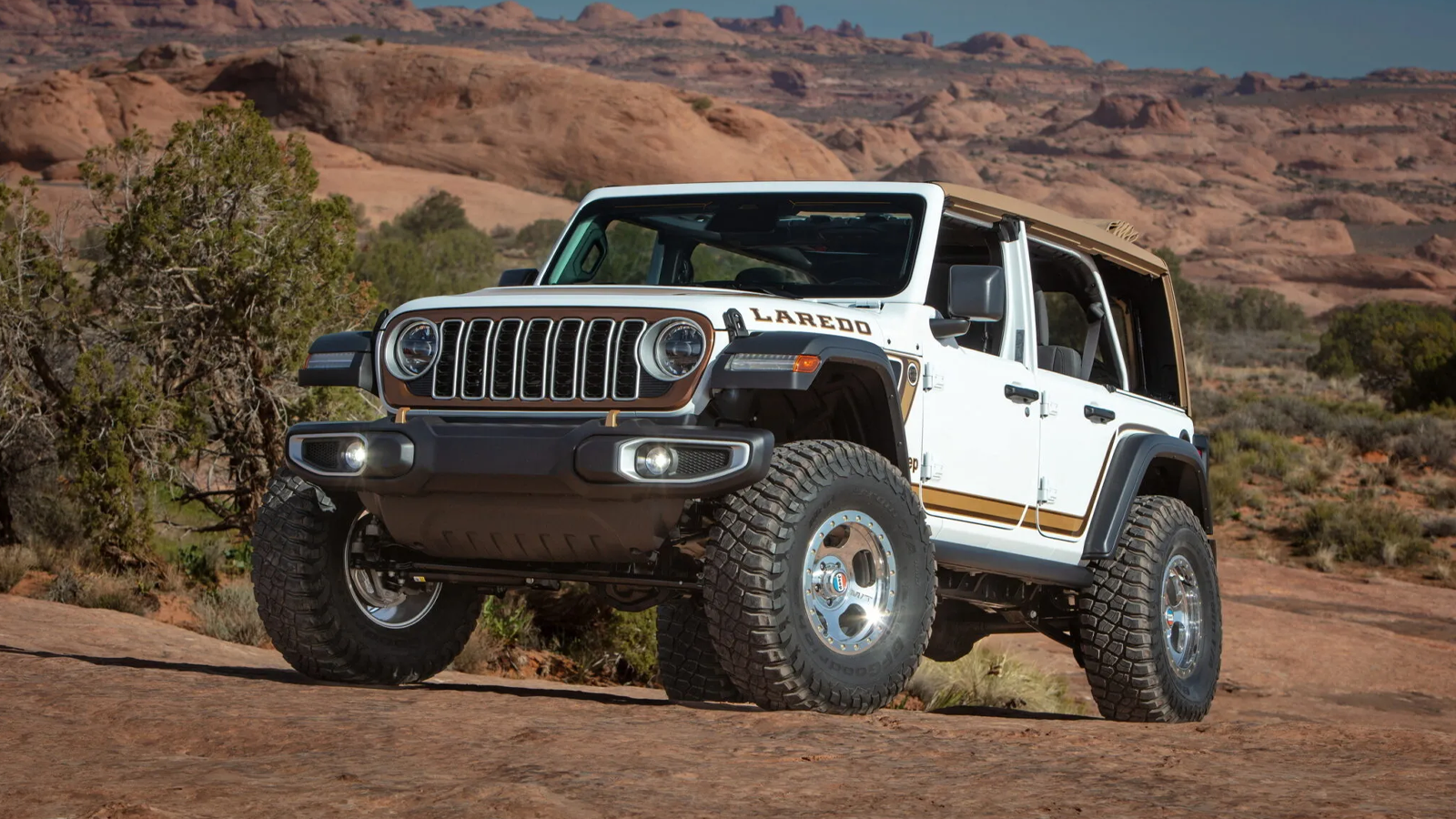
Another retro-themed build, the Wrangler Laredo concept draws inspiration from the Laredo trim package first introduced on CJ models decades ago. The modern version starts with a Jeep Wrangler Willys equipped with the 3.6-liter Pentastar V-6 producing 285 horsepower and paired with a six-speed manual transmission.
Wrangler Laredo
The exterior features brown and gold graphics reminiscent of 1970s styling, along with chrome-finished 17-inch wheels wearing classic CJ center caps. A two-inch lift and 37-inch off-road tires give the Laredo serious trail capability despite its vintage aesthetic.
Wrangler Laredo
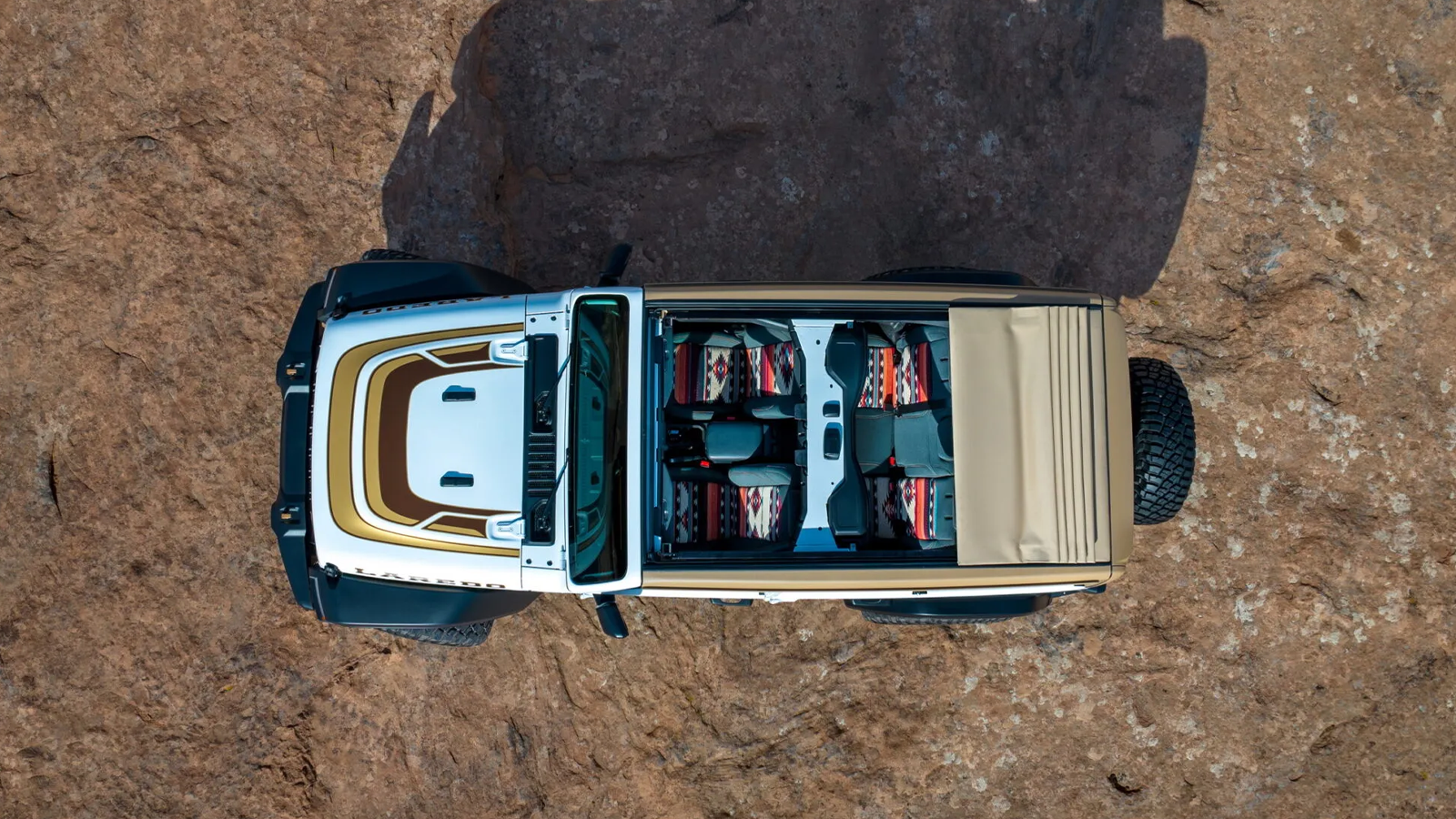
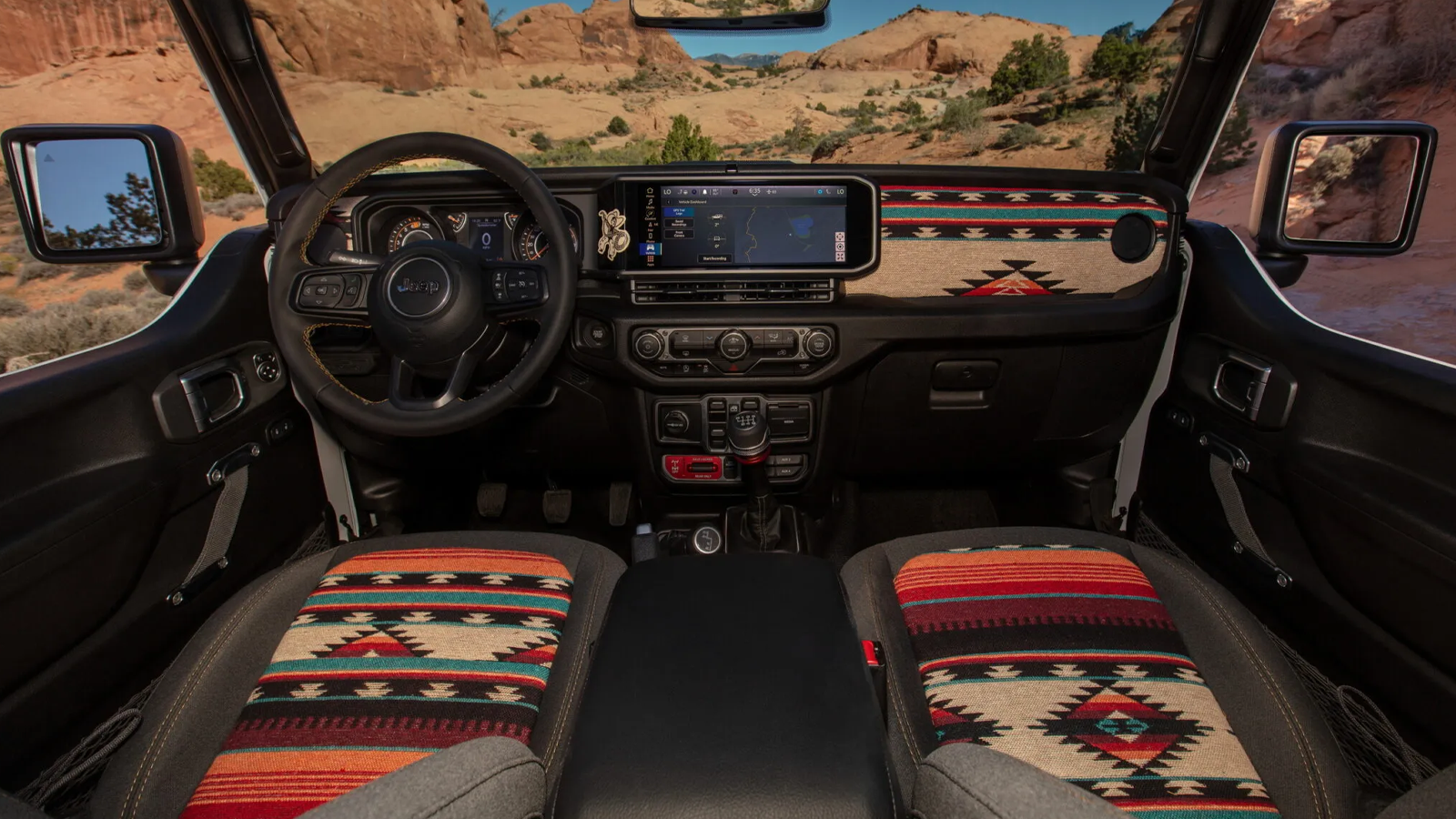
Inside, Jeep embraced a minimalist approach. Vinyl flooring replaces carpet so the cabin can be washed out after dusty trails, and the seats feature upholstery inspired by Southwestern-style textiles. Half doors and a manually operated sliding canvas roof emphasize the concept’s back-to-basics philosophy.
Gladiator Red Rock
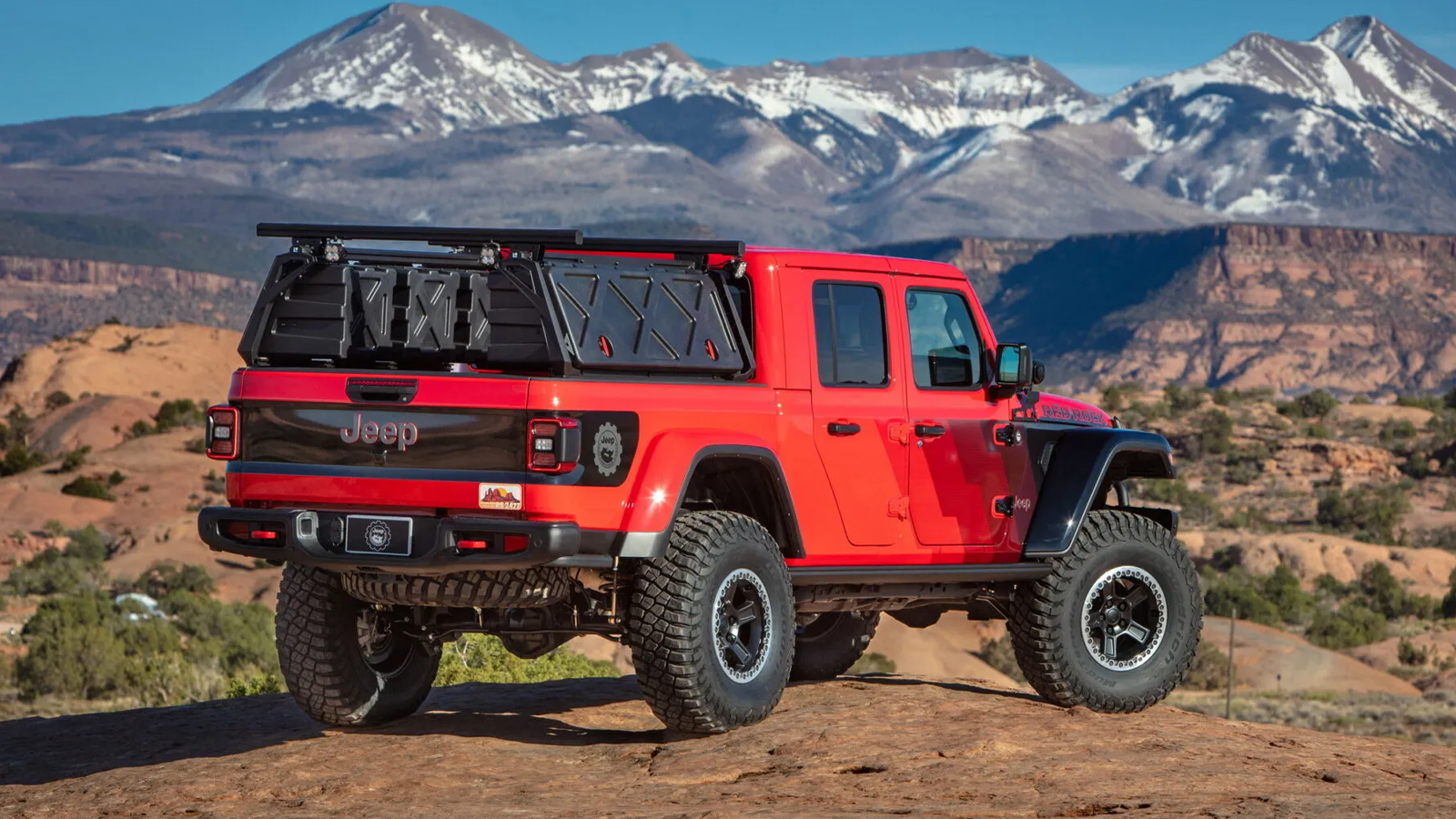
Unlike most concept vehicles that disappear into corporate collections, the Gladiator Red Rock will remain in Moab after the event. Jeep plans to donate the truck to the Red Rock 4Wheelers, the volunteer group that has organized the Easter Jeep Safari since 1982.
Gladiator Red Rock
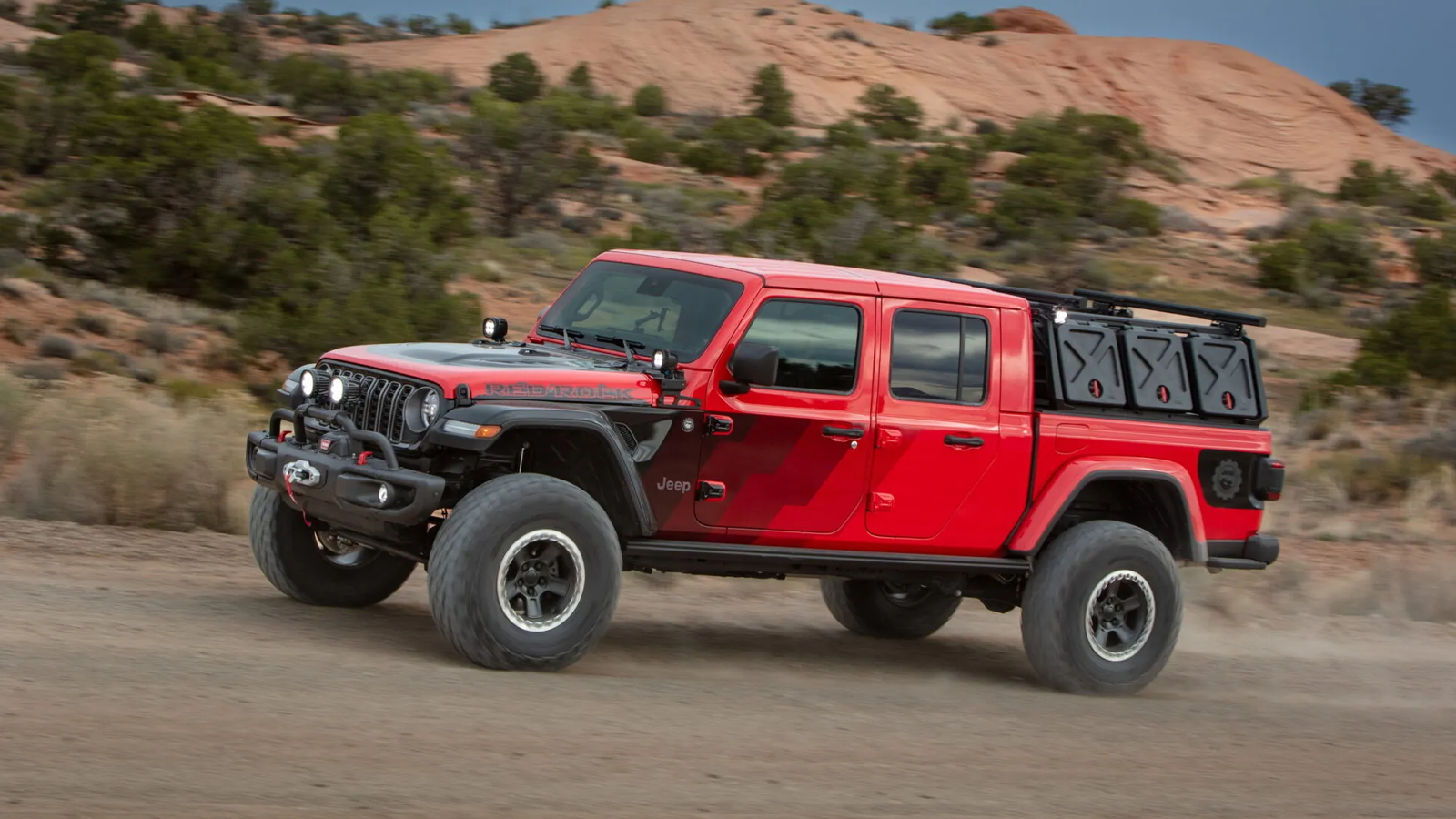
Built from a Gladiator Rubicon, the truck is designed for trail maintenance and support duties. It features a 3-inch lift kit from Rock Krawler Suspension, beadlock wheels wrapped in 37-inch BFGoodrich Mud-Terrain tires, and a steel front bumper equipped with a Warn winch.
Gladiator Red Rock
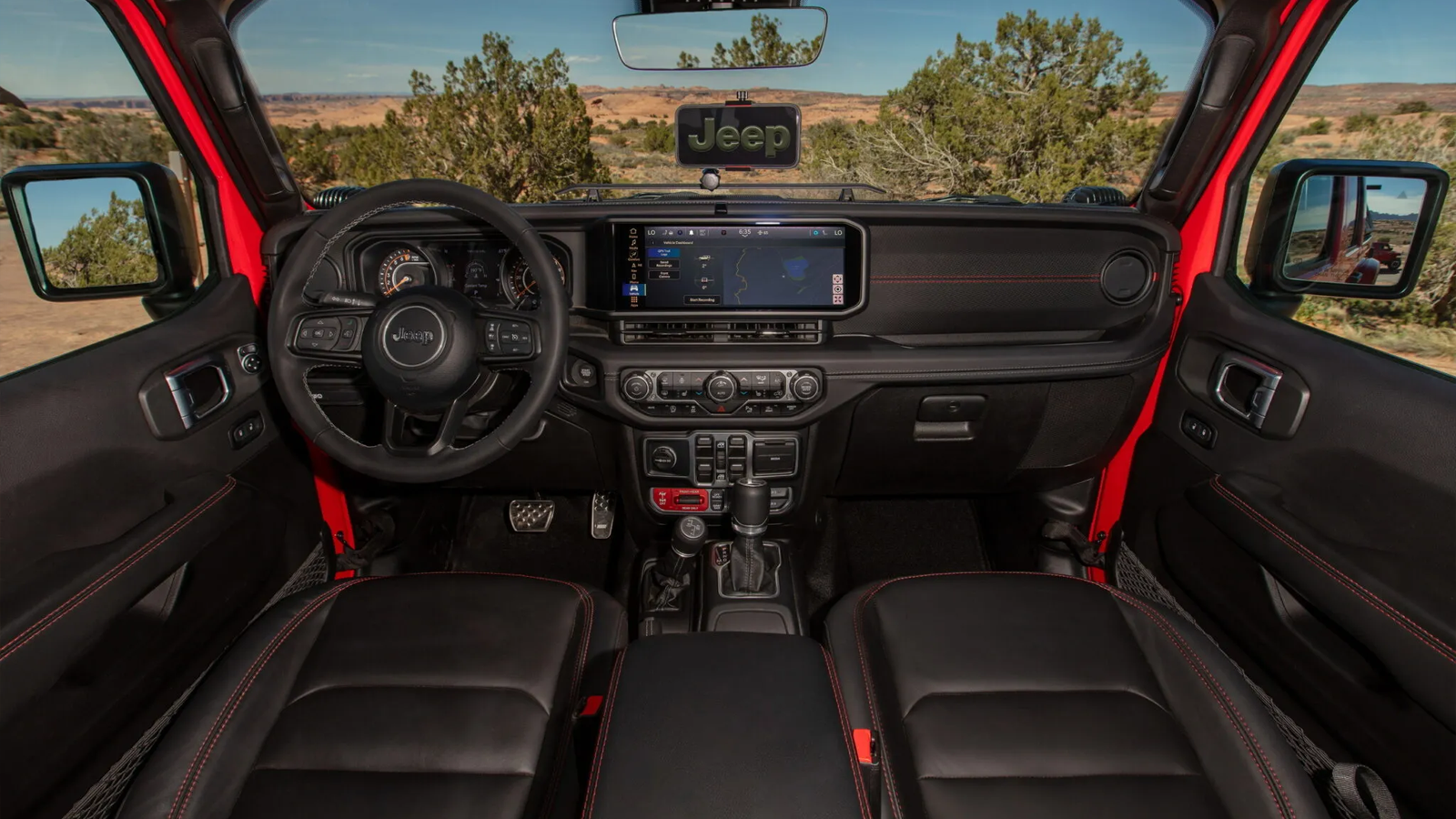
The pickup bed is fitted with a Bedslide cargo tray and a Leitner Designs rack with GearPod storage containers to haul tools and equipment to remote trails. Additional upgrades include auxiliary lighting, rock rails, an onboard air compressor, and durable Armorlite flooring inside the cabin.
Grand Wagoneer Commander
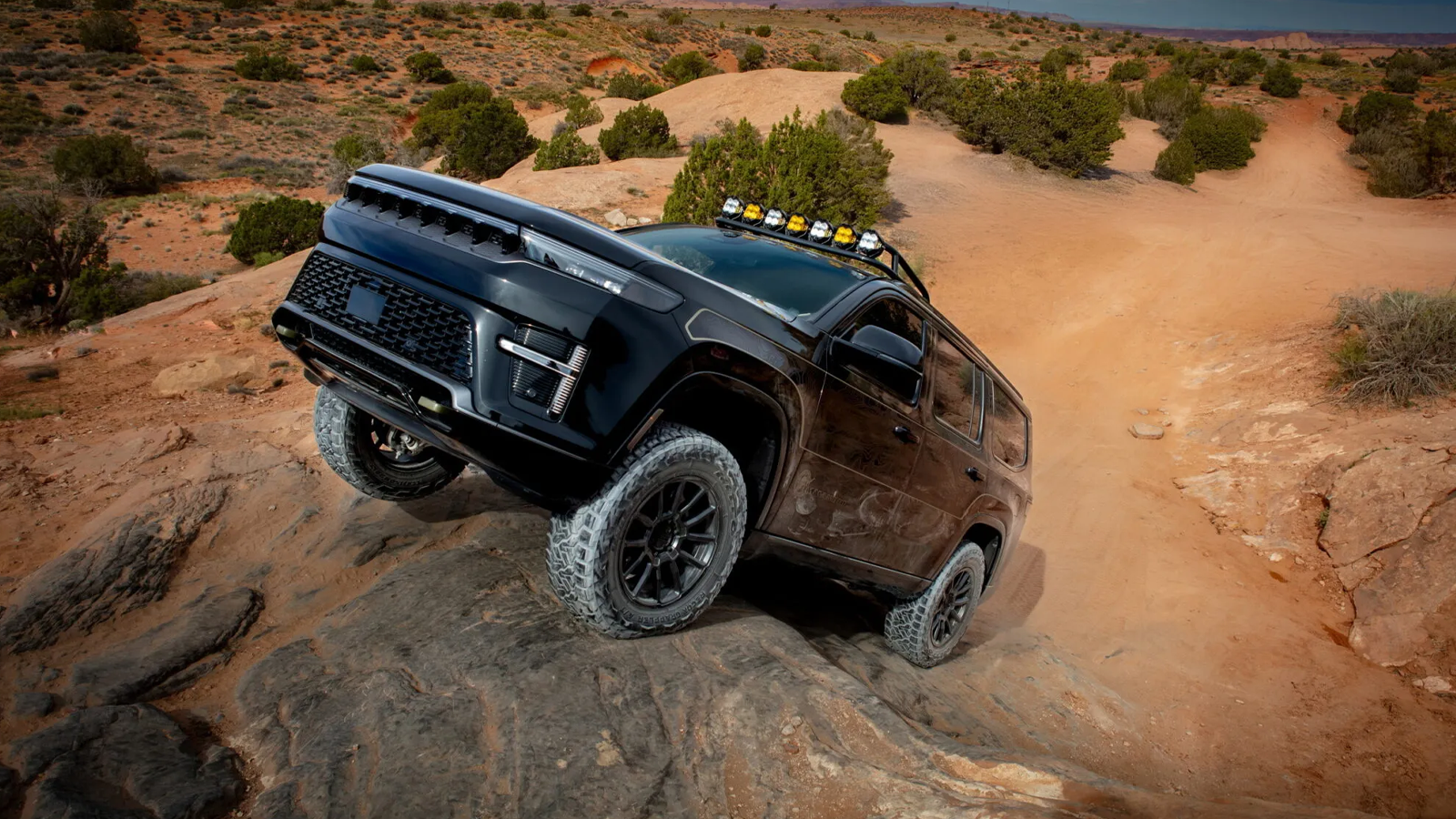
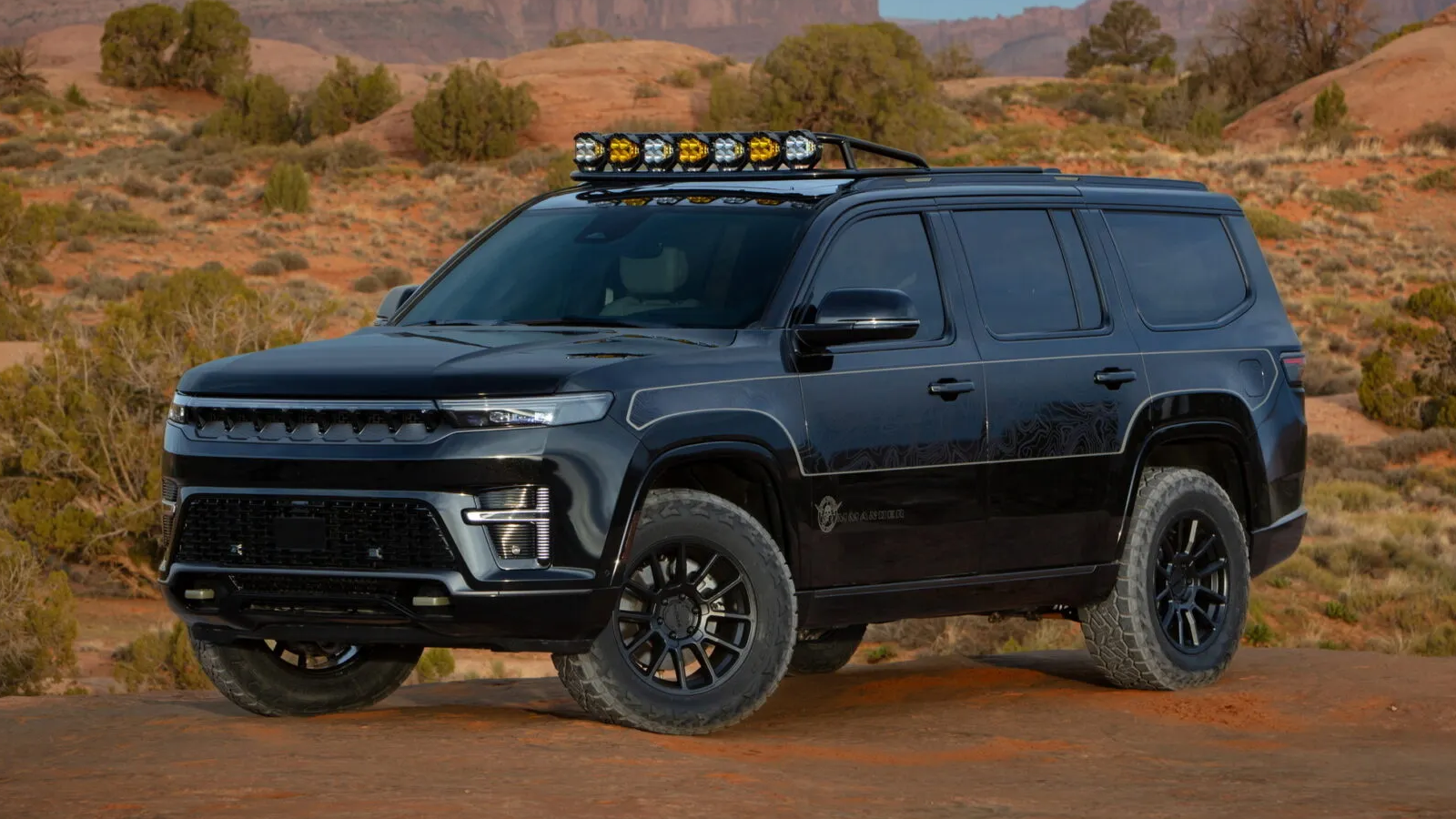
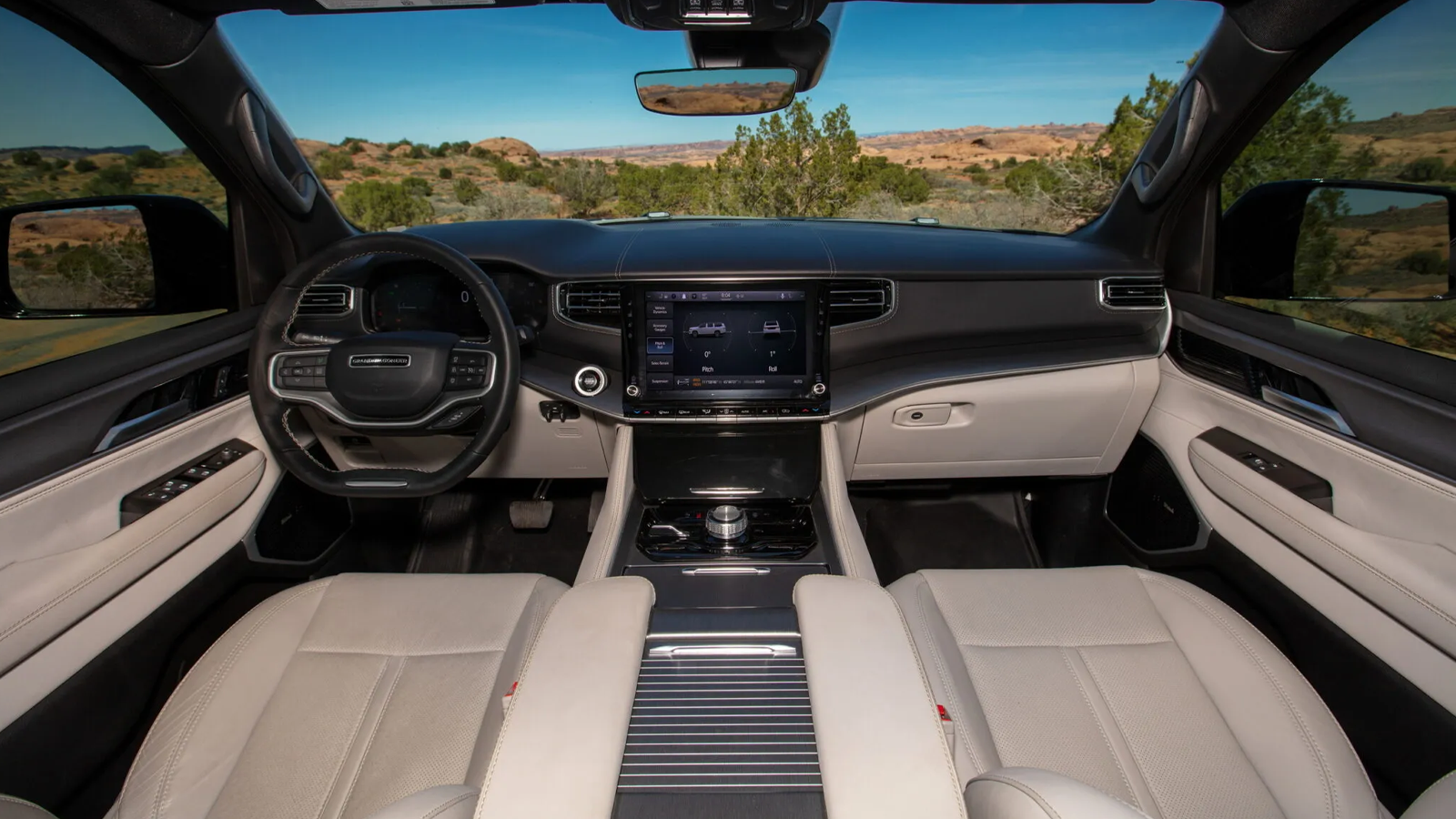
The final concept explores how Jeep’s largest luxury SUV might fit into serious off-roading. The Grand Wagoneer Commander begins with the three-row Jeep Grand Wagoneer but adds hardware intended to make it more capable in rough terrain.
Grand Wagoneer Commander
A suspension lift from Rock Krawler allows the SUV to ride on 35-inch all-terrain tires mounted to black 20-inch wheels. Custom skid plates protect the underbody, while a roof rack carrying multiple auxiliary lights helps illuminate remote trails at night.
Grand Wagoneer Commander
Styling elements also reference classic Wagoneers. The body graphics reinterpret the woodgrain panels seen on vintage models, replacing them with topographic lines inspired by Canyonlands National Park. The same map pattern even appears on the panoramic roof.
Concept Playground
Together, the six vehicles illustrate how Jeep uses the Easter Jeep Safari as a design playground. Some concepts highlight historical inspiration, such as the retro Laredo and the preserved XJ Pioneer. Others explore new directions for off-road capability or showcase aftermarket accessories. While most will remain one-off builds, the ideas behind them often influence future accessories and special editions that eventually reach production models.