


Battery Help

Thread Starter
JK Enthusiast
Joined: Mar 2008
Posts: 266
Likes: 0
From: Indiana
 Battery Help
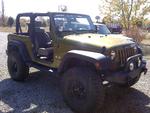
So i just put another set of KC lights on my bumper. Ive got two 130 watt long range KC's on the windshield and two 100 watt KC driving lights on the bumper. Do you guys think my battery will need to be upgraded or will the stock one be fine? I only run the lights when the Jeep is running.
Thread Starter
JK Enthusiast
Joined: Mar 2008
Posts: 266
Likes: 0
From: Indiana

JK Super Freak
Joined: Apr 2007
Posts: 1,699
Likes: 3
From: Lancaster Pa
As far as the OP's post, have you wired the aux lights to the battery, using the proper wire gage and fusing for the power feed, and used the control voltage for the trigger? The reason I ask this is because some without thinking go across the line with switches using smaller gage wire and therefore have a larger voltage drop due to the lower gage wire. If so you should be fine. The static volts provided by my stock battery runs at approx. 12.65-13VDC and with the engine running the voltage from the alternator back to my battery is approx. 14.7-15.02VDC
Your total wattage for the aux lights = 32.8 amps. Say another 7.8 or so for the headlights. The heater running full blast might take about 30 amps, and some equipment to keep the Jk rinning, say 7 amps. This is a total of about 80 amps draw. That will leave you with another 80 of alternator output amps to recharge your battery. I see no problem at this point.
Keep in mind the alternator puts out the nominal amperage, (160) at a given RPM speed of the alternator pully and it is normally about 1100-1800 RPM engine speed. The lower engine RPM the less power generated by the alternator. Over the 1800 RPM range it will not matter as you have already made nominal alternator speed, and therefore at low RPM's, below 1100, you will see the external lighting go somewhat dim.
If you do not have a multimeter, to check voltage, and amperage in the circuit, a good way to check is to run the JK at idle, Put everything on, (all lights, heater at full blast, radio, and so forth), then look at your lights. If they dim, increase the engine RPM to where the lights brighten and you will know at what engine RPM you need to be for safe charging of the battery. if the RPM is below the normal driving RPM of yoyr JK, you are fine.
Just for shit's and grins, I just checked our 07 JK unlimited with the stock battery. With the JK running, I turned the headlights on to include the factory fogs, and the IPF 520 series 85, (ea.) watt fogs, radio, and heater at full. My reading at the battery while engine running at idle was 14.32VDC, and with engine off the reading was 11.21VDC. This is telling my electrical system can support all that I have.
Let me add, that is is advantageous to run heavy gage wire for your power feed, and always use proper relays and fuses to support your control wiring.
Hope this helps you.

JK Freak
Joined: Dec 2009
Posts: 590
Likes: 0
From: QC, CA
Don't know about your JK, but mine came stock with a 160 amp alternator, and I do believe all JK's come with a 160 amp alternator.
As far as the OP's post, have you wired the aux lights to the battery, using the proper wire gage and fusing for the power feed, and used the control voltage for the trigger? The reason I ask this is because some without thinking go across the line with switches using smaller gage wire and therefore have a larger voltage drop due to the lower gage wire. If so you should be fine. The static volts provided by my stock battery runs at approx. 12.65-13VDC and with the engine running the voltage from the alternator back to my battery is approx. 14.7-15.02VDC
Your total wattage for the aux lights = 32.8 amps. Say another 7.8 or so for the headlights. The heater running full blast might take about 30 amps, and some equipment to keep the Jk rinning, say 7 amps. This is a total of about 80 amps draw. That will leave you with another 80 of alternator output amps to recharge your battery. I see no problem at this point.
Keep in mind the alternator puts out the nominal amperage, (160) at a given RPM speed of the alternator pully and it is normally about 1100-1800 RPM engine speed. The lower engine RPM the less power generated by the alternator. Over the 1800 RPM range it will not matter as you have already made nominal alternator speed, and therefore at low RPM's, below 1100, you will see the external lighting go somewhat dim.
If you do not have a multimeter, to check voltage, and amperage in the circuit, a good way to check is to run the JK at idle, Put everything on, (all lights, heater at full blast, radio, and so forth), then look at your lights. If they dim, increase the engine RPM to where the lights brighten and you will know at what engine RPM you need to be for safe charging of the battery. if the RPM is below the normal driving RPM of yoyr JK, you are fine.
Just for shit's and grins, I just checked our 07 JK unlimited with the stock battery. With the JK running, I turned the headlights on to include the factory fogs, and the IPF 520 series 85, (ea.) watt fogs, radio, and heater at full. My reading at the battery while engine running at idle was 14.32VDC, and with engine off the reading was 11.21VDC. This is telling my electrical system can support all that I have.
Let me add, that is is advantageous to run heavy gage wire for your power feed, and always use proper relays and fuses to support your control wiring.
Hope this helps you.
As far as the OP's post, have you wired the aux lights to the battery, using the proper wire gage and fusing for the power feed, and used the control voltage for the trigger? The reason I ask this is because some without thinking go across the line with switches using smaller gage wire and therefore have a larger voltage drop due to the lower gage wire. If so you should be fine. The static volts provided by my stock battery runs at approx. 12.65-13VDC and with the engine running the voltage from the alternator back to my battery is approx. 14.7-15.02VDC
Your total wattage for the aux lights = 32.8 amps. Say another 7.8 or so for the headlights. The heater running full blast might take about 30 amps, and some equipment to keep the Jk rinning, say 7 amps. This is a total of about 80 amps draw. That will leave you with another 80 of alternator output amps to recharge your battery. I see no problem at this point.
Keep in mind the alternator puts out the nominal amperage, (160) at a given RPM speed of the alternator pully and it is normally about 1100-1800 RPM engine speed. The lower engine RPM the less power generated by the alternator. Over the 1800 RPM range it will not matter as you have already made nominal alternator speed, and therefore at low RPM's, below 1100, you will see the external lighting go somewhat dim.
If you do not have a multimeter, to check voltage, and amperage in the circuit, a good way to check is to run the JK at idle, Put everything on, (all lights, heater at full blast, radio, and so forth), then look at your lights. If they dim, increase the engine RPM to where the lights brighten and you will know at what engine RPM you need to be for safe charging of the battery. if the RPM is below the normal driving RPM of yoyr JK, you are fine.
Just for shit's and grins, I just checked our 07 JK unlimited with the stock battery. With the JK running, I turned the headlights on to include the factory fogs, and the IPF 520 series 85, (ea.) watt fogs, radio, and heater at full. My reading at the battery while engine running at idle was 14.32VDC, and with engine off the reading was 11.21VDC. This is telling my electrical system can support all that I have.
Let me add, that is is advantageous to run heavy gage wire for your power feed, and always use proper relays and fuses to support your control wiring.
Hope this helps you.
Did write 160 amps at first but verified my number on jeep web site and they say 140 amps for the 2010 model......

JK Enthusiast
Joined: Jul 2008
Posts: 435
Likes: 1
From: Lake Stevens, WA
Do you also have a winch, or plan on getting one? The more accessories you add, the more you can benefit from a dual battery kit for you JK.
https://www.jk-forum.com/forums/sponsoring-manufacturers-vendors-check-out-cyber-monday-specials-24/new-year-new-dual-battery-kits-benchmark-designs-113995/
1. Most vehicles are designed and manufactured with a single battery that is adequate to satisfy OEM electrical requirements. As additional electrical accessories are installed, such as a winch, lighting, inverters, etc. the single OEM battery is quickly overwhelmed and proves to be inadequate. Symptoms such as headlights dimming while winching, battery malfunction indicator lights, poor winch performance etc. are all indicators that your battery is overworked. A secondary auxiliary battery provides additional capacity during periods of high electrical demand, avoiding depleting your battery and overworking your alternator.
2. A single battery is a high liability failure point. When you are using your vehicle in backcountry locations, a failed or drained battery can leave you stranded. OEM batteries often die with little or no warning, and typically during periods of peak usage, such as while winching. A high quality auxiliary battery provides redundancy, ensuring you’ll always be able to start your vehicle.
3. A single battery does not allow accessories to be safely used when the vehicle is not running. Whether it’s a power inverter, 12V fridge, lighting, a winch, many of these accessories need to be used when it’s not practical or possible to leave the vehicle running. An isolated auxiliary battery can power any accessory without depleting the main starting battery. Now you can run accessories for extended periods of time (sometimes days) without fear of depleting your main starting battery.
https://www.jk-forum.com/forums/sponsoring-manufacturers-vendors-check-out-cyber-monday-specials-24/new-year-new-dual-battery-kits-benchmark-designs-113995/
1. Most vehicles are designed and manufactured with a single battery that is adequate to satisfy OEM electrical requirements. As additional electrical accessories are installed, such as a winch, lighting, inverters, etc. the single OEM battery is quickly overwhelmed and proves to be inadequate. Symptoms such as headlights dimming while winching, battery malfunction indicator lights, poor winch performance etc. are all indicators that your battery is overworked. A secondary auxiliary battery provides additional capacity during periods of high electrical demand, avoiding depleting your battery and overworking your alternator.
2. A single battery is a high liability failure point. When you are using your vehicle in backcountry locations, a failed or drained battery can leave you stranded. OEM batteries often die with little or no warning, and typically during periods of peak usage, such as while winching. A high quality auxiliary battery provides redundancy, ensuring you’ll always be able to start your vehicle.
3. A single battery does not allow accessories to be safely used when the vehicle is not running. Whether it’s a power inverter, 12V fridge, lighting, a winch, many of these accessories need to be used when it’s not practical or possible to leave the vehicle running. An isolated auxiliary battery can power any accessory without depleting the main starting battery. Now you can run accessories for extended periods of time (sometimes days) without fear of depleting your main starting battery.
JK Super Freak
Joined: Apr 2007
Posts: 1,699
Likes: 3
From: Lancaster Pa
Trending Topics
Thread Starter
JK Enthusiast
Joined: Mar 2008
Posts: 266
Likes: 0
From: Indiana
Don't know about your JK, but mine came stock with a 160 amp alternator, and I do believe all JK's come with a 160 amp alternator.
As far as the OP's post, have you wired the aux lights to the battery, using the proper wire gage and fusing for the power feed, and used the control voltage for the trigger? The reason I ask this is because some without thinking go across the line with switches using smaller gage wire and therefore have a larger voltage drop due to the lower gage wire. If so you should be fine. The static volts provided by my stock battery runs at approx. 12.65-13VDC and with the engine running the voltage from the alternator back to my battery is approx. 14.7-15.02VDC
Your total wattage for the aux lights = 32.8 amps. Say another 7.8 or so for the headlights. The heater running full blast might take about 30 amps, and some equipment to keep the Jk rinning, say 7 amps. This is a total of about 80 amps draw. That will leave you with another 80 of alternator output amps to recharge your battery. I see no problem at this point.
Keep in mind the alternator puts out the nominal amperage, (160) at a given RPM speed of the alternator pully and it is normally about 1100-1800 RPM engine speed. The lower engine RPM the less power generated by the alternator. Over the 1800 RPM range it will not matter as you have already made nominal alternator speed, and therefore at low RPM's, below 1100, you will see the external lighting go somewhat dim.
If you do not have a multimeter, to check voltage, and amperage in the circuit, a good way to check is to run the JK at idle, Put everything on, (all lights, heater at full blast, radio, and so forth), then look at your lights. If they dim, increase the engine RPM to where the lights brighten and you will know at what engine RPM you need to be for safe charging of the battery. if the RPM is below the normal driving RPM of yoyr JK, you are fine.
Just for shit's and grins, I just checked our 07 JK unlimited with the stock battery. With the JK running, I turned the headlights on to include the factory fogs, and the IPF 520 series 85, (ea.) watt fogs, radio, and heater at full. My reading at the battery while engine running at idle was 14.32VDC, and with engine off the reading was 11.21VDC. This is telling my electrical system can support all that I have.
Let me add, that is is advantageous to run heavy gage wire for your power feed, and always use proper relays and fuses to support your control wiring.
Hope this helps you.
As far as the OP's post, have you wired the aux lights to the battery, using the proper wire gage and fusing for the power feed, and used the control voltage for the trigger? The reason I ask this is because some without thinking go across the line with switches using smaller gage wire and therefore have a larger voltage drop due to the lower gage wire. If so you should be fine. The static volts provided by my stock battery runs at approx. 12.65-13VDC and with the engine running the voltage from the alternator back to my battery is approx. 14.7-15.02VDC
Your total wattage for the aux lights = 32.8 amps. Say another 7.8 or so for the headlights. The heater running full blast might take about 30 amps, and some equipment to keep the Jk rinning, say 7 amps. This is a total of about 80 amps draw. That will leave you with another 80 of alternator output amps to recharge your battery. I see no problem at this point.
Keep in mind the alternator puts out the nominal amperage, (160) at a given RPM speed of the alternator pully and it is normally about 1100-1800 RPM engine speed. The lower engine RPM the less power generated by the alternator. Over the 1800 RPM range it will not matter as you have already made nominal alternator speed, and therefore at low RPM's, below 1100, you will see the external lighting go somewhat dim.
If you do not have a multimeter, to check voltage, and amperage in the circuit, a good way to check is to run the JK at idle, Put everything on, (all lights, heater at full blast, radio, and so forth), then look at your lights. If they dim, increase the engine RPM to where the lights brighten and you will know at what engine RPM you need to be for safe charging of the battery. if the RPM is below the normal driving RPM of yoyr JK, you are fine.
Just for shit's and grins, I just checked our 07 JK unlimited with the stock battery. With the JK running, I turned the headlights on to include the factory fogs, and the IPF 520 series 85, (ea.) watt fogs, radio, and heater at full. My reading at the battery while engine running at idle was 14.32VDC, and with engine off the reading was 11.21VDC. This is telling my electrical system can support all that I have.
Let me add, that is is advantageous to run heavy gage wire for your power feed, and always use proper relays and fuses to support your control wiring.
Hope this helps you.
Thread Starter
JK Enthusiast
Joined: Mar 2008
Posts: 266
Likes: 0
From: Indiana
Do you also have a winch, or plan on getting one? The more accessories you add, the more you can benefit from a dual battery kit for you JK.
https://www.jk-forum.com/forums/showthread.php?t=113995
1. Most vehicles are designed and manufactured with a single battery that is adequate to satisfy OEM electrical requirements. As additional electrical accessories are installed, such as a winch, lighting, inverters, etc. the single OEM battery is quickly overwhelmed and proves to be inadequate. Symptoms such as headlights dimming while winching, battery malfunction indicator lights, poor winch performance etc. are all indicators that your battery is overworked. A secondary auxiliary battery provides additional capacity during periods of high electrical demand, avoiding depleting your battery and overworking your alternator.
2. A single battery is a high liability failure point. When you are using your vehicle in backcountry locations, a failed or drained battery can leave you stranded. OEM batteries often die with little or no warning, and typically during periods of peak usage, such as while winching. A high quality auxiliary battery provides redundancy, ensuring you’ll always be able to start your vehicle.
3. A single battery does not allow accessories to be safely used when the vehicle is not running. Whether it’s a power inverter, 12V fridge, lighting, a winch, many of these accessories need to be used when it’s not practical or possible to leave the vehicle running. An isolated auxiliary battery can power any accessory without depleting the main starting battery. Now you can run accessories for extended periods of time (sometimes days) without fear of depleting your main starting battery.
https://www.jk-forum.com/forums/showthread.php?t=113995
1. Most vehicles are designed and manufactured with a single battery that is adequate to satisfy OEM electrical requirements. As additional electrical accessories are installed, such as a winch, lighting, inverters, etc. the single OEM battery is quickly overwhelmed and proves to be inadequate. Symptoms such as headlights dimming while winching, battery malfunction indicator lights, poor winch performance etc. are all indicators that your battery is overworked. A secondary auxiliary battery provides additional capacity during periods of high electrical demand, avoiding depleting your battery and overworking your alternator.
2. A single battery is a high liability failure point. When you are using your vehicle in backcountry locations, a failed or drained battery can leave you stranded. OEM batteries often die with little or no warning, and typically during periods of peak usage, such as while winching. A high quality auxiliary battery provides redundancy, ensuring you’ll always be able to start your vehicle.
3. A single battery does not allow accessories to be safely used when the vehicle is not running. Whether it’s a power inverter, 12V fridge, lighting, a winch, many of these accessories need to be used when it’s not practical or possible to leave the vehicle running. An isolated auxiliary battery can power any accessory without depleting the main starting battery. Now you can run accessories for extended periods of time (sometimes days) without fear of depleting your main starting battery.
