


Without a winch - why not reverse??


Thread Starter
JK Enthusiast
Joined: May 2007
Posts: 144
Likes: 0
From: YUKON, OK
 Without a winch - why not reverse??
This might be an obvious answer to some, but I am curious. While wheeling a trail, the Jeep in front of me went down in a creek bed and it was too steep to get back out. I was directly behind him, but still up on high ground, so I offered to pull him back up. He said he would never pull someone using the Jeep in reverse. (I don't have a winch) He said it would easily destroy the diffs. I had never heard this. We used farm equipment in every way imaginable without ever doing damige this way. Can anyone shed some light on this before I do undue damage?


JK Super Freak
Joined: Mar 2008
Posts: 1,439
Likes: 1
From: Flyover Country
When in reverse, you're putting the stress of the pull on the "back side" of the teeth on your R&P gears. I don't think it's instant death by any stretch of the imagination, but you would be exposing the R&Ps to more stress than when in forward motion.

Thread Starter
JK Enthusiast
Joined: May 2007
Posts: 144
Likes: 0
From: YUKON, OK

Thanks to all for the input. I understand and agree the stress would be pulling away fron the R&P carrier rather than pushing against it, but I figured the teeth would be under the same stress either way. I thought, maybe he meant it would be harder on the points where the difs attached to the suspension, but I was just guessing.


Trending Topics

JK Junkie
Joined: Jan 2008
Posts: 2,319
Likes: 0
From: Long Island, NY
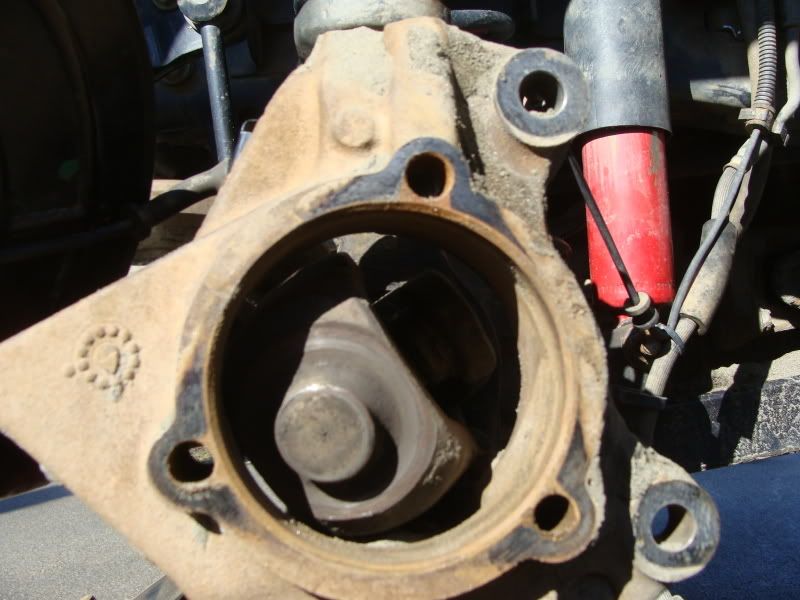
Same thing happened this weekend on my wheeling trip. One of our rigs got high centered on a HUGE rock. Directly behind him was one of our other rigs, D30, Detroit Locker with Warn hubs and upgraded shafts. He tried to pull the rig in reverse, Warn hub grenanded and landed 15ft. away and u-joint popped.
JK Jedi

Joined: Feb 2008
Posts: 7,215
Likes: 10
From: Georgia
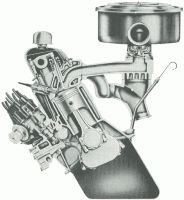
The teeth on a ring gear exhibit the exact same principle as a dam that holds back water. Each tooth is in effect a dam of it's own that holds the force of the pinion gear driving the ring gear and carrier.

The driving side of the teeth in the pic is on the right side. See how each tooth is in an arc towards the driving side? In the same way a dam is made to take advantage of that arc, the ring gear teeth are also made. When in reverse, it is easy to see how the coast side of the teeth, then become the drive side, and they are NOT made for that.
The driving side of the teeth in the pic is on the right side. See how each tooth is in an arc towards the driving side? In the same way a dam is made to take advantage of that arc, the ring gear teeth are also made. When in reverse, it is easy to see how the coast side of the teeth, then become the drive side, and they are NOT made for that.
Last edited by RedneckJeep; Sep 23, 2009 at 03:21 AM.