

How hot can shocks get?


Thread Starter
JK Freak
Joined: Apr 2014
Posts: 505
Likes: 4
From: Anaheim, ca
 How hot can shocks get?
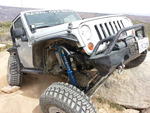
I installed my new BDS tuned Fox shocks up front right before going to TDS last weekend. After driving a couple hours in the desert through mixed terrain between 5-45mph @ 78F we stopped and I did a quick inspection of the suspension. I happened to grab a shock body and then decided to feel them all... The Fox's up front were very hot, wouldn't burn your hand but would be uncomfortable to hold for more than a few seconds. The Bilstein 5100's in the rear were slightly hotter and the OEM rubicon shocks on the front of my buddys Jeep were way too hot to touch for more than a second.
How hot should they be getting? Am I overheating them? Will that ruin them? Should I have gone RR?
How hot should they be getting? Am I overheating them? Will that ruin them? Should I have gone RR?


JK Junkie
Joined: Feb 2013
Posts: 2,013
Likes: 0
From: West Richland Washington
I installed my new BDS tuned Fox shocks up front right before going to TDS last weekend. After driving a couple hours in the desert through mixed terrain between 5-45mph @ 78F we stopped and I did a quick inspection of the suspension. I happened to grab a shock body and then decided to feel them all... The Fox's up front were very hot, wouldn't burn your hand but would be uncomfortable to hold for more than a few seconds. The Bilstein 5100's in the rear were slightly hotter and the OEM rubicon shocks on the front of my buddys Jeep were way too hot to touch for more than a second.
How hot should they be getting? Am I overheating them? Will that ruin them? Should I have gone RR?
How hot should they be getting? Am I overheating them? Will that ruin them? Should I have gone RR?

JK Enthusiast

Joined: Apr 2014
Posts: 457
Likes: 2
From: Akron, OH
The heat is a by product of the shock doing it's job. Think of how much the shock is moving when you're bouncing through the desert. When you move the oil from one side of the shock to the other, it gets hot. That's why the fox shocks weren't as hot, because they're designed for desert racing. The Rubi's shocks were designed for mostly street driving, with a little bit of wheeling.

Former Member
Joined: Apr 2012
Posts: 2,573
Likes: 2
From: USA
The heat is a by product of the shock doing it's job. Think of how much the shock is moving when you're bouncing through the desert. When you move the oil from one side of the shock to the other, it gets hot. That's why the fox shocks weren't as hot, because they're designed for desert racing. The Rubi's shocks were designed for mostly street driving, with a little bit of wheeling.

JK Super Freak
Joined: Feb 2007
Posts: 1,416
Likes: 0
From: Dallas, Texas
As stated above, heat is the bi-product of energy. So you should expected it to get hot. Desert racing does take a toll. if you have fox shocks with the reservoir and you are still worried, then you should get a second one. two shocks means each shock does half the work. Since heat is a bi-product, you should have half the heat transfer. This does not mean it will be too much cooler to the touch. Just that it would not shorten the life expectancy of the shock to the same degree as just operating on one shock.
A good source for you may be on Pirate...
A good source for you may be on Pirate...

Trending Topics

JK Enthusiast
Joined: May 2014
Posts: 142
Likes: 0
Shocks will always get hot, the more they are used the hotter they will get. Constant driving in the desert will work the shocks far more than crawling around on rocks.
A good example of this was a video by BJ Baldwin on his Facebook page where after a session of pre running through a section of whoops he gets out of the truck, pours water on his bypass shocks and the water instantly boils and evaporates.
As already stated heat is a byproduct. As oil passes through the valves this causes friction which generates heat.
A good example of this was a video by BJ Baldwin on his Facebook page where after a session of pre running through a section of whoops he gets out of the truck, pours water on his bypass shocks and the water instantly boils and evaporates.
As already stated heat is a byproduct. As oil passes through the valves this causes friction which generates heat.