


OEM PCV Valve Study



Thread Starter
JK Jedi Master

Joined: Feb 2008
Posts: 12,907
Likes: 185
From: Maine

"Check the PCV valve, replace if necessary. Perform
the first inspection at 60,000 miles (100 000 km) or 60
months. 30,000 miles/30 months thereafter.
"Proper operation of this system depends on freedom
from sticking or plugging due to deposits. As vehicle
mileage builds up, the PCV valve and passages may
accumulate deposits. If a valve is not working properly,
replace it with a new valve. DO NOT ATTEMPT TO
CLEAN THE OLD PCV VALVE!"
Last edited by ronjenx; Jul 20, 2010 at 02:29 PM.
Thread Starter
JK Jedi Master
Joined: Feb 2008
Posts: 12,907
Likes: 185
From: Maine

JK Newbie
Joined: Apr 2008
Posts: 10
Likes: 1
From: Birmingham, Alabama
PCV valve swap has worked so far.....
The issue that I had was as follows: I was sitting a red light and the MIL and Lightning bolt came on and my RPM's raced to 1100 and it was idling very rough. It felt as if the Jee was going to stall and it had no power when I stepped on the accelerator (limp mode). I pulled the DTC codes and they where P0507 idle speed performance higher than expected and
P2173 High airflow/vacuum leak detected (slow accumulation). When I turned of the engine the lights went away but they came back every time I drove the Jeep even if it was only 5 miles or so. I changed out the PVC valve and thus far (two days later) I have not had a single issue tht I was having. If something changes I'll let you guys know but so far this has worked like a charm.
I just wanted to take the time to say thanks to ronjenx again because I was able to change the PCV valve in 30 minutes (thanks to this post) and for around $10 and it seems to have fixed my issue.
P2173 High airflow/vacuum leak detected (slow accumulation). When I turned of the engine the lights went away but they came back every time I drove the Jeep even if it was only 5 miles or so. I changed out the PVC valve and thus far (two days later) I have not had a single issue tht I was having. If something changes I'll let you guys know but so far this has worked like a charm.
I just wanted to take the time to say thanks to ronjenx again because I was able to change the PCV valve in 30 minutes (thanks to this post) and for around $10 and it seems to have fixed my issue.
JK Newbie
Joined: Apr 2008
Posts: 10
Likes: 1
From: Birmingham, Alabama
I didn't find any defects. When I took it out the first thing I did was shake it and the cone rattled around but I found another post that said that doesn't neccesarily mean the PCV valve is still working as intended. It could have had a clog or the spring may be worn out but I'm just guessing. I'm just happy that the problem has ceased for now. 
JK Newbie
Joined: Apr 2008
Posts: 10
Likes: 1
From: Birmingham, Alabama
For those of you that may wonder if changing the PCV valve out solved my issue; It's been over a week since I swapped it out and I have had no idle issues or any error Codes at all. Thanks again to this post...

JK Freak
Joined: Jun 2007
Posts: 813
Likes: 2
From: MOKENA ILL
ronjenx i have been looking at the threads and posts from you " YOU ARE THE MAN " i have a quick question, could this be the cause or is it related to oil consumption  i have an 07 unl and my son has a 07 2 door we both burn about 2-3 qts of oil between oil changes ? i have 96000mi and he has about 50000mi thanks and again YOU ARE THE MAN
i have an 07 unl and my son has a 07 2 door we both burn about 2-3 qts of oil between oil changes ? i have 96000mi and he has about 50000mi thanks and again YOU ARE THE MANThe PCV valve is a pretty simple device, but it performs a potentially critical function.
It is, essentially, a regulated vacuum leak, drawing contaminated air from the crank case, rather than letting it vent to atmosphere, as in days gone by.
If you look at old pictures of roads and highways, you will notice a dark stripe in the middle of each travel lane. That's mostly from crank case oil vapors condensing in the breather tube, then dripping onto the road. It was called a "road draft tube" because it hung down enough to create a small vacuum as the vehicle moved through the air.
Air was draw into the crank case through a filtered oil filler cap on most vehicles back then.
Since the 1960's, the crank case gasses have been pulled into the intake system, to be burned with the fuel/air mixture.
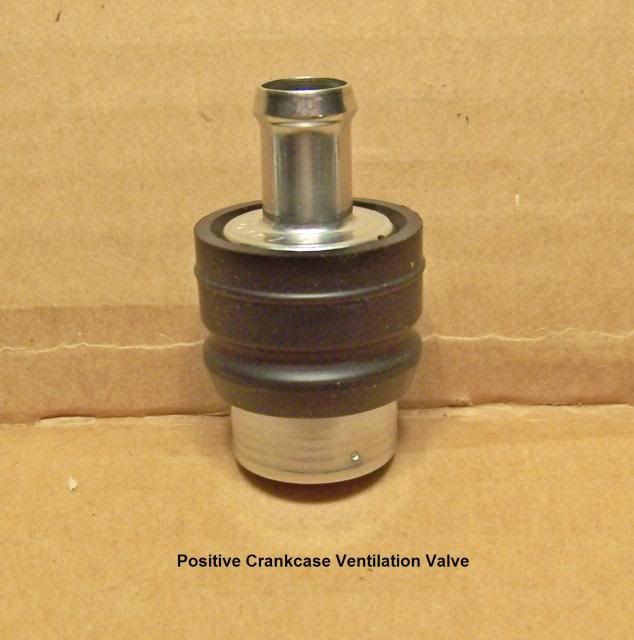
Here is a picture of the PCV valve used on the Jeep JK.
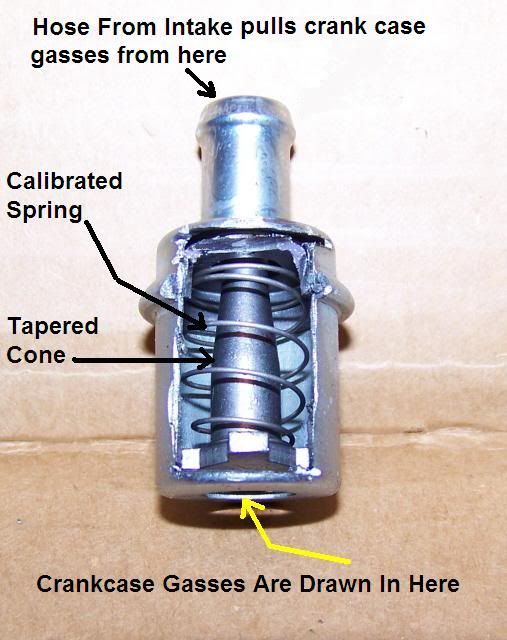
This is a picture of what's inside the valve. Crank case vapors are draw into the hole in the bottom, pass by the tapered cone, out the top, and through the hose connected to the intake.
In the picture, the valve is in the low vacuum, high load position. It is open to allow the most flow, because under load, the intake is producing the least vacuum, but the engine is producing the most blow-by into the crank case.
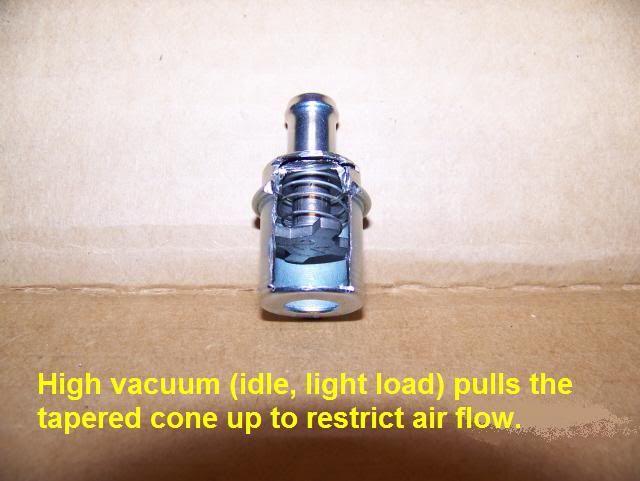
In this view, the valve is in the high vacuum, low load position. The tapered cone is drawn up, into the exit hole, to restrict flow, because the engine is producing less blow-by vapor. It also decreases what the engine would see as a vacuum leak.
Oil is continually being thrown around inside the crank case, producing an oil mist saturated atmosphere. If the PCV valve were to remain fully open during times of low load/high vacuum, this oil mist would be drawn out, too. An increase in oil consumption may be observed, along with a rough idle because of the vacuum leak.
This view shows the air hoses for the PCV system. A hose is connected from the intake to the PCV valve. As air is drawn out, it is replaced with filtered air from the intake box. Clean air is constantly flowing through the crank case.
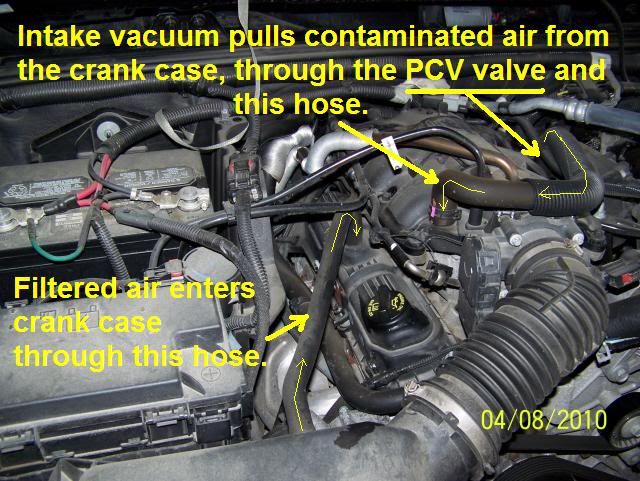
Pictured is the location of the PCV valve. It is tucked away behind the coil pack.
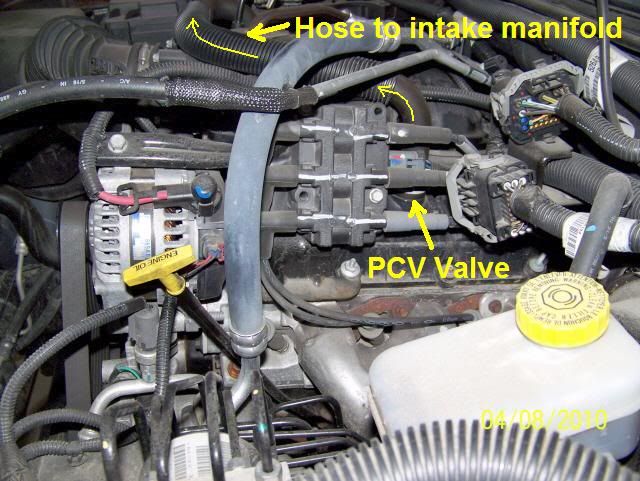
Here is the removal/replacement procedure:
https://www.jk-forum.com/forums/show...30#post1773730
It is, essentially, a regulated vacuum leak, drawing contaminated air from the crank case, rather than letting it vent to atmosphere, as in days gone by.
If you look at old pictures of roads and highways, you will notice a dark stripe in the middle of each travel lane. That's mostly from crank case oil vapors condensing in the breather tube, then dripping onto the road. It was called a "road draft tube" because it hung down enough to create a small vacuum as the vehicle moved through the air.
Air was draw into the crank case through a filtered oil filler cap on most vehicles back then.
Since the 1960's, the crank case gasses have been pulled into the intake system, to be burned with the fuel/air mixture.
Here is a picture of the PCV valve used on the Jeep JK.
This is a picture of what's inside the valve. Crank case vapors are draw into the hole in the bottom, pass by the tapered cone, out the top, and through the hose connected to the intake.
In the picture, the valve is in the low vacuum, high load position. It is open to allow the most flow, because under load, the intake is producing the least vacuum, but the engine is producing the most blow-by into the crank case.
In this view, the valve is in the high vacuum, low load position. The tapered cone is drawn up, into the exit hole, to restrict flow, because the engine is producing less blow-by vapor. It also decreases what the engine would see as a vacuum leak.
Oil is continually being thrown around inside the crank case, producing an oil mist saturated atmosphere. If the PCV valve were to remain fully open during times of low load/high vacuum, this oil mist would be drawn out, too. An increase in oil consumption may be observed, along with a rough idle because of the vacuum leak.
This view shows the air hoses for the PCV system. A hose is connected from the intake to the PCV valve. As air is drawn out, it is replaced with filtered air from the intake box. Clean air is constantly flowing through the crank case.
Pictured is the location of the PCV valve. It is tucked away behind the coil pack.
Here is the removal/replacement procedure:
https://www.jk-forum.com/forums/show...30#post1773730