


Write up: Soft Brake Pedal? ABS Module Bleed (J-Scan)


JK Newbie
Joined: Oct 2023
Posts: 1
Likes: 0
From: placentia, ca
 brakes bleeder tool
[QUOTE=Rednroll;4385995]Introduction:
In this write-up I'm going to show the least expensive and best way to perform an ABS Brake Module Bleed using the OBD J-Scan app.
Observed Problems where you may want to perform this task:
- You are experience a soft brake pedal.
- You've bled your brake lines multiple times, and are certain you are not able to get anymore air out of your brake lines but your brake pedal still feels soft.
- You suspect your ABS module is bad, and would like to confirm that part is bad before making an expensive part replacement.
- You've replaced your ABS brake module and now need to bleed the module and would like to perform the bleed yourself instead of taking it to the dealership.
- Your brake fluid is old/dirty and you want to perform a COMPLETE brake fluid replacement flush
Tools/Parts Needed:
1. OBD-II Wireless Adapter (Wifi or Bluetooth)
I'm using a V-tech Wifi OBD-II adapter which I purchased in 2010. It was an inexpensive $20 adapter
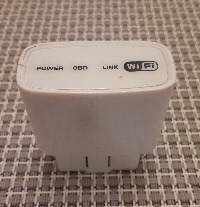
2. A Smartphone or Tablet Device (to install the J-scan app)
3. OBD JScan App
Android: https://play.google.com/store/apps/d...hl=en_US&gl=US
iOS: https://apps.apple.com/us/app/obd-jscan/id1445903514
4. 11mm Wrench (Front Brake Bleeder Valves)
5. 10mm Wrench (Rear Brake Bleeder Valves)
6. Dot 3 Brake Fluid (1QT)
7. DIY Brake Bleeder Tool
- Empty Plastic Bottle with a cap (Clear preferred)
- 2ft of 1/4" ID Clear Tubing

??? - Why would you need to drill a hole near the top of container for the clear tubing? why not just insert the tubing in the open top without the cap. all these extra steps make no sense at all. No tubing hole or air vent holes are needed since the end of the tubing will be at the bottom of the container, submerged in the brake fluid.
In this write-up I'm going to show the least expensive and best way to perform an ABS Brake Module Bleed using the OBD J-Scan app.
Observed Problems where you may want to perform this task:
- You are experience a soft brake pedal.
- You've bled your brake lines multiple times, and are certain you are not able to get anymore air out of your brake lines but your brake pedal still feels soft.
- You suspect your ABS module is bad, and would like to confirm that part is bad before making an expensive part replacement.
- You've replaced your ABS brake module and now need to bleed the module and would like to perform the bleed yourself instead of taking it to the dealership.
- Your brake fluid is old/dirty and you want to perform a COMPLETE brake fluid replacement flush
Tools/Parts Needed:
1. OBD-II Wireless Adapter (Wifi or Bluetooth)
I'm using a V-tech Wifi OBD-II adapter which I purchased in 2010. It was an inexpensive $20 adapter
2. A Smartphone or Tablet Device (to install the J-scan app)
3. OBD JScan App
Android: https://play.google.com/store/apps/d...hl=en_US&gl=US
iOS: https://apps.apple.com/us/app/obd-jscan/id1445903514
4. 11mm Wrench (Front Brake Bleeder Valves)
5. 10mm Wrench (Rear Brake Bleeder Valves)
6. Dot 3 Brake Fluid (1QT)
7. DIY Brake Bleeder Tool
- Empty Plastic Bottle with a cap (Clear preferred)
- 2ft of 1/4" ID Clear Tubing
??? - Why would you need to drill a hole near the top of container for the clear tubing? why not just insert the tubing in the open top without the cap. all these extra steps make no sense at all. No tubing hole or air vent holes are needed since the end of the tubing will be at the bottom of the container, submerged in the brake fluid.

JK Newbie


Joined: Oct 2024
Posts: 14
Likes: 3
From: Saint Joseph, MI
Greetings all,
Thank you Rednroll for creating this thread and sharing your experience. I purchased a license for OBD JScan a couple of years ago so I could customize some of the settings in my 2010 JK Rubi (like the behavior of the fog lamps and daytime running lights). I purchased the JK in 2024 to replace a 1997 TJ Sahara. A previous owner had replaced the factory softtop on the JK with a factory hardtop but never connected the rear window stuff (wiper, washer and defroster). So I installed a hardtop upgrade kit and had to use JScan to enable the rear-window defroster so it would stay on. JScan is a helpful and very useful app. But it is filled with many, many misspellings and poor English. And I found this to be the case with the ABS Brake Pump Bleed procedure.
I tried to use the JScan app to bleed my ABS and was surprised to see that it only asked the user to bleed the front right (passenger front) and rear right (passenger rear) wheels. Three things seemed wrong. First, why start at the front instead of the rear as is normally done when bleeding. Second, JScan never instructs the user to bleed the left side (driver front or driver rear). Third, the app seems to hang at the “Test in progress” message until you tap the Proceed button again. (I was using the OBD JScan app version 01.04.2026.20:45 under Android 14 on a Motorola smartphone with a Vgate iCar Pro OBD-II interface via bluetooth.)
I came here looking to see if anyone knew why JScan’s ABS Brake Pump Bleed procedure ignored the driver side and used confusing terminology like left-right instead of driver-passenger. Rednroll, your instructions did not follow the app and added to the confusion. I appreciated your tips about when and when not to open the bleeder valves. Thank you for that! However, I had to read down to your #6 post where you describe your “Background Story” to understand that you were not confusing “right” with “driver” (in actual fact, “driver” is “left”). Instead, you were suggesting that we ignore JScan’s instructions and bleed all four wheels and bleed them in a different order. To do all four wheels, we must run the ABS Brake Pump Bleed procedure twice. But I’m still not convinced about your order because I expect we should start on the passenger side and do the driver side last.
As I write, it is 2026 and I don’t know if you will see this, but I respectfully suggest that you update your earlier posts, beginning in #4. For example, please explain at Step 9 that you are intentionally disregarding the JScan instruction to begin bleeding the “Right Front” (passenger-side) bleeder valve and you are, instead, suggesting that the reader start with the “Left Front” (driver-side) bleeder. This will alleviate confusion by other new readers who may think, like I did, that you were making a mistake. They should not be expected to read so far beyond this point to understand that you are intentionally modifying the JScan procedure with regard to the wheel bleed order (instead of getting your driver and passenger sides confused).
My own experience (which predates me reading this thread) had mixed results and I ran the JScan procedure twice. After flushing the brake fluid with fresh Amsoil Dot 3/4 Synthetic, I was trying to determine if my soft pedal is the result of a leaking master cylinder or air in the ABS. After reading this thread, I realize that I need to try the ABS Brake Pump Bleed procedure yet again, using Rednroll’s excellent advice about not bleeding until after the first ABS pulse has increased the pressure. And I’ll try repeating the ABS bleed procedure again for the driver side, as well. Then I’ll follow with a standard four-wheel bleed at the end (which I always do).
Hopefully that will help me be certain that the master cylinder needs to be replaced. If it does, the next big question will be whether or not to replace the booster, also. My booster is working fine now. However, when the pistons in the master cylinder start to leak, it is typical for fluid to flow backward into the booster and this shortens its life, too. It’s a pain in the wazoo to replace the booster, but it’s much easier to do while the master cylinder is out. So I’m thinking about doing it at the same time as the master cylinder as a preventative.
I want to stay with Mopar parts but the prices are crazy. Discount prices 09-Apr-2026 at MoparPartsGiant are US$354 for a master cylinder and US$470 for a booster (the list prices are $537 and $712, respectively!!!). Yikes! I’m tempted to upgrade to a Mopar J8 kit for about US$550 (the kit includes both the master cylinder and the booster). However, if I do go the J8 route, I’ll need to add a fluid reservoir for my clutch because I have a manual transmission and the larger J8 reservoir does not have a clutch port.
I just rebuilt the parking brakes with PowerStop shoes and all new hardware. And I upgraded the disc brakes to PowerStop’s KC2798-36 Z36 Truck & Tow Kit with all new calipers. The rotors bedded in well and work great. Believe it or not, this was my first-ever disc brake job. Most of my work has been on old drum brake systems and I’m loving how much easier disc brakes are to service (my first full brake job was on a 1958 British MGA roadster in 1981, this was Morris Garage’s last production race car with racing brakes and a mostly aluminum body). ABS adds a new complexity that, while not trivial, seems simple enough if you have the right software tools. And I live in Michigan where ABS is beloved by everyone come winter.
Thank you Rednroll for creating this thread and sharing your experience. I purchased a license for OBD JScan a couple of years ago so I could customize some of the settings in my 2010 JK Rubi (like the behavior of the fog lamps and daytime running lights). I purchased the JK in 2024 to replace a 1997 TJ Sahara. A previous owner had replaced the factory softtop on the JK with a factory hardtop but never connected the rear window stuff (wiper, washer and defroster). So I installed a hardtop upgrade kit and had to use JScan to enable the rear-window defroster so it would stay on. JScan is a helpful and very useful app. But it is filled with many, many misspellings and poor English. And I found this to be the case with the ABS Brake Pump Bleed procedure.
I tried to use the JScan app to bleed my ABS and was surprised to see that it only asked the user to bleed the front right (passenger front) and rear right (passenger rear) wheels. Three things seemed wrong. First, why start at the front instead of the rear as is normally done when bleeding. Second, JScan never instructs the user to bleed the left side (driver front or driver rear). Third, the app seems to hang at the “Test in progress” message until you tap the Proceed button again. (I was using the OBD JScan app version 01.04.2026.20:45 under Android 14 on a Motorola smartphone with a Vgate iCar Pro OBD-II interface via bluetooth.)
I came here looking to see if anyone knew why JScan’s ABS Brake Pump Bleed procedure ignored the driver side and used confusing terminology like left-right instead of driver-passenger. Rednroll, your instructions did not follow the app and added to the confusion. I appreciated your tips about when and when not to open the bleeder valves. Thank you for that! However, I had to read down to your #6 post where you describe your “Background Story” to understand that you were not confusing “right” with “driver” (in actual fact, “driver” is “left”). Instead, you were suggesting that we ignore JScan’s instructions and bleed all four wheels and bleed them in a different order. To do all four wheels, we must run the ABS Brake Pump Bleed procedure twice. But I’m still not convinced about your order because I expect we should start on the passenger side and do the driver side last.
As I write, it is 2026 and I don’t know if you will see this, but I respectfully suggest that you update your earlier posts, beginning in #4. For example, please explain at Step 9 that you are intentionally disregarding the JScan instruction to begin bleeding the “Right Front” (passenger-side) bleeder valve and you are, instead, suggesting that the reader start with the “Left Front” (driver-side) bleeder. This will alleviate confusion by other new readers who may think, like I did, that you were making a mistake. They should not be expected to read so far beyond this point to understand that you are intentionally modifying the JScan procedure with regard to the wheel bleed order (instead of getting your driver and passenger sides confused).
My own experience (which predates me reading this thread) had mixed results and I ran the JScan procedure twice. After flushing the brake fluid with fresh Amsoil Dot 3/4 Synthetic, I was trying to determine if my soft pedal is the result of a leaking master cylinder or air in the ABS. After reading this thread, I realize that I need to try the ABS Brake Pump Bleed procedure yet again, using Rednroll’s excellent advice about not bleeding until after the first ABS pulse has increased the pressure. And I’ll try repeating the ABS bleed procedure again for the driver side, as well. Then I’ll follow with a standard four-wheel bleed at the end (which I always do).
Hopefully that will help me be certain that the master cylinder needs to be replaced. If it does, the next big question will be whether or not to replace the booster, also. My booster is working fine now. However, when the pistons in the master cylinder start to leak, it is typical for fluid to flow backward into the booster and this shortens its life, too. It’s a pain in the wazoo to replace the booster, but it’s much easier to do while the master cylinder is out. So I’m thinking about doing it at the same time as the master cylinder as a preventative.
I want to stay with Mopar parts but the prices are crazy. Discount prices 09-Apr-2026 at MoparPartsGiant are US$354 for a master cylinder and US$470 for a booster (the list prices are $537 and $712, respectively!!!). Yikes! I’m tempted to upgrade to a Mopar J8 kit for about US$550 (the kit includes both the master cylinder and the booster). However, if I do go the J8 route, I’ll need to add a fluid reservoir for my clutch because I have a manual transmission and the larger J8 reservoir does not have a clutch port.
I just rebuilt the parking brakes with PowerStop shoes and all new hardware. And I upgraded the disc brakes to PowerStop’s KC2798-36 Z36 Truck & Tow Kit with all new calipers. The rotors bedded in well and work great. Believe it or not, this was my first-ever disc brake job. Most of my work has been on old drum brake systems and I’m loving how much easier disc brakes are to service (my first full brake job was on a 1958 British MGA roadster in 1981, this was Morris Garage’s last production race car with racing brakes and a mostly aluminum body). ABS adds a new complexity that, while not trivial, seems simple enough if you have the right software tools. And I live in Michigan where ABS is beloved by everyone come winter.

JK Newbie
Joined: Apr 2023
Posts: 2
Likes: 0
From: North Country, Canada
Tried jscan procedure as well
@FirstLight I too tried the jscan bleed procedure and found other instructions to get the correct line orientations.
I've done this half a dozen times, power bled my entire brake system, swapped stainless lines, new calipers, new master cylinder, and new abs pump vs a rebuild of the pump.
Same results albeit an ever so slight improvement. There has to be air in my lines because I double pumped the brake and it firms up quite well and performs as expected until the next braking cycle.
Maybe the j scan ABS bleed procedure needs further correction.
The only other assumption I have is that somehow air is getting trapped between the master and the ABS pump. The next thing I'm going to try is compressing all four calipers with front and rear lines cracked open at the brake master to try and reverse force any air out in that area. Incredibly unlikely.
I highly doubt any air can get trapped in as I pressure bled at about 18 PSI and have put about 2 gallons of brake fluid through this system.
Good luck in your endeavors.
I've done this half a dozen times, power bled my entire brake system, swapped stainless lines, new calipers, new master cylinder, and new abs pump vs a rebuild of the pump.
Same results albeit an ever so slight improvement. There has to be air in my lines because I double pumped the brake and it firms up quite well and performs as expected until the next braking cycle.
Maybe the j scan ABS bleed procedure needs further correction.
The only other assumption I have is that somehow air is getting trapped between the master and the ABS pump. The next thing I'm going to try is compressing all four calipers with front and rear lines cracked open at the brake master to try and reverse force any air out in that area. Incredibly unlikely.
I highly doubt any air can get trapped in as I pressure bled at about 18 PSI and have put about 2 gallons of brake fluid through this system.
Good luck in your endeavors.
Greetings all,
Thank you Rednroll for creating this thread and sharing your experience. I purchased a license for OBD JScan a couple of years ago so I could customize some of the settings in my 2010 JK Rubi (like the behavior of the fog lamps and daytime running lights). I purchased the JK in 2024 to replace a 1997 TJ Sahara. A previous owner had replaced the factory softtop on the JK with a factory hardtop but never connected the rear window stuff (wiper, washer and defroster). So I installed a hardtop upgrade kit and had to use JScan to enable the rear-window defroster so it would stay on. JScan is a helpful and very useful app. But it is filled with many, many misspellings and poor English. And I found this to be the case with the ABS Brake Pump Bleed procedure.
I tried to use the JScan app to bleed my ABS and was surprised to see that it only asked the user to bleed the front right (passenger front) and rear right (passenger rear) wheels. Three things seemed wrong. First, why start at the front instead of the rear as is normally done when bleeding. Second, JScan never instructs the user to bleed the left side (driver front or driver rear). Third, the app seems to hang at the “Test in progress” message until you tap the Proceed button again. (I was using the OBD JScan app version 01.04.2026.20:45 under Android 14 on a Motorola smartphone with a Vgate iCar Pro OBD-II interface via bluetooth.)
I came here looking to see if anyone knew why JScan’s ABS Brake Pump Bleed procedure ignored the driver side and used confusing terminology like left-right instead of driver-passenger. Rednroll, your instructions did not follow the app and added to the confusion. I appreciated your tips about when and when not to open the bleeder valves. Thank you for that! However, I had to read down to your #6 post where you describe your “Background Story” to understand that you were not confusing “right” with “driver” (in actual fact, “driver” is “left”). Instead, you were suggesting that we ignore JScan’s instructions and bleed all four wheels and bleed them in a different order. To do all four wheels, we must run the ABS Brake Pump Bleed procedure twice. But I’m still not convinced about your order because I expect we should start on the passenger side and do the driver side last.
As I write, it is 2026 and I don’t know if you will see this, but I respectfully suggest that you update your earlier posts, beginning in #4. For example, please explain at Step 9 that you are intentionally disregarding the JScan instruction to begin bleeding the “Right Front” (passenger-side) bleeder valve and you are, instead, suggesting that the reader start with the “Left Front” (driver-side) bleeder. This will alleviate confusion by other new readers who may think, like I did, that you were making a mistake. They should not be expected to read so far beyond this point to understand that you are intentionally modifying the JScan procedure with regard to the wheel bleed order (instead of getting your driver and passenger sides confused).
My own experience (which predates me reading this thread) had mixed results and I ran the JScan procedure twice. After flushing the brake fluid with fresh Amsoil Dot 3/4 Synthetic, I was trying to determine if my soft pedal is the result of a leaking master cylinder or air in the ABS. After reading this thread, I realize that I need to try the ABS Brake Pump Bleed procedure yet again, using Rednroll’s excellent advice about not bleeding until after the first ABS pulse has increased the pressure. And I’ll try repeating the ABS bleed procedure again for the driver side, as well. Then I’ll follow with a standard four-wheel bleed at the end (which I always do).
Hopefully that will help me be certain that the master cylinder needs to be replaced. If it does, the next big question will be whether or not to replace the booster, also. My booster is working fine now. However, when the pistons in the master cylinder start to leak, it is typical for fluid to flow backward into the booster and this shortens its life, too. It’s a pain in the wazoo to replace the booster, but it’s much easier to do while the master cylinder is out. So I’m thinking about doing it at the same time as the master cylinder as a preventative.
I want to stay with Mopar parts but the prices are crazy. Discount prices 09-Apr-2026 at MoparPartsGiant are US$354 for a master cylinder and US$470 for a booster (the list prices are $537 and $712, respectively!!!). Yikes! I’m tempted to upgrade to a Mopar J8 kit for about US$550 (the kit includes both the master cylinder and the booster). However, if I do go the J8 route, I’ll need to add a fluid reservoir for my clutch because I have a manual transmission and the larger J8 reservoir does not have a clutch port.
I just rebuilt the parking brakes with PowerStop shoes and all new hardware. And I upgraded the disc brakes to PowerStop’s KC2798-36 Z36 Truck & Tow Kit with all new calipers. The rotors bedded in well and work great. Believe it or not, this was my first-ever disc brake job. Most of my work has been on old drum brake systems and I’m loving how much easier disc brakes are to service (my first full brake job was on a 1958 British MGA roadster in 1981, this was Morris Garage’s last production race car with racing brakes and a mostly aluminum body). ABS adds a new complexity that, while not trivial, seems simple enough if you have the right software tools. And I live in Michigan where ABS is beloved by everyone come winter.
Thank you Rednroll for creating this thread and sharing your experience. I purchased a license for OBD JScan a couple of years ago so I could customize some of the settings in my 2010 JK Rubi (like the behavior of the fog lamps and daytime running lights). I purchased the JK in 2024 to replace a 1997 TJ Sahara. A previous owner had replaced the factory softtop on the JK with a factory hardtop but never connected the rear window stuff (wiper, washer and defroster). So I installed a hardtop upgrade kit and had to use JScan to enable the rear-window defroster so it would stay on. JScan is a helpful and very useful app. But it is filled with many, many misspellings and poor English. And I found this to be the case with the ABS Brake Pump Bleed procedure.
I tried to use the JScan app to bleed my ABS and was surprised to see that it only asked the user to bleed the front right (passenger front) and rear right (passenger rear) wheels. Three things seemed wrong. First, why start at the front instead of the rear as is normally done when bleeding. Second, JScan never instructs the user to bleed the left side (driver front or driver rear). Third, the app seems to hang at the “Test in progress” message until you tap the Proceed button again. (I was using the OBD JScan app version 01.04.2026.20:45 under Android 14 on a Motorola smartphone with a Vgate iCar Pro OBD-II interface via bluetooth.)
I came here looking to see if anyone knew why JScan’s ABS Brake Pump Bleed procedure ignored the driver side and used confusing terminology like left-right instead of driver-passenger. Rednroll, your instructions did not follow the app and added to the confusion. I appreciated your tips about when and when not to open the bleeder valves. Thank you for that! However, I had to read down to your #6 post where you describe your “Background Story” to understand that you were not confusing “right” with “driver” (in actual fact, “driver” is “left”). Instead, you were suggesting that we ignore JScan’s instructions and bleed all four wheels and bleed them in a different order. To do all four wheels, we must run the ABS Brake Pump Bleed procedure twice. But I’m still not convinced about your order because I expect we should start on the passenger side and do the driver side last.
As I write, it is 2026 and I don’t know if you will see this, but I respectfully suggest that you update your earlier posts, beginning in #4. For example, please explain at Step 9 that you are intentionally disregarding the JScan instruction to begin bleeding the “Right Front” (passenger-side) bleeder valve and you are, instead, suggesting that the reader start with the “Left Front” (driver-side) bleeder. This will alleviate confusion by other new readers who may think, like I did, that you were making a mistake. They should not be expected to read so far beyond this point to understand that you are intentionally modifying the JScan procedure with regard to the wheel bleed order (instead of getting your driver and passenger sides confused).
My own experience (which predates me reading this thread) had mixed results and I ran the JScan procedure twice. After flushing the brake fluid with fresh Amsoil Dot 3/4 Synthetic, I was trying to determine if my soft pedal is the result of a leaking master cylinder or air in the ABS. After reading this thread, I realize that I need to try the ABS Brake Pump Bleed procedure yet again, using Rednroll’s excellent advice about not bleeding until after the first ABS pulse has increased the pressure. And I’ll try repeating the ABS bleed procedure again for the driver side, as well. Then I’ll follow with a standard four-wheel bleed at the end (which I always do).
Hopefully that will help me be certain that the master cylinder needs to be replaced. If it does, the next big question will be whether or not to replace the booster, also. My booster is working fine now. However, when the pistons in the master cylinder start to leak, it is typical for fluid to flow backward into the booster and this shortens its life, too. It’s a pain in the wazoo to replace the booster, but it’s much easier to do while the master cylinder is out. So I’m thinking about doing it at the same time as the master cylinder as a preventative.
I want to stay with Mopar parts but the prices are crazy. Discount prices 09-Apr-2026 at MoparPartsGiant are US$354 for a master cylinder and US$470 for a booster (the list prices are $537 and $712, respectively!!!). Yikes! I’m tempted to upgrade to a Mopar J8 kit for about US$550 (the kit includes both the master cylinder and the booster). However, if I do go the J8 route, I’ll need to add a fluid reservoir for my clutch because I have a manual transmission and the larger J8 reservoir does not have a clutch port.
I just rebuilt the parking brakes with PowerStop shoes and all new hardware. And I upgraded the disc brakes to PowerStop’s KC2798-36 Z36 Truck & Tow Kit with all new calipers. The rotors bedded in well and work great. Believe it or not, this was my first-ever disc brake job. Most of my work has been on old drum brake systems and I’m loving how much easier disc brakes are to service (my first full brake job was on a 1958 British MGA roadster in 1981, this was Morris Garage’s last production race car with racing brakes and a mostly aluminum body). ABS adds a new complexity that, while not trivial, seems simple enough if you have the right software tools. And I live in Michigan where ABS is beloved by everyone come winter.
JK Newbie
Joined: Oct 2024
Posts: 14
Likes: 3
From: Saint Joseph, MI
What “other instructions” have you found and what do you mean by “line orientations”? I would like to know what they are and understand this process better.
I checked with the JScan website here (https://jscan-docs.readthedocs.io/en...r-jk-2007-2018) and all they say is:
ABS Pump Bleed
It’s PUMP bleed, not a full brake system bleed. It’s to be done after a regular brake bleed.
Note: Yes, it does bleed only one side. By design.
It’s PUMP bleed, not a full brake system bleed. It’s to be done after a regular brake bleed.
Note: Yes, it does bleed only one side. By design.
I have also heard similar reports as Rednroll reported from other sources. The gist of it is this: ABS brake pump bleeding is not a precise process. It is difficult to accomplish and sometimes takes repetition for success. So running the procedure multiple times and included both the passenger and driver sides seems plausible. One of the biggest challenges seems to be the migration of air through the system. In other words, the bleeding process may move the air from one location to another but not eliminate it.
It would be nice if a knowledgeable mechanic or brake engineer would shed some light on this. I’d like to understand it because I get the feeling that many mechanics do not and it is yet another reason why we can do a better job if we do it ourselves.