


OBX Permit

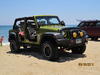
Thread Starter
JK Enthusiast
Joined: Aug 2007
Posts: 453
Likes: 0
From: baltimore md

Sorry I don't seem to be able to edit my posts everything is white Anyway here are some changes I just love that we are not allowed to park our vehicles to block the wind so I guess we just get sand blasted.
•It is true, as the environmental groups note in their press release and have emphasized before, that 28 miles of the seashore’s 67 or so miles are set aside for ORV routes, “only” 26 miles are set aside as “vehicle-free” areas, and 13 miles are seasonally open to ORVs. However, remember that many of the 28 miles of designated ORV routes will be closed to vehicles – and pedestrians – during nesting season, which is basically from March through August.
•If you want to come to the seashore, get a permit, and drive to the beach in your ORV during the nesting season, you will be able to get to the beach, but not necessarily the area of the beach you want to get to. That may be closed for nesting birds and turtles.
•And we note again that while environmental groups are very pleased to have these vehicle-free areas set aside for pedestrians only, even pedestrians can expect to be prohibited in many areas during nesting season.
•Night driving will be prohibited from May 1-Sept. 14 during the hours of 9 p.m. and 7 a.m. Under the consent decree, driving is prohibited from 10 p.m. until 6 a.m.
•Vehicles can park on the beach in the ORV areas in single file – not double parking or “circling the wagons” for a wind block.
•There will be no limit on the number of permits sold, but there will be a carrying capacity on the beach. The maximum number of vehicles allowed on any ORV route at one time is the length of the route – or portion of the route that is open divided by 6 meters, which is 20 feet. This is the equivalent of 260 vehicles per mile.
•The ORV permit goes with the vehicle, not the driver. So if you have more than one vehicle you drive to the beach, you will need a permit for each one.
Anyway here are some changes I just love that we are not allowed to park our vehicles to block the wind so I guess we just get sand blasted.•It is true, as the environmental groups note in their press release and have emphasized before, that 28 miles of the seashore’s 67 or so miles are set aside for ORV routes, “only” 26 miles are set aside as “vehicle-free” areas, and 13 miles are seasonally open to ORVs. However, remember that many of the 28 miles of designated ORV routes will be closed to vehicles – and pedestrians – during nesting season, which is basically from March through August.
•If you want to come to the seashore, get a permit, and drive to the beach in your ORV during the nesting season, you will be able to get to the beach, but not necessarily the area of the beach you want to get to. That may be closed for nesting birds and turtles.
•And we note again that while environmental groups are very pleased to have these vehicle-free areas set aside for pedestrians only, even pedestrians can expect to be prohibited in many areas during nesting season.
•Night driving will be prohibited from May 1-Sept. 14 during the hours of 9 p.m. and 7 a.m. Under the consent decree, driving is prohibited from 10 p.m. until 6 a.m.
•Vehicles can park on the beach in the ORV areas in single file – not double parking or “circling the wagons” for a wind block.
•There will be no limit on the number of permits sold, but there will be a carrying capacity on the beach. The maximum number of vehicles allowed on any ORV route at one time is the length of the route – or portion of the route that is open divided by 6 meters, which is 20 feet. This is the equivalent of 260 vehicles per mile.
•The ORV permit goes with the vehicle, not the driver. So if you have more than one vehicle you drive to the beach, you will need a permit for each one.

JK Newbie
Joined: Jun 2011
Posts: 58
Likes: 0
From: Clayton, NC
Permits cost $50.00 for a week or $120.00 for a year.
http://outerbanksvoice.com/2012/02/0...permit-prices/
http://outerbanksvoice.com/2012/02/0...permit-prices/
Thread Starter
JK Enthusiast
Joined: Aug 2007
Posts: 453
Likes: 0
From: baltimore md
 thanks for the update. I just can't wait to watch the 7 min video. We are going this year and we will see how much has changed. I remember when we would go out to eat in Avon and drive all the way back to waves on the beach. This will never happen again. My kids are already asking when we are going back I just can't imagine not taking them to the obx next year. Even my jeep tag is OBX JK. I am 33 and grew up going to the OBX I wanted to continue this tradition with my kids but sadly I think it may come to an end. Already all the traditions that we had are slowly coming to an end can't even drive up on the beach to have a fire well we can if want to be off by 9