


Direct to battery with wiring.

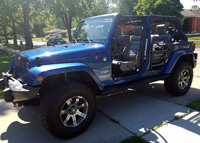
JK Jedi
Joined: Apr 2010
Posts: 4,468
Likes: 221
From: SE Michigan

JK Jedi Master

Joined: Feb 2008
Posts: 12,907
Likes: 185
From: Maine

So, the JK, being a newer vehicle, has no mechanical relays?
Last edited by ronjenx; Apr 8, 2011 at 12:14 PM.

JK Junkie
Joined: Nov 2008
Posts: 3,297
Likes: 8
From: Cabot, Ar.
It sounds like with your 30+ years of experience, you need to come out of the dark ages and get up to date.
You mention all the good things of a relay, but fail to mention any of the bad things. In all essence a relay is a "switch". So all the bad things you mention about a switch also apply to a relay. A relay is a mechanical device which has metal moving parts and a spring. It is therefore susceptible to things like moisture, dirt and corrosion....3 things that are very present in an automotive environment. A relay is able to pass high amounts of current through this mechanical device. Have you ever connected a wire to a battery which was connected to a circuit which draws a lot of current? I would hope you have in your 30 years of electronics. What did you observe? Probably an spark ARC right? What do you think happens in a relay circuit when the relay switch gets closed? An arc spark, in a device which is enclosed in plastic. If you've used a relay with a clear housing, you can even see this spark occur when the relay closes. Sparks combined with plastic....what's that open the potential of happening? FIRE!!! Starting from inside the relay. Did I mention there's also a spring mechanism inside of that relay? So what happens with a spring when you drive down a bumpy road? The spring bounces, causing the switch to momentarily open and close....now your lights are flashing on an off driving over bumps....and guess what? The whole time that's happening arcing is happening inside of the relay.
When you pass high amounts of current through a wire what happens to that wire? The wire heats up. What is the part that opens/closes inside of a relay? A metal piece of wire which heats up just the same. What happens when you put a hot object into a colder environment, which often occurs in a automotive application? It causes condensation to occur inside of that part. And what is condensation? WATER. What happens when you mix electronics and water together? Nothing good....it causes short circuits, and inside of a relay it causes corrosion to form between the metal parts.
Since the relay is a mechanical device made of metal moving parts, what happens to any metal part that moves over time? It wears out and becomes weak....again causing the relay to fail.....and additionally increasing the chances of more arcing to occur inside the relay, since those parts become weaker and even more susceptible to "vibrations".....which are VERY present inside of a vehicle.
And you want to put these relays inside of the engine compartment don't you? An environment which is surrounded by heat, moisture, and dirt the most. The exact kind of environment that causes failures within the relay to most likely happen.
Sure a relay will work great after it's 1st installed.....now what happens to it over time due to being used in that engine compartment, surrounded by all those elements I just mentioned? It fails and it can fail in a manor that causes fire or just makes it so your lights don't work when you most likely need them.
Sure Relays were used all the time 30 years ago in automobile electronic applications. EVERY automotive manufacturer has moved away from using relays for the EXACT same reasons I mentioned. What are they using instead? MOSFETS. An electronic device which is able to have a small signal voltage turn on/off and pass a large current voltage signal. The EXACT same application that a RELAY does. Yet, a MOSFET has NONE of the mechanical properties that a relay has, and can serve the same purpose as a relay, yet is resilient to all the automotive environment elements that can cause a relay to fail, since it's made from silicon with no metal moving parts.
Maybe 30+ years ago MOSFETS where only used in "radios", but today they're a much more capable device, which is able to handle high amounts of current being driven through them.
So take your 30+ years of electronics experience and shove it up your ass, jack-ass. You don't know as much about electronics as you "think" you know, and you certainly have no experience understanding what can and will happen to certain electronic devices like a RELAY in an automotive environment, because no one with an electrical engineering background who has worked in the automotive industry would EVER suggest using a relay in an automotive environment except some electronics hack, given the fact that there's a much more robust and safer device that could be used instead.....and weren't you the one who said "there are many opinions on how to do this job. But there are very few ways to do it right. Yeah, so do the job RIGHT then Jackass.
He's wiring to the M8/M9 fuse sockets which are turned on/off through the ignition key.....and where those connections are most likely turned on and off through a Mosfet by the way. So your comments about accidentally leaving the switch on and killing the battery doesn't apply, unless he also forgets and leaves his key and ignition turned on also.......additionally, the relay is able to do the same thing when corrosion starts to form, or start to become weak due to vibrations....and corrosion WILL start to form inside of a relay over time and the spring inside of the relay WILL become weaker over time, causing the relay to close the switch inside of itself by itself.
Once again, ALL the things you mentioned about a switch can also occur with a relay.....because a relay is a switch.....just one where a smaller voltage is applied to a coil of wire, which causes a magnetic field to open and close that switch.
You mention all the good things of a relay, but fail to mention any of the bad things. In all essence a relay is a "switch". So all the bad things you mention about a switch also apply to a relay. A relay is a mechanical device which has metal moving parts and a spring. It is therefore susceptible to things like moisture, dirt and corrosion....3 things that are very present in an automotive environment. A relay is able to pass high amounts of current through this mechanical device. Have you ever connected a wire to a battery which was connected to a circuit which draws a lot of current? I would hope you have in your 30 years of electronics. What did you observe? Probably an spark ARC right? What do you think happens in a relay circuit when the relay switch gets closed? An arc spark, in a device which is enclosed in plastic. If you've used a relay with a clear housing, you can even see this spark occur when the relay closes. Sparks combined with plastic....what's that open the potential of happening? FIRE!!! Starting from inside the relay. Did I mention there's also a spring mechanism inside of that relay? So what happens with a spring when you drive down a bumpy road? The spring bounces, causing the switch to momentarily open and close....now your lights are flashing on an off driving over bumps....and guess what? The whole time that's happening arcing is happening inside of the relay.
When you pass high amounts of current through a wire what happens to that wire? The wire heats up. What is the part that opens/closes inside of a relay? A metal piece of wire which heats up just the same. What happens when you put a hot object into a colder environment, which often occurs in a automotive application? It causes condensation to occur inside of that part. And what is condensation? WATER. What happens when you mix electronics and water together? Nothing good....it causes short circuits, and inside of a relay it causes corrosion to form between the metal parts.
Since the relay is a mechanical device made of metal moving parts, what happens to any metal part that moves over time? It wears out and becomes weak....again causing the relay to fail.....and additionally increasing the chances of more arcing to occur inside the relay, since those parts become weaker and even more susceptible to "vibrations".....which are VERY present inside of a vehicle.
And you want to put these relays inside of the engine compartment don't you? An environment which is surrounded by heat, moisture, and dirt the most. The exact kind of environment that causes failures within the relay to most likely happen.
Sure a relay will work great after it's 1st installed.....now what happens to it over time due to being used in that engine compartment, surrounded by all those elements I just mentioned? It fails and it can fail in a manor that causes fire or just makes it so your lights don't work when you most likely need them.
Sure Relays were used all the time 30 years ago in automobile electronic applications. EVERY automotive manufacturer has moved away from using relays for the EXACT same reasons I mentioned. What are they using instead? MOSFETS. An electronic device which is able to have a small signal voltage turn on/off and pass a large current voltage signal. The EXACT same application that a RELAY does. Yet, a MOSFET has NONE of the mechanical properties that a relay has, and can serve the same purpose as a relay, yet is resilient to all the automotive environment elements that can cause a relay to fail, since it's made from silicon with no metal moving parts.
Maybe 30+ years ago MOSFETS where only used in "radios", but today they're a much more capable device, which is able to handle high amounts of current being driven through them.
So take your 30+ years of electronics experience and shove it up your ass, jack-ass. You don't know as much about electronics as you "think" you know, and you certainly have no experience understanding what can and will happen to certain electronic devices like a RELAY in an automotive environment, because no one with an electrical engineering background who has worked in the automotive industry would EVER suggest using a relay in an automotive environment except some electronics hack, given the fact that there's a much more robust and safer device that could be used instead.....and weren't you the one who said "there are many opinions on how to do this job. But there are very few ways to do it right. Yeah, so do the job RIGHT then Jackass.
He's wiring to the M8/M9 fuse sockets which are turned on/off through the ignition key.....and where those connections are most likely turned on and off through a Mosfet by the way. So your comments about accidentally leaving the switch on and killing the battery doesn't apply, unless he also forgets and leaves his key and ignition turned on also.......additionally, the relay is able to do the same thing when corrosion starts to form, or start to become weak due to vibrations....and corrosion WILL start to form inside of a relay over time and the spring inside of the relay WILL become weaker over time, causing the relay to close the switch inside of itself by itself.
Once again, ALL the things you mentioned about a switch can also occur with a relay.....because a relay is a switch.....just one where a smaller voltage is applied to a coil of wire, which causes a magnetic field to open and close that switch.


No one that I know of has been able to find any relays related to the lighting systems on our Jeeps. Or fuses for those circuits either. This aplication is similar to the PLC's that I work with in a major industrial facility "Every Day", These systems can have one or more common power source to handel all of the outputs. The input logic when compared to the internal logic determins the output. And, I'm not an electronics teck, but I'm pretty sure that the switching is done by some sort of triac. And not a mosfet. Well, I havn't gotten any radio communications from outer space yet.

JK Jedi
Joined: Apr 2010
Posts: 4,468
Likes: 221
From: SE Michigan
The JK has relays, what kind is the real question? If you open up your fuse box under your hood you will see some grey boxes with the "OMRON" name on it. OMRON is one of the largest suppliers of relays. Well, guess what? They also make "Mos Fet" relays....and this is where the trend is headed, since it's a much more reliable device.
Here's a OMRON brochure for you, where you can read the advantages of "MOSFETs" being used as a relay, over your typical mechanical relays.
http://www.alliedelec.com/images/pro...OSFETRelay.pdf
This should be some interesting reading also, since when I mention the word using a "MOSFET" as a relay, this Jackass's eyes glaze over where he tries to make radio jokes in an effort to hide what little he really knows, while pretending he's some kind of expert in power distribution. He further tries to throw out names of devices like "Triac" which are also used as a similar solid state switching device.....but are usually used in AC voltage applications and not DC voltage systems, which are typical in an automobile with it's DC battery.
http://en.wikipedia.org/wiki/Solid_state_relay
Here's a OMRON brochure for you, where you can read the advantages of "MOSFETs" being used as a relay, over your typical mechanical relays.
http://www.alliedelec.com/images/pro...OSFETRelay.pdf
This should be some interesting reading also, since when I mention the word using a "MOSFET" as a relay, this Jackass's eyes glaze over where he tries to make radio jokes in an effort to hide what little he really knows, while pretending he's some kind of expert in power distribution. He further tries to throw out names of devices like "Triac" which are also used as a similar solid state switching device.....but are usually used in AC voltage applications and not DC voltage systems, which are typical in an automobile with it's DC battery.
http://en.wikipedia.org/wiki/Solid_state_relay
Last edited by Rednroll; Apr 9, 2011 at 07:26 AM.
JK Jedi Master
Joined: Feb 2008
Posts: 12,907
Likes: 185
From: Maine
The JK has relays, what kind is the real question? If you open up your fuse box under your hood you will see some grey boxes with the "OMRON" name on it. OMRON is one of the largest suppliers of relays. Well, guess what? They also make "Mos Fet" relays....and this is where the trend is headed, since it's a much more reliable device.
Here's a OMRON brochure for you, where you can read the advantages of "MOSFETs" being used as a relay, over your typical mechanical relays.
http://www.alliedelec.com/images/pro...OSFETRelay.pdf
Here's a OMRON brochure for you, where you can read the advantages of "MOSFETs" being used as a relay, over your typical mechanical relays.
http://www.alliedelec.com/images/pro...OSFETRelay.pdf
Your statements in your post I previously quoted got me thinking. So I went out to the Jeep to check a few things.
I can see 10 relays. The ones I can check, make noise when they actuate, can be felt when they actuate, have the diagram on the side for a mechanical relay, and are depicted in the wiring diagrams as mechanical relays.
Now, I would believe there are some fully electronic "relays" in the TIPM. The wiring diagrams just show a box, labeled "Electronics" where this type of power control is represented.
So, to cut someone down for suggesting the use of a relay in a lighting circuit, and base it on the fact engineers and auto manufactures know better now and no longer use them, appears inaccurate, and a little extreme.
Last edited by ronjenx; Apr 9, 2011 at 07:19 AM.

Thread Starter
JK Junkie
Joined: Mar 2009
Posts: 2,368
Likes: 0
From: Scottsdale, AZ
Lol so many words but I just did the M8 fuse tap thing problem solved. Had to drive around to several different auto stores all they had were the regular sized ones till I found one with the 1 mini style fuse tap in the area haha. Definitely worth it I can run my PIAA lights and my fog lights all independent the key just has to be in the ignition. I just need to buy some wire loom to make the job look clean
Thank You guys so much for all of your answers
Thank You guys so much for all of your answers
JK Jedi
Joined: Apr 2010
Posts: 4,468
Likes: 221
From: SE Michigan
I'm not doubting the benefits of MOSFETS. I agree with all that.
Your statements in your post I previously quoted got me thinking. So I went out to the Jeep to check a few things.
I can see 10 relays. The ones I can check, make noise when they actuate, can be felt when they actuate, have the diagram on the side for a mechanical relay, and are depicted in the wiring diagrams as mechanical relays.
Now, I would believe there are some fully electronic "relays" in the TIPM. The wiring diagrams just show a box, labeled "Electronics" where this type of power control is represented.
So, to cut someone down for suggesting the use of a relay in a lighting circuit, and base it on the fact engineers and auto manufactures know better now and no longer use them, appears inaccurate, and a little extreme.
Your statements in your post I previously quoted got me thinking. So I went out to the Jeep to check a few things.
I can see 10 relays. The ones I can check, make noise when they actuate, can be felt when they actuate, have the diagram on the side for a mechanical relay, and are depicted in the wiring diagrams as mechanical relays.
Now, I would believe there are some fully electronic "relays" in the TIPM. The wiring diagrams just show a box, labeled "Electronics" where this type of power control is represented.
So, to cut someone down for suggesting the use of a relay in a lighting circuit, and base it on the fact engineers and auto manufactures know better now and no longer use them, appears inaccurate, and a little extreme.
If you want to defend this jackass and jump on the jackass bandwagon, where he's done nothing to assist the OP, but instead has come in here and quoted my posts and critiqued them from the start, when I was just trying to assist the OP, then so be it. Feel free to jump on the jackass bandwagon, because obviously there's not enough jackasses in this forum.
Go read back....I was the original one who pointed out the concern for "Fire" and made a suggestion to help reduce that risk, without trying to over complicate and thus overwhelm the OP...."Jackass comes in and critiques MY post". I outline how the fuse holder he chose is a good idea, and mention he may not need a relay....Jackass comes back in quotes and critiques MY post. WELL FUCK YOU GUYS!!! I'm NOT the one looking for the help. I have an electronics background.....It's obvious you jackasses just want to come in here and ACT like you're smart, without ever assisting anyone. We got the post critiquing crew of SISKEL AND FUCKING EBERT, who do nothing but critique others jumping in to assist and don't actually try to help anyone. SO FUCK YOU JACKASSES!!! Now how's that for Harsh and extreme BITCH?!
How about some more radio jokes, since you jackasses obviously have no idea about how a MOSFET works??? Can we please get some more of those, because those are pretty helpful....and oh sooooooo hilarious. Or how about throwing out device names like "Triac" to try and act like you're smart again......Here, this should show you how smart this guys is.....go read about a TRIAC and see how it's used in AC circuits.....NOT DC circuits.....oh and why is it even called a "Triac".....because it's a Triode used for AC circuit, where the "AC" on the end of its name even indicates it's intended for AC applications......but he's "Pretty Certain" the JK uses TRIACS for power distribution and NOT MOSFETS....Yeah!!! Let's use an AC voltage switching device...to distribute our DC voltages around the JK.....and he even tried to make it sound so convincing, like he knew what he was talking about.

http://en.wikipedia.org/wiki/TRIAC
Yep....fucking electronic hacks, critiquing other people while at the same time trying to throw out electronic terms, that will easily confuse anyone without an electronics background to try to act like they know what they're talking about.......Next time, the jackass crew try to throw that kind of B.S. out there while criticizing someone at the same time....you should damn well make sure there's not an electrical engineer present in the conversation.
Last edited by Rednroll; Apr 9, 2011 at 10:01 AM.
JK Junkie
Joined: Nov 2008
Posts: 3,297
Likes: 8
From: Cabot, Ar.