

Headlight Mod suggestions


Thread Starter
JK Newbie
Joined: Mar 2010
Posts: 1
Likes: 0
From: Raleigh, NC
 Headlight Mod suggestions
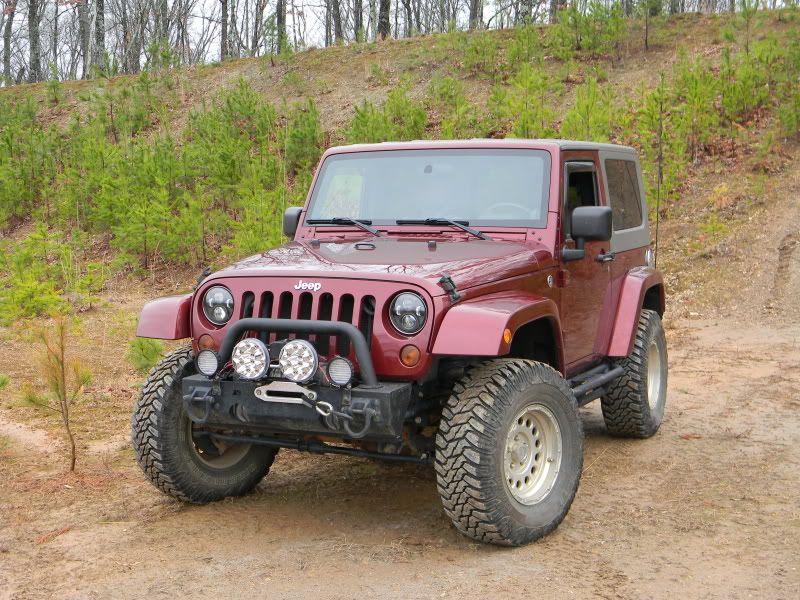
2009 Wrangler X w/ Silverstar lamps in stock headlights. Wife was driving in western NC earlier this week and was very uncomfortable w/ lights...unfamilear roads. Late. Very dark. Even the silverstars aren't enough. Our other rides have HID so the Jeep really kinda sucks. So who has upgraded headlights using what that's proved satisfactory? Considering Quadratech IPF upgrade kit and I see it's also available at Northridge at a discount w/ free shipping. Any and all opinions will be appreciated! 
JK Enthusiast
Joined: Mar 2010
Posts: 189
Likes: 0
From: peg,mb
IPF upgrade from northridge is the best deal going and from what I have gathered, makes a huge difference while staying legal. Check out the project JK site, Eddie has the wright up and pictures with before and afters. Putting HIDs in the crappy factory housings dosnt net a whole lot, as the light isn't focused correctly.
JK Enthusiast
Joined: Apr 2008
Posts: 368
Likes: 0
From: Quantico, VA
IPFs are the worst H4 reflector made as far as photometry goes; they don't comply with ECE or DOT regulations aren't even legal to run in any civilized country.
Silverstar bulbs are never an upgrade. They're tinted rubbish.
If you want the best H13 bulb in your stock reflector, get a Phillips Xtreme Power +80.
If you want it to work the best it can, run a set of relays on a harness and feed them another 1.5 volts.
If you really want better lights, get a set of Cibie H4 reflectors, H4 Phillips Xtreme Power bulbs, and a relayed harness.
Or go LED like I did...
Silverstar bulbs are never an upgrade. They're tinted rubbish.
Originally Posted by Daniel Stern
Blue and violet are very difficult for the human optical system to process correctly. They are the shortest visible wavelengths and tend to focus in front of our eyes' retinae, rather than upon it. To demonstrate this to yourself, find a dark blue store front sign or something else that's a dark, pure blue against a dark background in the absence of white light—from any appreciable distance, it's almost impossible for your eyes to see the blue lighted object as a sharply defined form;the edges blur significantly. Deep blue runway lights exhibit the same effect; check it out the next time you land at night.
Blue also is a very difficult color of light to look at; it stimulates the reaction we call glare. Within the range of allowable white light, bluer headlamps have been shown to be 46% more glaring than yellower ones for a given intensity of light...
...The visible spectrum consists of all the colors of the rainbow: Red, orange, yellow, green, blue, and indigo + violet. Glowing filaments produce a whole lot of light in the red-orange-yellow-green wavelengths, and only very little light in the blue-violet wavelengths. To put very rough numbers on the matter, a 9006 bulb produces 1000 lumens, of which approximately 250 are red, 250 are orange, 250 are yellow, 175 are green, 50 are blue and 25 are violet.
Now, suppose we want to add a filter to the glass that makes the light look bluer/colder. How does it do that? Well, there's no such thing as a filter that adds light into the beam passing through it; filters can only suppress light, not add it. So if we can't add green-blue-violet light, then the only way to get the light to look colder is to suppress green-blue-violet's opposites, which are red-orange-yellow. If we want the light to look, let's say, 20% colder, we suppress red-orange-yellow by 20%. Looking up above, we see that we've got a total of 750 lumens' worth of red, orange and yellow. So, cutting this by 20% leaves 600 lumens, plus essentially all of the bulb's original green-blue-violet output of 250 lumens, so we've now got a bulb that produces light that looks 20% colder and produces 850 lumens.
850 lumens happens to be the minimum legal output for a 9006. Unless we're craven marketeers who don't care about compliance or performance, we can't produce a bulb that produces only the bare minimum of light, because 50% of production will be 849 lumens or less. So, we have to put in a high-luminance filament to try to counteract some of the filtering losses. BUT we still have to come in under the max-allowable-wattage spec in DOT or ECE regulations.
So, let's say we build our 9006 with a super-duper filament that produces 1200 lumens. That's too much for a 9006, but we're going to take away some of those lumens with our colored filter (blue glass). This 1200-lumen filament produces, let's say, 300 lumens red, 300 lumens orange, 300 lumens yellow, 210 lumens green, 60 lumens blue and 30 lumens violet. Now we put that same blue glass over it, which suppresses red-orange-yellow by 20%. Now we've got 720 lumens' worth of red-orange-yellow after filtration, plus 300 lumens' worth of green-blue-violet. That gives us a 910-lumen bulb, which is enough above the 850-lumen legal "floor" that we can run the bulb and even if some filaments only produce 1150 lumens instead of 1200, we're still legally OK. Of course, we still only have 910 lumens instead of 1000, and our 1200-lumen filament is going to have a significantly shorter life than a 1000-lumen filament, but we've got our colder/bluer light appearance in a legal bulb.
Blue also is a very difficult color of light to look at; it stimulates the reaction we call glare. Within the range of allowable white light, bluer headlamps have been shown to be 46% more glaring than yellower ones for a given intensity of light...
...The visible spectrum consists of all the colors of the rainbow: Red, orange, yellow, green, blue, and indigo + violet. Glowing filaments produce a whole lot of light in the red-orange-yellow-green wavelengths, and only very little light in the blue-violet wavelengths. To put very rough numbers on the matter, a 9006 bulb produces 1000 lumens, of which approximately 250 are red, 250 are orange, 250 are yellow, 175 are green, 50 are blue and 25 are violet.
Now, suppose we want to add a filter to the glass that makes the light look bluer/colder. How does it do that? Well, there's no such thing as a filter that adds light into the beam passing through it; filters can only suppress light, not add it. So if we can't add green-blue-violet light, then the only way to get the light to look colder is to suppress green-blue-violet's opposites, which are red-orange-yellow. If we want the light to look, let's say, 20% colder, we suppress red-orange-yellow by 20%. Looking up above, we see that we've got a total of 750 lumens' worth of red, orange and yellow. So, cutting this by 20% leaves 600 lumens, plus essentially all of the bulb's original green-blue-violet output of 250 lumens, so we've now got a bulb that produces light that looks 20% colder and produces 850 lumens.
850 lumens happens to be the minimum legal output for a 9006. Unless we're craven marketeers who don't care about compliance or performance, we can't produce a bulb that produces only the bare minimum of light, because 50% of production will be 849 lumens or less. So, we have to put in a high-luminance filament to try to counteract some of the filtering losses. BUT we still have to come in under the max-allowable-wattage spec in DOT or ECE regulations.
So, let's say we build our 9006 with a super-duper filament that produces 1200 lumens. That's too much for a 9006, but we're going to take away some of those lumens with our colored filter (blue glass). This 1200-lumen filament produces, let's say, 300 lumens red, 300 lumens orange, 300 lumens yellow, 210 lumens green, 60 lumens blue and 30 lumens violet. Now we put that same blue glass over it, which suppresses red-orange-yellow by 20%. Now we've got 720 lumens' worth of red-orange-yellow after filtration, plus 300 lumens' worth of green-blue-violet. That gives us a 910-lumen bulb, which is enough above the 850-lumen legal "floor" that we can run the bulb and even if some filaments only produce 1150 lumens instead of 1200, we're still legally OK. Of course, we still only have 910 lumens instead of 1000, and our 1200-lumen filament is going to have a significantly shorter life than a 1000-lumen filament, but we've got our colder/bluer light appearance in a legal bulb.
If you want it to work the best it can, run a set of relays on a harness and feed them another 1.5 volts.
If you really want better lights, get a set of Cibie H4 reflectors, H4 Phillips Xtreme Power bulbs, and a relayed harness.
Or go LED like I did...
JK Enthusiast
Joined: Aug 2009
Posts: 438
Likes: 0
From: Tucson
Originally Posted by Hilldweller
IPFs are the worst H4 reflector made as far as photometry goes; they don't comply with ECE or DOT regulations aren't even legal to run in any civilized country.
Silverstar bulbs are never an upgrade. They're tinted rubbish.
If you want the best H13 bulb in your stock reflector, get a Phillips Xtreme Power +80.
If you want it to work the best it can, run a set of relays on a harness and feed them another 1.5 volts.
If you really want better lights, get a set of Cibie H4 reflectors, H4 Phillips Xtreme Power bulbs, and a relayed harness.
Or go LED like I did...
Silverstar bulbs are never an upgrade. They're tinted rubbish.
If you want the best H13 bulb in your stock reflector, get a Phillips Xtreme Power +80.
If you want it to work the best it can, run a set of relays on a harness and feed them another 1.5 volts.
If you really want better lights, get a set of Cibie H4 reflectors, H4 Phillips Xtreme Power bulbs, and a relayed harness.
Or go LED like I did...
JK Enthusiast
Joined: Apr 2008
Posts: 368
Likes: 0
From: Quantico, VA
I've seen the JW Speakers sell for as much as $800 each and for as little as $499 each. There are truck shops and Harley dealers that will discount them often; you have to shop around like a ninja. Or call the factory and beg a little like I did.
Begging isn't sad or pathetic; we do it with women, right?
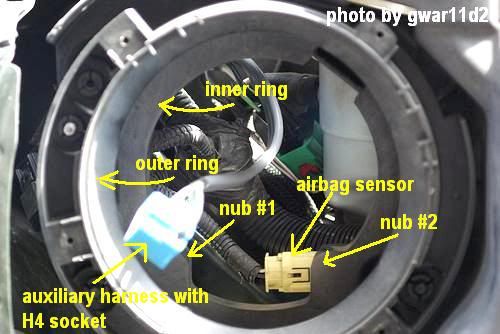
Anyhow, I'd also suggest a harness from Rallylights and then you still have to trim the buckets here:
And night shots.
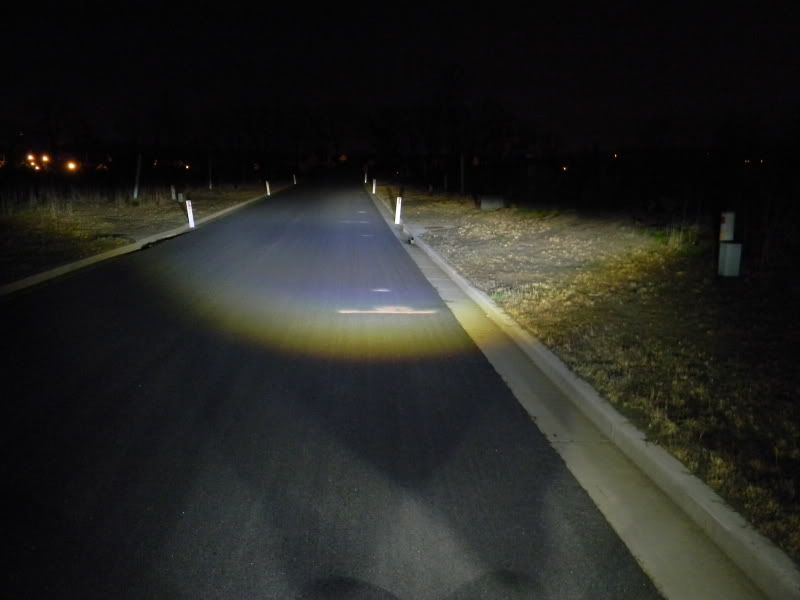
The camera is set to filter out the low lumen scatter and background light; it shows more artifacts than your eye would normally see.
Lowbeam:
Highbeam:

Highbeam plus TruckLite spots:

Overall the photometry is quite good and they work very well in the real world.
Begging isn't sad or pathetic; we do it with women, right?
Anyhow, I'd also suggest a harness from Rallylights and then you still have to trim the buckets here:
And night shots.
The camera is set to filter out the low lumen scatter and background light; it shows more artifacts than your eye would normally see.
Lowbeam:
Highbeam:
Highbeam plus TruckLite spots:
Overall the photometry is quite good and they work very well in the real world.
JK Enthusiast
Joined: Aug 2009
Posts: 438
Likes: 0
From: Tucson
Originally Posted by Hilldweller
I've seen the JW Speakers sell for as much as $800 each and for as little as $499 each. There are truck shops and Harley dealers that will discount them often; you have to shop around like a ninja. Or call the factory and beg a little like I did.
Begging isn't sad or pathetic; we do it with women, right?
Anyhow, I'd also suggest a harness from Rallylights and then you still have to trim the buckets here:
And night shots.
The camera is set to filter out the low lumen scatter and background light; it shows more artifacts than your eye would normally see.
Lowbeam:
Highbeam:
Highbeam plus TruckLite spots:
Overall the photometry is quite good and they work very well in the real world.
Begging isn't sad or pathetic; we do it with women, right?
Anyhow, I'd also suggest a harness from Rallylights and then you still have to trim the buckets here:
And night shots.
The camera is set to filter out the low lumen scatter and background light; it shows more artifacts than your eye would normally see.
Lowbeam:
Highbeam:
Highbeam plus TruckLite spots:
Overall the photometry is quite good and they work very well in the real world.