


No Relay Required


Thread Starter
JK Newbie
Joined: Oct 2011
Posts: 39
Likes: 0
From: Allen, Tx
 No Relay Required
I have been reading up on adding aux. circuits allowing me to add off road lights, a winch, air compressor. I have several questions that I thought I would bring to the forum.
First, when or what could be added that would not require a relay in the circuit? Typically, I have seen when adding a light bar or off road lights a relay is installed. If I install for example a pair of Dually lights that use 15W, it would require a 5A fuse, but does it require a relay? If it is recommended or required that a relay be used, what can be installed that would not need or require a relay? (hope that's clear)
Second, I have seen and read about installs of spot lights, light bars, both front and rear, winches, air compressor and audio amplifiers. Does anyone have any thing else they have added to their jeep or have thought about? I am curious because of the number of switches and typical conversations on the forum. Most add 4-6 switches (i.e. sPod) but what do you use all of those switches for?
BTW...I have a 2011 JK Rubicon unlimited...
Thanks, Dave
First, when or what could be added that would not require a relay in the circuit? Typically, I have seen when adding a light bar or off road lights a relay is installed. If I install for example a pair of Dually lights that use 15W, it would require a 5A fuse, but does it require a relay? If it is recommended or required that a relay be used, what can be installed that would not need or require a relay? (hope that's clear)
Second, I have seen and read about installs of spot lights, light bars, both front and rear, winches, air compressor and audio amplifiers. Does anyone have any thing else they have added to their jeep or have thought about? I am curious because of the number of switches and typical conversations on the forum. Most add 4-6 switches (i.e. sPod) but what do you use all of those switches for?
BTW...I have a 2011 JK Rubicon unlimited...
Thanks, Dave

JK Junkie
Joined: Nov 2013
Posts: 3,703
Likes: 8
From: The Dirty South
I have been reading up on adding aux. circuits allowing me to add off road lights, a winch, air compressor. I have several questions that I thought I would bring to the forum.
First, when or what could be added that would not require a relay in the circuit? Typically, I have seen when adding a light bar or off road lights a relay is installed. If I install for example a pair of Dually lights that use 15W, it would require a 5A fuse, but does it require a relay? If it is recommended or required that a relay be used, what can be installed that would not need or require a relay? (hope that's clear)
Second, I have seen and read about installs of spot lights, light bars, both front and rear, winches, air compressor and audio amplifiers. Does anyone have any thing else they have added to their jeep or have thought about? I am curious because of the number of switches and typical conversations on the forum. Most add 4-6 switches (i.e. sPod) but what do you use all of those switches for?
BTW...I have a 2011 JK Rubicon unlimited...
Thanks, Dave
First, when or what could be added that would not require a relay in the circuit? Typically, I have seen when adding a light bar or off road lights a relay is installed. If I install for example a pair of Dually lights that use 15W, it would require a 5A fuse, but does it require a relay? If it is recommended or required that a relay be used, what can be installed that would not need or require a relay? (hope that's clear)
Second, I have seen and read about installs of spot lights, light bars, both front and rear, winches, air compressor and audio amplifiers. Does anyone have any thing else they have added to their jeep or have thought about? I am curious because of the number of switches and typical conversations on the forum. Most add 4-6 switches (i.e. sPod) but what do you use all of those switches for?
BTW...I have a 2011 JK Rubicon unlimited...
Thanks, Dave
Just curious. Why are you trying to avoid using relays? Maybe you're not sure how they work? They are really, really simple once you know how they work. The most common relay you will come across when wiring up accessories is a single-pole, single-throw (SPST) relay. It simply allows you to control a higher amperage circuit using a lower amperage circuit. The benefit of using a low amperage circuit is that the wiring into the tub is small, low amperage. This allows you to use a very small, and therefore easy to place switch. The higher the amperage the larger the switch required. In addition, lower amperage circuits are less of a fire risk, always a plus when in the tub.
To simplify things, think of the switch in the tub being used to turn on another big switch under the hood. That is basically all it does. You hit the switch in the tub, it turns on the switch for the accessory. The accessory could be drawing 15, 20, 30, 40 or even 50 amps. No sense in bringing that through the seating area. The relay will be marked and the "big" switch will be pins 30 and 87. The "little" switch controlled from inside the tub will be pins 85 and 86. If you need help wiring that you can message me or tell me what you're doing and I'll draw up a schematic for you and post it here.
As far as part two of your question, I have 6 switches. Three are being used now and the fourth will be used within a week or two and 5 and 6 are reserved for lockers. my switches are designated as follows:
1. Windshield lights
2. Rock lights
3. Bumper mounted light bar
4. Front locker
5. Rear locker
6. Winch.
Hope this helps.

JK Freak

Joined: Mar 2012
Posts: 572
Likes: 0
From: San Diego, CA
I have been reading up on adding aux. circuits allowing me to add off road lights, a winch, air compressor. I have several questions that I thought I would bring to the forum.
First, when or what could be added that would not require a relay in the circuit? Typically, I have seen when adding a light bar or off road lights a relay is installed. If I install for example a pair of Dually lights that use 15W, it would require a 5A fuse, but does it require a relay? If it is recommended or required that a relay be used, what can be installed that would not need or require a relay? (hope that's clear)
Second, I have seen and read about installs of spot lights, light bars, both front and rear, winches, air compressor and audio amplifiers. Does anyone have any thing else they have added to their jeep or have thought about? I am curious because of the number of switches and typical conversations on the forum. Most add 4-6 switches (i.e. sPod) but what do you use all of those switches for?
BTW...I have a 2011 JK Rubicon unlimited...
Thanks, Dave
First, when or what could be added that would not require a relay in the circuit? Typically, I have seen when adding a light bar or off road lights a relay is installed. If I install for example a pair of Dually lights that use 15W, it would require a 5A fuse, but does it require a relay? If it is recommended or required that a relay be used, what can be installed that would not need or require a relay? (hope that's clear)
Second, I have seen and read about installs of spot lights, light bars, both front and rear, winches, air compressor and audio amplifiers. Does anyone have any thing else they have added to their jeep or have thought about? I am curious because of the number of switches and typical conversations on the forum. Most add 4-6 switches (i.e. sPod) but what do you use all of those switches for?
BTW...I have a 2011 JK Rubicon unlimited...
Thanks, Dave
However, it can get far more complicated than that. Wire gauge, as well as total wire length have major roles in setting up a safe circuit. Not running a relay, means all of the power needed for the item has to run all the way to the switch, and all the way back. This can produce a lot of heat due to an electrical effect called skin loss(electrons in a wire travel along the surface of the wire, not in the core of the wire. Unfortunately, this means electrons bleed out due to many, many reasons, which heat up the wire), so different guages have maximum amperages for different distances.
So the simpler answer is that the limiting factor is whichever is the smallest bottleneck between: the switch(amp rating) or the wire(max amps for needed distance).
Outside of that, relays are optional, but can be more efficient than not using a relay. Relays in general are better sealed than switches, and so last longer. Also, on the safety side, very little power is needed to activate a relay, and so by using one, you can minimize the amount of power that has to travel through the fire wall. More power: More fire risk: Bad. Or at least, not preferable.
As for me, I have 9 switches myself. I needed more than the 4-6 because my sport JK didn't come pre-wired for lockers or an electronic swaybar disconnect.
The 4 on my A-Pillar are:
Safety cutout (to make sure my knee doesn't turn on my lockers accidently)
Windshield LED Cubes
Bumper LED Lightbar
Winch Control (out-off-in) (I didn't want to constantly have to connect that wired harness lol)
Then my 5 switch panel to the lower left off my steering wheel:
Air Compressor
Rock Lights
Sway bar disconnect
Front Locker
Rear Locker
Fun fact though: I need more. At least 7 more for my end-build plans, lol. My 4x4 club likes to call my rig the USS Enterprise. lol
Last edited by KCCO JK; Sep 3, 2014 at 01:08 PM.
Thread Starter
JK Newbie
Joined: Oct 2011
Posts: 39
Likes: 0
From: Allen, Tx
KCCO & 14Sport...thanks for the quick reply. I do understand the concept of a relay as well as the current draw or drain of wire and distance. The resin for the question is more about looking at the options I have seen on line. Recently I was researching adding an sPod or a bussmann relay/fuse box to allow for the additional circuits, but I noticed that for example the Bussmann box I was looking at provided space for 10 fuses and 5 relays, thus the question when/what would you wire without a relay. After posting my question I wondered would you ever wire two fuses to one relay. Soooo if I have two cube lights on the windshield would I wire one fuse per light but connect them to the same relay? Using two fuses per one relay?
JK Junkie
Joined: Nov 2013
Posts: 3,703
Likes: 8
From: The Dirty South
And as a result of being able to use smaller wires for the switch (the "little" switch or "trigger circuit" runs on milliamps), above and beyond what I and KCCO have already mentioned, is that it can be much more cost effective. Running a 18, 20, 22, or even 24 gauge wire to the switch is a lot cheaper per foot than running 14, 12, 10, or even in the case of my winch, 2 gauge wire (which is VERY expensive and the switch is massive).
That said, usually when you buy your accessory it will come with everything needed to safely install the switch in the tub. At least if it is a well made accessory. However, it can sometimes get a little gangly having to find where to install all the switches separately in the dash.
Good luck.
That said, usually when you buy your accessory it will come with everything needed to safely install the switch in the tub. At least if it is a well made accessory. However, it can sometimes get a little gangly having to find where to install all the switches separately in the dash.
Good luck.
JK Junkie
Joined: Nov 2013
Posts: 3,703
Likes: 8
From: The Dirty South
KCCO & 14Sport...thanks for the quick reply. I do understand the concept of a relay as well as the current draw or drain of wire and distance. The resin for the question is more about looking at the options I have seen on line. Recently I was researching adding an sPod or a bussmann relay/fuse box to allow for the additional circuits, but I noticed that for example the Bussmann box I was looking at provided space for 10 fuses and 5 relays, thus the question when/what would you wire without a relay. After posting my question I wondered would you ever wire two fuses to one relay. Soooo if I have two cube lights on the windshield would I wire one fuse per light but connect them to the same relay? Using two fuses per one relay?
Edit: If that's the case with the one you were looking at, it would need to be loaded with double-pole, single throw (DPST) relays. Think of the poles as the big switches, and the throws as the little switches. So a single little switch controls two big switches under the hood.
Last edited by 14Sport; Sep 3, 2014 at 01:58 PM.
JK Freak
Joined: Mar 2012
Posts: 572
Likes: 0
From: San Diego, CA
Sorry I was typing as you responded. Yes it is possible to have a fuse for each light of a pair and therefore one relay per two fuses. Not common though. That's assuming the relay is connected to both fuses. They could just be providing additional fuses for items you install the don't need a switch....say if you added marker lights to run off the existing marker lights.
Dave, as was stated already, it's either a flexibility option, to tap off the relay already in use (Like a 20A accessory with a 10A accessory thrown in to run off the same switch, without risking too much amperage running through the secondary item.), allowing you to run a set of two items through two different fuses (redundancy, kind of like with headlights. So you don't lose both at once), or it's just an extra fuse. Either way, it's flexibility, which is fantastic.
Trending Topics

JK Newbie
Joined: May 2011
Posts: 69
Likes: 0
From: Royal Oaks, California
Accurate information regarding cost benefits allowing shorter high current / large gauge wire runs.
Need to correct the part about skin effect though. Skin effect applies only to higher frequency AC current. Current density across a wire carrying DC is unity. In other words the current through the core of the conductor is equal to the current flowing on the surface.
http://whatis.techtarget.com/definition/skin-effect
Another important property of relays (of the proper type) is the ballistic characteristics of the switching contacts. The speed of the make / break action of the contacts as well as the force exerted during break are engineered to minimize the possibility of contact erosion and welding. This is especially important when controlling heavy current, high inductance loads such as motors and compressors where arching will destroy a conventional switch quickly if thrown slowly by the operator. Even purely resistive loads such as lights will cause contact welding if the switching action is too slow. This property of a properly selected relay is frequently overlooked by circuit designers and is at least as important a design criteria as current capacity.
Phil
Need to correct the part about skin effect though. Skin effect applies only to higher frequency AC current. Current density across a wire carrying DC is unity. In other words the current through the core of the conductor is equal to the current flowing on the surface.
http://whatis.techtarget.com/definition/skin-effect
Another important property of relays (of the proper type) is the ballistic characteristics of the switching contacts. The speed of the make / break action of the contacts as well as the force exerted during break are engineered to minimize the possibility of contact erosion and welding. This is especially important when controlling heavy current, high inductance loads such as motors and compressors where arching will destroy a conventional switch quickly if thrown slowly by the operator. Even purely resistive loads such as lights will cause contact welding if the switching action is too slow. This property of a properly selected relay is frequently overlooked by circuit designers and is at least as important a design criteria as current capacity.
Phil
Last edited by psouza; Sep 3, 2014 at 09:03 PM.
JK Jedi Master


Joined: Mar 2007
Posts: 14,800
Likes: 374
From: Midwest City, OK
Excellent discussion. Want to add one small, but very important point, that was grazed on, but not explicitly stated: If you run all of the wiring into the Jeep without relays, then you need to find space to bring that larger wiring into the Jeep. Many of us, even using just half a dozen switches on the sPOD, have used up most of the available access points. When you consider that on top of the switched circuits, there is also the need for refrigerator power, CB radio power, gadget power (GoPros, camera chargers, etc), inverter power (many of us didn't get one in the early JK years, and the ones provided are very low power anyway), oil pressure gauge, etc, you can imagine that short of putting yet more holes through the firewall, you definitely need to keep wire sizes down.
One last thought: I use a relay to invert the operation of an sPOD relay. That is, I wanted to remove power from my engine fan during water fording. However, the sPOD provides only for powering things up when activated, not powering things down when activated (it's missing the power when relaxed connection--very common on horn relays and such). A five pin (instead of four pin) fan relay provided me exactly what I needed.
And here's what I have powered ...
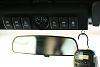
You'll note that I have two Roof Lights switches. That's because the sPOD is limited in current capacity through each circuit and four KC Daylighters exceed those limits. A future project is to use a larger relay, controlled by one of the sPOD circuits, to power on all four lights. This will free up one of those circuits. For the time being, I haven't come up with anything to wire up to it.
One last thought: I use a relay to invert the operation of an sPOD relay. That is, I wanted to remove power from my engine fan during water fording. However, the sPOD provides only for powering things up when activated, not powering things down when activated (it's missing the power when relaxed connection--very common on horn relays and such). A five pin (instead of four pin) fan relay provided me exactly what I needed.
And here's what I have powered ...
You'll note that I have two Roof Lights switches. That's because the sPOD is limited in current capacity through each circuit and four KC Daylighters exceed those limits. A future project is to use a larger relay, controlled by one of the sPOD circuits, to power on all four lights. This will free up one of those circuits. For the time being, I haven't come up with anything to wire up to it.