


Safe water crossing




JK Jedi Master

Joined: Jan 2008
Posts: 11,463
Likes: 165
From: Austin <--> Colorado Springs

Per the manual, 9 inches for flowing water, 20 inches for standing water...

Flowing Water
If the water is swift flowing and rising (as in storm run-off) avoid crossing until the water level recedes and/or the flow rate is reduced. If you must cross flowing water avoid depths in excess of 9 inches. The flowing water can erode the streambed causing your vehicle to sink into deeper water. Determine exit point(s) that are downstream of your entry point to allow for drifting.
Standing Water
Avoid driving in standing water deeper than 20 inches, and reduce speed appropriately to minimize wave effects. Maximum speed in 20 inches of water is less than 5 mph (8 km/h).
If the water is swift flowing and rising (as in storm run-off) avoid crossing until the water level recedes and/or the flow rate is reduced. If you must cross flowing water avoid depths in excess of 9 inches. The flowing water can erode the streambed causing your vehicle to sink into deeper water. Determine exit point(s) that are downstream of your entry point to allow for drifting.
Standing Water
Avoid driving in standing water deeper than 20 inches, and reduce speed appropriately to minimize wave effects. Maximum speed in 20 inches of water is less than 5 mph (8 km/h).
Trending Topics

JK Enthusiast
Joined: Jan 2010
Posts: 131
Likes: 0
From: Near da Beach
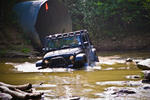
A mate going through after me

This is me going first

The middle was about as deep as my 33's
In still water, if the bow wave is any higher than the bottom of your head lights, you will be running out of air
In flowing water the bow wave should be no higher than your tires.
Its a funny feeling in deep water; remember the jeep will want to float and the tires do Not have the same traction as on dry land.
This is me going first
The middle was about as deep as my 33's
In still water, if the bow wave is any higher than the bottom of your head lights, you will be running out of air
In flowing water the bow wave should be no higher than your tires.
Its a funny feeling in deep water; remember the jeep will want to float and the tires do Not have the same traction as on dry land.
Thread Starter
JK Enthusiast
Joined: Apr 2010
Posts: 298
Likes: 0
From: Windsor, Ontario
my owner's manual says that "This vehicle is capable of crossing through water at a depth of 30 inches (76 cm) at speeds no greater than 5 mph (8 km/h). Water ingestion can occur causing damage to your vehicle. "
Are they saying that it can go through 30" but if you do some damage can occur?
Are they saying that it can go through 30" but if you do some damage can occur?

