


Winch Circuit Breaker Install


Thread Starter
JK Junkie


Joined: Nov 2011
Posts: 2,199
Likes: 218
From: Over the hill
 Winch Circuit Breaker Install
A waterproof (IP66), marine rated circuit breaker with manual switch, manufactured by Coopper Bussman, cost $82 (including shipping) at http://www.amazon.com/Blue-Sea-Systems-Surface-Circuit/dp/B007P5UNNW/ref=sr_1_3?ie=UTF8&qid=1453736814&sr=8-3&keywords=200+amp+marine+circuit+breaker. Update: In post#18 adamisadam found it at http://www.waytekwire.com/item/46875/Bussmann-187200F-03-1-200A-Marine-Circuit-Breaker/ for around $55 including shipping -- a fantastic price!. 
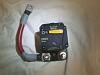
As you can see in the picture, the circuit breaker has a manual on-reset-off switch built in. Keep the breaker turned off when not in use for most protection. Install a circuit breaker on the un-grounded conductor (positive). If a breaker was installed on the grounded (negative) side, it may appear to work until a ground fault happened, the positive would continue to feed a fault even after the breaker opened. Keep the wire from the battery to the breaker as short as possible to minimize the amount of unprotected wiring. Use plastic split-tubing to protect wiring, all the way to the winch motor.
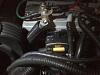
For me, there is no need to hard mount the breaker. In front of the battery (see picture) was a good location that's easy to see and close to the positive battery terminal. The 2 gage wire off the battery terminal is short and stiff enough to provide all the support it needs for occasional use. This wire was a custom length made from a battery cable.
To sum up the installation, prepare a wire from a positive battery terminal, connect it to the line side of the breaker, and then connect the winches positive wire to the load side of the breaker.
So why use a circuit breaker? There are two reasons. For the first reason, Google: winch fire burn battery. The second reason is that an inverse-time-delay circuit breaker can be sized to trip if you run the motor too long at high loads. Winch motors are intermittent duty, especially at near full load where efficiency drops rapidly, and current increases. A breaker (or a time-delay fuse) has an inverse time characteristic that allows considerably over the rated current for a time that is inversely proportional to the amount of over-current. In other words, the more the amps the faster the tripping.
Now the hard part, selecting the breaker. One can use spec sheets, empirical testing, and good electrical practice -- But to keep it simple, here's a rule of thumb I just made up for selecting the size for a Cooper Bussman Marine Rated series 187 circuit breaker: Use around 45% of the winch full load amps. As a sanity check, SuperWinch supplied some winches with circuit breakers, so what percentage of full load amps did they use? For example, the LP1000 has parallel self-resetting breakers on a bus-bar that total 150 rated amps for a ~350 amp full load rated winch -- that's 43%.
In my case, the winch is a 9.5 SuperWinch Talon that is rated at 430 amps at full load. 430 x 0.45 is 194 amps. 200 amps is the highest rated size currently available, and is what I purchased. Per the chart for this breaker, the average trip time at 400 amps is about 25 seconds. At 300 amps, the average trip time is about 70 seconds. And below about 230 amps it will never trip. In the case of a dead short, it will trip in about 1 second at 1000 amps. Also, the manual switch could be used as an emergency shut-off if a winch will not stop running. Here's a couple links for the data sheet for this breaker: Circuit Breaker, 200A - PN 7149 - Blue Sea Systems
Ideally, one could set up a 300 to 400 amp winch load and check the internal motor winding temperatures after the breaker trips at various ambient temperatures, and maybe much more if this was a job. But this is mostly about having short-circuit protection with a convenient on-off switch. Motor protection is just a potential bonus that at worst may trip a little early or late. The time spent describing inverse-time delay was mostly to get rid of any notion that one must use a circuit breaker sized at 100% or greater full load amps for a vehicle winch -- If for no other reason than they don't exist at a reasonable price or size.
Testing
For a test after installing the circuit breaker, I winched the Jeep up a gravel road on about a 10 degree hill, it only pulled 140 amps on the largest diameter rope wrap. Did it again with Mrs.T applying brakes to the point of barely skidding tires, 220 amps average on the largest diameter rope wrap. Although my nerves were ready for a pause after 20 seconds, I kept pulling because I knew the motor was not too hot and the amps/load were not high. Repeated testing a few times, and as expected the breaker never tripped. Even without a meter, it's easy to see the slow line speed and hear the different sound when a winch gets highly loaded. Based on the spec sheet for this breaker and the motor full load amps; When the load seems high I'll run about 20 seconds on-time (slightly less than the average trip time at 400 amps), and 20 seconds off-time -- which is a potential downside. The off-time also lets the battery charge up, allows time to feel the motor temperature, assess how the rope is wrapping on the drum and how the pull is going. If there's a "battle-short" winch situation where stopping or a trip cannot be tolerated, it's a five minute job to move the winch wire to a direct battery connection beforehand.
Cheers!

Suggestion: Breakers to avoid
There are some inexpensive generic breakers that look similar to the Cooper Bussman Marine Rated series 187, but have no real specifications, and are marketed to the car audio enthusiast. There's numerous reviews mentioning nuisance trips and voltage drop. I'm also not fond of the (SuperWinch breaker) type that have multiple self-resetting 30 to 50 amp breakers in parallel on buss-bars because they have a relatively short inverse-time delay (trip quicker), and a self-reset on a an electrical fault with a winch isn't my preference.
As you can see in the picture, the circuit breaker has a manual on-reset-off switch built in. Keep the breaker turned off when not in use for most protection. Install a circuit breaker on the un-grounded conductor (positive). If a breaker was installed on the grounded (negative) side, it may appear to work until a ground fault happened, the positive would continue to feed a fault even after the breaker opened. Keep the wire from the battery to the breaker as short as possible to minimize the amount of unprotected wiring. Use plastic split-tubing to protect wiring, all the way to the winch motor.
For me, there is no need to hard mount the breaker. In front of the battery (see picture) was a good location that's easy to see and close to the positive battery terminal. The 2 gage wire off the battery terminal is short and stiff enough to provide all the support it needs for occasional use. This wire was a custom length made from a battery cable.
To sum up the installation, prepare a wire from a positive battery terminal, connect it to the line side of the breaker, and then connect the winches positive wire to the load side of the breaker.
So why use a circuit breaker? There are two reasons. For the first reason, Google: winch fire burn battery. The second reason is that an inverse-time-delay circuit breaker can be sized to trip if you run the motor too long at high loads. Winch motors are intermittent duty, especially at near full load where efficiency drops rapidly, and current increases. A breaker (or a time-delay fuse) has an inverse time characteristic that allows considerably over the rated current for a time that is inversely proportional to the amount of over-current. In other words, the more the amps the faster the tripping.
Now the hard part, selecting the breaker. One can use spec sheets, empirical testing, and good electrical practice -- But to keep it simple, here's a rule of thumb I just made up for selecting the size for a Cooper Bussman Marine Rated series 187 circuit breaker: Use around 45% of the winch full load amps. As a sanity check, SuperWinch supplied some winches with circuit breakers, so what percentage of full load amps did they use? For example, the LP1000 has parallel self-resetting breakers on a bus-bar that total 150 rated amps for a ~350 amp full load rated winch -- that's 43%.
In my case, the winch is a 9.5 SuperWinch Talon that is rated at 430 amps at full load. 430 x 0.45 is 194 amps. 200 amps is the highest rated size currently available, and is what I purchased. Per the chart for this breaker, the average trip time at 400 amps is about 25 seconds. At 300 amps, the average trip time is about 70 seconds. And below about 230 amps it will never trip. In the case of a dead short, it will trip in about 1 second at 1000 amps. Also, the manual switch could be used as an emergency shut-off if a winch will not stop running. Here's a couple links for the data sheet for this breaker: Circuit Breaker, 200A - PN 7149 - Blue Sea Systems
Ideally, one could set up a 300 to 400 amp winch load and check the internal motor winding temperatures after the breaker trips at various ambient temperatures, and maybe much more if this was a job. But this is mostly about having short-circuit protection with a convenient on-off switch. Motor protection is just a potential bonus that at worst may trip a little early or late. The time spent describing inverse-time delay was mostly to get rid of any notion that one must use a circuit breaker sized at 100% or greater full load amps for a vehicle winch -- If for no other reason than they don't exist at a reasonable price or size.
Testing
For a test after installing the circuit breaker, I winched the Jeep up a gravel road on about a 10 degree hill, it only pulled 140 amps on the largest diameter rope wrap. Did it again with Mrs.T applying brakes to the point of barely skidding tires, 220 amps average on the largest diameter rope wrap. Although my nerves were ready for a pause after 20 seconds, I kept pulling because I knew the motor was not too hot and the amps/load were not high. Repeated testing a few times, and as expected the breaker never tripped. Even without a meter, it's easy to see the slow line speed and hear the different sound when a winch gets highly loaded. Based on the spec sheet for this breaker and the motor full load amps; When the load seems high I'll run about 20 seconds on-time (slightly less than the average trip time at 400 amps), and 20 seconds off-time -- which is a potential downside. The off-time also lets the battery charge up, allows time to feel the motor temperature, assess how the rope is wrapping on the drum and how the pull is going. If there's a "battle-short" winch situation where stopping or a trip cannot be tolerated, it's a five minute job to move the winch wire to a direct battery connection beforehand.
Cheers!
Suggestion: Breakers to avoid
There are some inexpensive generic breakers that look similar to the Cooper Bussman Marine Rated series 187, but have no real specifications, and are marketed to the car audio enthusiast. There's numerous reviews mentioning nuisance trips and voltage drop. I'm also not fond of the (SuperWinch breaker) type that have multiple self-resetting 30 to 50 amp breakers in parallel on buss-bars because they have a relatively short inverse-time delay (trip quicker), and a self-reset on a an electrical fault with a winch isn't my preference.
Last edited by Mr.T; May 31, 2019 at 09:38 AM. Reason: Color - Bold



JK Enthusiast
Joined: Nov 2010
Posts: 326
Likes: 1
From: Fontana, California

A waterproof, marine rated circuit breaker with manual switch, manufactured by Coopper Bussman, cost $82 (including shipping) at Amazon.
Attachment 408822
As you can see in the picture, the circuit breaker has a manual on-reset-off switch built in. Keep the breaker turned off when not in use for most protection. Install a circuit breaker on the un-grounded conductor (positive). If a breaker was installed on the grounded (negative) side, it may appear to work until a ground fault happened, the positive would continue to feed a fault even after the breaker opened. Keep the wire from the battery to the breaker as short as possible to minimize the amount of unprotected wiring. Use plastic split-tubing to protect wiring, all the way to the winch motor.
Attachment 408823
For me, there is no need to hard mount the breaker. In front of the battery (see picture) was a good location that's easy to see and close to the positive battery terminal. The 2 gage wire off the battery terminal is short and stiff enough to provide all the support it needs for occasional use. This wire was a custom length made from a battery cable.
To sum up the installation, prepare a wire from a positive battery terminal, connect it to the line side of the breaker, and then connect the winches positive wire to the load side of the breaker.
So why use a circuit breaker? There are two reasons. For the first reason, Google: winch fire burn battery. Here's an example https://www.jk-forum.com/forums/jk-t...6/#post2546498 . The second reason is that an inverse-time-delay circuit breaker can be sized to trip if you run the motor too long at high loads. Winch motors are intermittent duty, especially at near full load where efficiency drops rapidly, and current increases. A breaker (or a time-delay fuse) has an inverse time characteristic that allows considerably over the rated current for a time that is inversely proportional to the amount of over-current. In other words, the more the amps the faster the tripping.
Now the hard part, selecting the breaker. One can use spec sheets, empirical testing, and good electrical practice -- But to keep it simple, here's a rule of thumb I just made up for selecting the size for a Cooper Bussman Marine Rated series 187 circuit breaker: Use around 45% of the winch full load amps. As a sanity check, SuperWinch supplied some winches with circuit breakers, so what percentage of full load amps did they use? For example, the LP1000 has parallel self-resetting breakers on a bus-bar that total 150 rated amps for a ~350 amp full load rated winch -- that's 43%.
In my case, the winch is a 9.5 SuperWinch Talon that is rated at 430 amps at full load. 430 x 0.45 is 194 amps. 200 amps is the highest rated size currently available, and is what I purchased. Per the chart for this breaker, the mean trip time at 400 amps is about 20 seconds. At 300 amps, the trip time is about 50 seconds. And below about 220 amps it will never trip. In the case of a dead short, it will trip in about 1 second at 1000 amps. Also, the manual switch could be used as an emergency shut-off if a winch will not stop running. Here's a link to this breaker: Circuit Breaker, 200A - PN 7149 - Blue Sea Systems
Ideally, one could set up a 300 to 400 amp winch load and check the motor temperatures after the breaker trips at various ambient temperatures, and maybe much more if this was a job. But this is mostly about having short-circuit protection with a convenient on-off switch. Motor over-current protection is just a potential bonus that at worst may trip a little early or late. The time spent describing inverse-time delay was mostly to get rid of any notion that one must use a circuit breaker sized at 100% or greater full load amps for a vehicle winch -- If for no other reason than they don't exist at a reasonable price or size.
For a quick test after installing the circuit breaker, I winched the Jeep up a gravel road on about a 10 degree hill, it only pulled 140 amps on the largest diameter rope wrap. Did it again with Mrs.T applying brakes to the point of almost skidding tires, 220 amps on the largest diameter rope wrap. My nerves were ready for a pause after 20 seconds, but I kept pulling because I knew the motor was quite cold and the amps were low. Even without a meter, it's easy to see the slow line speed and hear the different sound when a winch gets highly loaded. Based on the spec sheet for this breaker and the motor full load amps, I believe I'll run at 20 second intervals when the loads seem high -- which is the only potential downside. This also lets the battery charge up, allows time to feel the motor temperature, and assess how the pull is going.
Cheers!
Attachment 408822
As you can see in the picture, the circuit breaker has a manual on-reset-off switch built in. Keep the breaker turned off when not in use for most protection. Install a circuit breaker on the un-grounded conductor (positive). If a breaker was installed on the grounded (negative) side, it may appear to work until a ground fault happened, the positive would continue to feed a fault even after the breaker opened. Keep the wire from the battery to the breaker as short as possible to minimize the amount of unprotected wiring. Use plastic split-tubing to protect wiring, all the way to the winch motor.
Attachment 408823
For me, there is no need to hard mount the breaker. In front of the battery (see picture) was a good location that's easy to see and close to the positive battery terminal. The 2 gage wire off the battery terminal is short and stiff enough to provide all the support it needs for occasional use. This wire was a custom length made from a battery cable.
To sum up the installation, prepare a wire from a positive battery terminal, connect it to the line side of the breaker, and then connect the winches positive wire to the load side of the breaker.
So why use a circuit breaker? There are two reasons. For the first reason, Google: winch fire burn battery. Here's an example https://www.jk-forum.com/forums/jk-t...6/#post2546498 . The second reason is that an inverse-time-delay circuit breaker can be sized to trip if you run the motor too long at high loads. Winch motors are intermittent duty, especially at near full load where efficiency drops rapidly, and current increases. A breaker (or a time-delay fuse) has an inverse time characteristic that allows considerably over the rated current for a time that is inversely proportional to the amount of over-current. In other words, the more the amps the faster the tripping.
Now the hard part, selecting the breaker. One can use spec sheets, empirical testing, and good electrical practice -- But to keep it simple, here's a rule of thumb I just made up for selecting the size for a Cooper Bussman Marine Rated series 187 circuit breaker: Use around 45% of the winch full load amps. As a sanity check, SuperWinch supplied some winches with circuit breakers, so what percentage of full load amps did they use? For example, the LP1000 has parallel self-resetting breakers on a bus-bar that total 150 rated amps for a ~350 amp full load rated winch -- that's 43%.
In my case, the winch is a 9.5 SuperWinch Talon that is rated at 430 amps at full load. 430 x 0.45 is 194 amps. 200 amps is the highest rated size currently available, and is what I purchased. Per the chart for this breaker, the mean trip time at 400 amps is about 20 seconds. At 300 amps, the trip time is about 50 seconds. And below about 220 amps it will never trip. In the case of a dead short, it will trip in about 1 second at 1000 amps. Also, the manual switch could be used as an emergency shut-off if a winch will not stop running. Here's a link to this breaker: Circuit Breaker, 200A - PN 7149 - Blue Sea Systems
Ideally, one could set up a 300 to 400 amp winch load and check the motor temperatures after the breaker trips at various ambient temperatures, and maybe much more if this was a job. But this is mostly about having short-circuit protection with a convenient on-off switch. Motor over-current protection is just a potential bonus that at worst may trip a little early or late. The time spent describing inverse-time delay was mostly to get rid of any notion that one must use a circuit breaker sized at 100% or greater full load amps for a vehicle winch -- If for no other reason than they don't exist at a reasonable price or size.
For a quick test after installing the circuit breaker, I winched the Jeep up a gravel road on about a 10 degree hill, it only pulled 140 amps on the largest diameter rope wrap. Did it again with Mrs.T applying brakes to the point of almost skidding tires, 220 amps on the largest diameter rope wrap. My nerves were ready for a pause after 20 seconds, but I kept pulling because I knew the motor was quite cold and the amps were low. Even without a meter, it's easy to see the slow line speed and hear the different sound when a winch gets highly loaded. Based on the spec sheet for this breaker and the motor full load amps, I believe I'll run at 20 second intervals when the loads seem high -- which is the only potential downside. This also lets the battery charge up, allows time to feel the motor temperature, and assess how the pull is going.
Cheers!



JK Junkie
Joined: Dec 2012
Posts: 2,203
Likes: 4
From: Jacksonville NC
This will help with blown winch motors. Amp draw is directly connected to how hard the motor is working though. So if you only use 45% of your motors strength you won't get to 45% of what the motor can take before the breaker pops. Say you have a 12k winch it will still pull 12k but you won't be able to use it as long for long hard pulls.
Trending Topics

JK Newbie
Joined: Jun 2009
Posts: 21
Likes: 0
From: Fenton, MO (St. Louis area)