
Jeep Wrangler 4xe PHEV Powertrain System: Deep Dive

The Jeep Wrangler 4xe PHEV powertrain is a bit different than most hybrid systems out there, but there are valid reasons why.
Since its debut, the Jeep Wrangler 4xe has proven to be a popular plug-in hybrid, one that offers up 21 miles of all-electric driving range via a 17 kWh battery coupled with the ability to travel longer distances – around 370 miles – thanks to the presence of a regular old ICE powerplant. It does that courtesy of the 2.0-liter turbocharged four-cylinder engine and two electric motors, delivering 375 horsepower and 470 pound-feet of torque. This same system is used in the Grand Cherokee 4xe, making for a high-tech way to get around.
As one might imagine, the PHEV powertrain utilized in the Jeep Wrangler 4xe and Grand Cherokee 4xe are rather complex, not to mention fascinating, particularly if one tends to geek out on engineering. For those folks, this recent video from the YouTube channel WeberAuto is certainly worth the watch, because it takes a very deep dive into this particular setup – courtesy of Professor John D. Kelly from Weber State University.
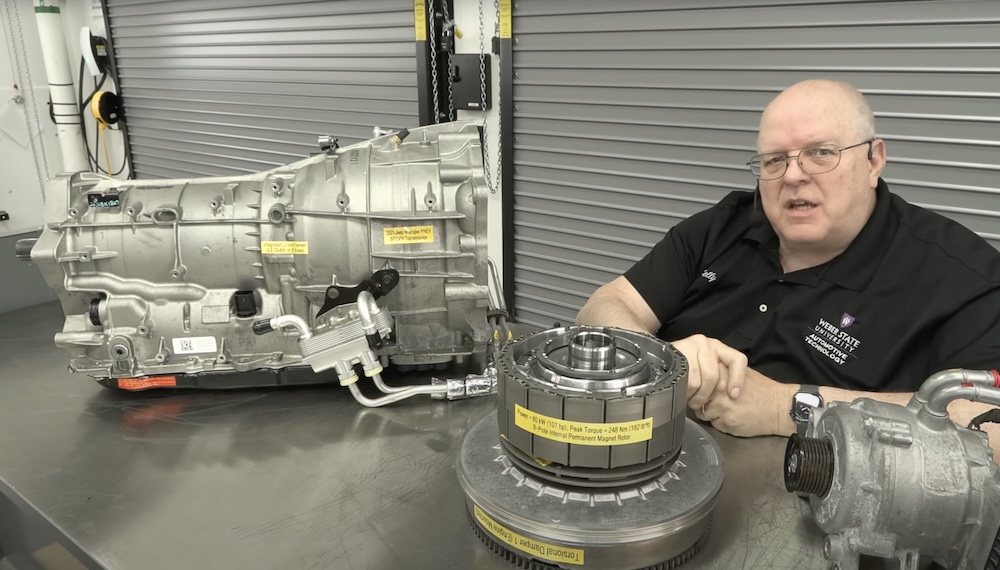
As many are already likely aware, the 4xe powertrain utilizes two electric motors, with the first being attached to front of the gas engine itself (the P0 position) – a belt driven motor generator with an output of 44 horsepower and 39 pound-feet of torque. It functions as the starter motor and can recharge the battery, all while providing extra boost and helping to eliminate turbo lag. The second electric motor is a permanent magnet rotor unit located inside the transmission (P2), generating 107 horsepower and 91 pound-feet of torque.
When the clutch pack in the transmission is not applied, that’s what enables the 4xe to run in electric only mode, and when it is, the gas engine will run, sending power via the crankshaft – which the front-mounted motor is also connected to, via a serpentine belt. When the battery gets to a lower state of charge, the powertrain enters series hybrid mode, where the gas engine rotates the front of the motor generator to provide energy to the battery and the rear motor to propel the vehicle.

Then there’s parallel hybrid mode, which – if the battery’s state of charge is high enough – the front electric motor can help rotate the crank shaft while the gas engine is doing the same, while the other electric motor is also doing precisely the same thing, with the clutch pack applied – which means that one is utilizing the powertrain’s maximum power capabilities. Finally, our fourth mode is engine idling, which enables the front electric motor to charge the battery when the vehicle is sitting stationary, such as at a stoplight.
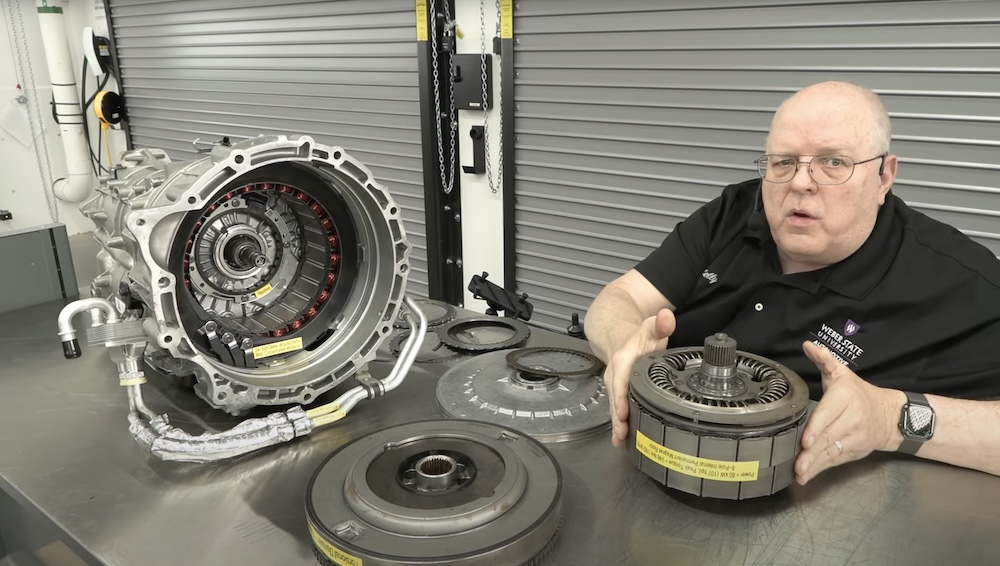
Interestingly, the ZF 8-speed automatic transmission here doesn’t use a torque converter like so many traditional gearboxes of that style, though they tend to generate a lot of heat. In this case, that means that the 4xe doesn’t have to use some massive transmission cooler, and in fact, this one is quite small. To compensate for the torque converter’s ability to have fluid coupling to allow for slippage, there are multiple clutch packs – which purposely allows the transmission to slip under certain conditions.
Overall, the Jeep Wrangler 4xe PHEV powertrain is a pretty fascinating one, particularly from an engineering standpoint. It takes a slightly different route than some other setups – notably, as Kelly points out here – Toyota’s iForce Max hybrid powertrain – but there are certainly some benefits to being unique in this case.
Join the JK-Forums now!

You must be logged in to post a comment.