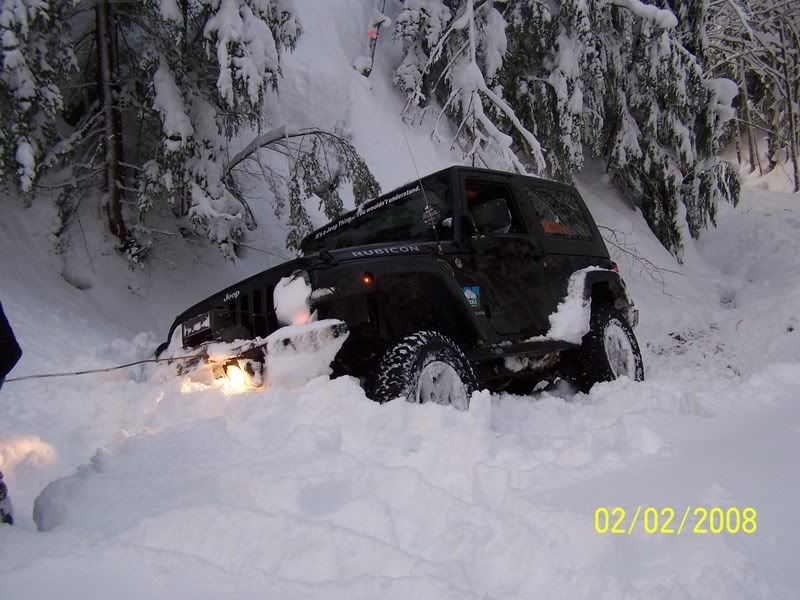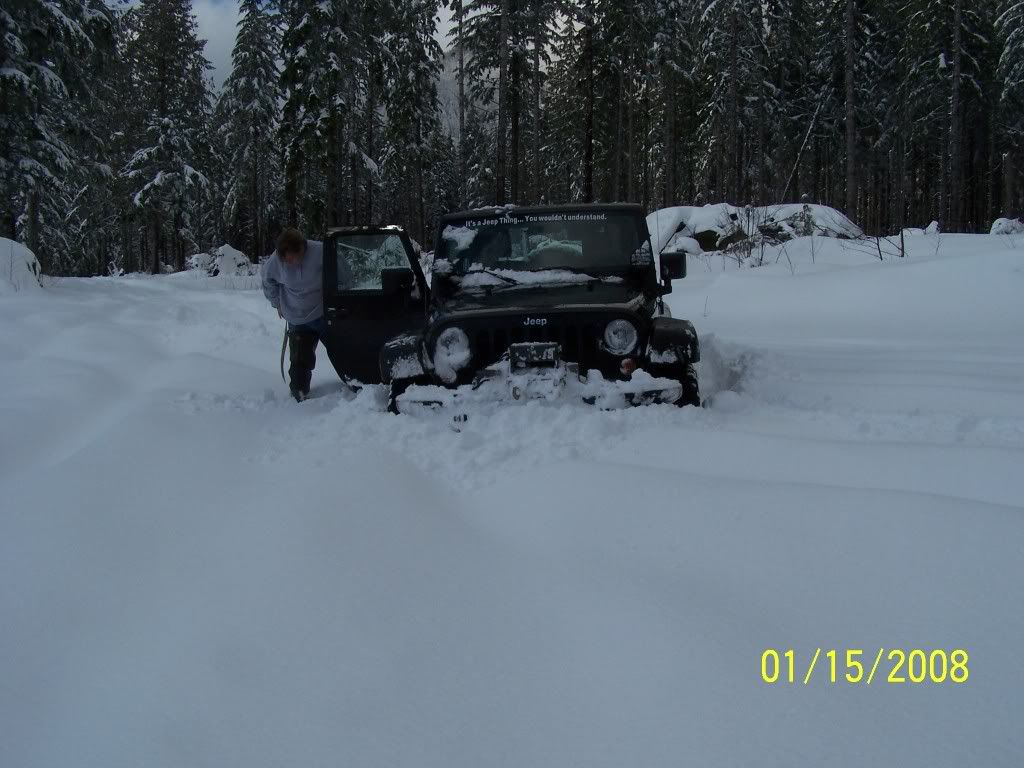


Rubicon tires in snow


JK Enthusiast
Joined: Oct 2006
Posts: 130
Likes: 0
From: Calgary Alberta

For those of who have siped MT tires, Can you post a PIC Please.
I'd like to see what the MT's look like siped.
We were gonna get winter, but I'm wondering, at 10 bucks a tire if that isn't a very good alternative.
Thanks in advance.
I'd like to see what the MT's look like siped.
We were gonna get winter, but I'm wondering, at 10 bucks a tire if that isn't a very good alternative.
Thanks in advance.

JK Enthusiast
Joined: Oct 2006
Posts: 130
Likes: 0
From: Calgary Alberta
Anyone got pics of an MT siped??


JK Freak
Joined: Oct 2008
Posts: 974
Likes: 0
From: Canisteo, NY
I had several different MT's on my TJ, never had them siped, and never had any real problems on snow or ice. Now that's not to say that you aren't going to get more traction by sipping them, because you definitely will get more traction if you do.

JK Newbie
Joined: Nov 2007
Posts: 16
Likes: 0
From: High Ridge, MO
Ya, I drove all last winter on the stock Rubicon tires, and even tried to get stuck. I stopped on hills, drove down through snow drifts, and never had any issues.
Though I could see having issues without traction control and ESP.
Though I could see having issues without traction control and ESP.

JK Enthusiast
Joined: Sep 2008
Posts: 138
Likes: 0
From: Poconos PA
I tried mine out for the first time today. Nice 12 inches of wet snow. Seemed to work just fine for me. All kinds of trucks, cars, buses stuck all over the road once I got there and no problem for me!

JK Freak
Joined: Sep 2008
Posts: 916
Likes: 3
From: Terryville, LI, NY
A few thoughts on Winter driving, regardless of what tire you have installed.
Never air down your tires to drive in snow. It will only cause you trouble. I saw that one poster aired his down to 8 psi! I can't think of a better way to break the tire bead seal than running them nearly flat. Not to mention the abuse to the side walls.
You want the tires to be inflated to normal pressure, or even a few PSI above that.
It seems that some folks think that, "if I get better traction on sand by airing down, I should air them down for snow."
Sorry, but that is exactly backwards of how the physics work.
In sand, you want to disperse you Jeep's weight over the greatest area. Airing down does that. You have improved flotation, which is what you need. Digging into the sand is not desirable. It makes the engine and drive train work much harder. In some cases, it can lead to overheating the engine and/or the automatic transmission.
Snow is a much different media than sand. You want maximum friction, which means you don't want flotation. Sand offers little compacting under load. Snow will compact down to hard ice. Sand offers a measure of friction against itself. Snow does not.
Snow offers little resistance to the tires rolling, but sand offers much greater rolling resistance. This is because snow compacts and sand does not.
If you decide to switch to Winter tires, every tire manufacturer will recommend that you stay with the size you currently have, or better yet, drop once section size (width). This will increase the relative weight on the tires (in pounds per square inch) and result in increased traction.
Siping: Where siping really makes a difference is on compacted snow or on ice. Ice in itself is not nearly as low friction as ice with a layer of water. Siping squeegies out the water, allowing contact with the underlying surface of ice or compacted snow. Thus, your traction improves, both for accelerating and braking. Winter tires also use special rubber compounds that remain soft at temperatures below freezing. Thus, they better conform to the surface and the sipes can flex.
The Goodrich MTs work well in deep snow, where the lugs can get a bite. However, on compacted snow and ice, they fall well short of ideal.
Having sipes cut into the tread blocks will help squeegie off the water and you'll feel the difference immediately.
Those Goodyear SR-As that are OEM on the X and X Unlimited are siped. They are a bit better in snow or ice than the Rubicon's Goodrich rubber. That said, they aren't great either. Just adequate. Those of you who have their OEM SR-As mounted on the original wheels, you may want to re-install those for the winter.
Then again, I'd lean towards buying a set of Goodyear Silent Armor tires in 255/75-17 (32.1 inches dia). These tires are highly rated for snow and are superior to the SR-As off road, being far more resistant to damage, especially if aired down. These Goodyears are rated as Winter tires. Take them off as soon as snow becomes unlikely and put the Goodrich rubber back on.
You could also opt for 245/75-17 Blizzak DM-Z3s. These measure 31.5 inches in diameter and will fit the 17" Moabs on the Rubicon or the X. Unfortunately, they are rather poor off road in anything but snow.
One other note of interest. Consumer Reports tested several "All Terrain" tires, including the Goodyear SR-A. The SR-A was a mid-pack tire in most aspects, except one. It had the least rolling resistance of any tire tested. This resulted in a 2.4 mpg increase in fuel mileage on the highway when compared to all other tires in the test. So, if you Rubicon owners have been looking at the mileage reports from owners of the X and X Unlimited and scratching your heads, it turns out that it's more than gearing making this difference.
My regards,
Widewing
Never air down your tires to drive in snow. It will only cause you trouble. I saw that one poster aired his down to 8 psi!
I can't think of a better way to break the tire bead seal than running them nearly flat. Not to mention the abuse to the side walls.You want the tires to be inflated to normal pressure, or even a few PSI above that.
It seems that some folks think that, "if I get better traction on sand by airing down, I should air them down for snow."
Sorry, but that is exactly backwards of how the physics work.
In sand, you want to disperse you Jeep's weight over the greatest area. Airing down does that. You have improved flotation, which is what you need. Digging into the sand is not desirable. It makes the engine and drive train work much harder. In some cases, it can lead to overheating the engine and/or the automatic transmission.
Snow is a much different media than sand. You want maximum friction, which means you don't want flotation. Sand offers little compacting under load. Snow will compact down to hard ice. Sand offers a measure of friction against itself. Snow does not.
Snow offers little resistance to the tires rolling, but sand offers much greater rolling resistance. This is because snow compacts and sand does not.
If you decide to switch to Winter tires, every tire manufacturer will recommend that you stay with the size you currently have, or better yet, drop once section size (width). This will increase the relative weight on the tires (in pounds per square inch) and result in increased traction.
Siping: Where siping really makes a difference is on compacted snow or on ice. Ice in itself is not nearly as low friction as ice with a layer of water. Siping squeegies out the water, allowing contact with the underlying surface of ice or compacted snow. Thus, your traction improves, both for accelerating and braking. Winter tires also use special rubber compounds that remain soft at temperatures below freezing. Thus, they better conform to the surface and the sipes can flex.
The Goodrich MTs work well in deep snow, where the lugs can get a bite. However, on compacted snow and ice, they fall well short of ideal.
Having sipes cut into the tread blocks will help squeegie off the water and you'll feel the difference immediately.
Those Goodyear SR-As that are OEM on the X and X Unlimited are siped. They are a bit better in snow or ice than the Rubicon's Goodrich rubber. That said, they aren't great either. Just adequate. Those of you who have their OEM SR-As mounted on the original wheels, you may want to re-install those for the winter.
Then again, I'd lean towards buying a set of Goodyear Silent Armor tires in 255/75-17 (32.1 inches dia). These tires are highly rated for snow and are superior to the SR-As off road, being far more resistant to damage, especially if aired down. These Goodyears are rated as Winter tires. Take them off as soon as snow becomes unlikely and put the Goodrich rubber back on.
You could also opt for 245/75-17 Blizzak DM-Z3s. These measure 31.5 inches in diameter and will fit the 17" Moabs on the Rubicon or the X. Unfortunately, they are rather poor off road in anything but snow.
One other note of interest. Consumer Reports tested several "All Terrain" tires, including the Goodyear SR-A. The SR-A was a mid-pack tire in most aspects, except one. It had the least rolling resistance of any tire tested. This resulted in a 2.4 mpg increase in fuel mileage on the highway when compared to all other tires in the test. So, if you Rubicon owners have been looking at the mileage reports from owners of the X and X Unlimited and scratching your heads, it turns out that it's more than gearing making this difference.
My regards,
Widewing
Last edited by Widewing; Oct 28, 2008 at 04:34 PM.