


OTRATTW Switches


JK Jedi
Joined: Oct 2010
Posts: 5,192
Likes: 3
From: REDONDO BEACH, CA

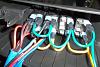
What do you guys mean by "jumped"? Are you daisy chaining the switches to each other or something? For my 4 switches, I ran 4 separate wires to my dimmer circuit (4 wires butt-spliced to one wire) and 4 separate wires to the ground (again, 4 wires butt-spliced to one wire connected to bolt on chassis).
EDIT: Nevermind. I just found this in an earlier post. I must've missed it.
EDIT: Nevermind. I just found this in an earlier post. I must've missed it.
Last edited by TURTLECON; Jan 27, 2013 at 07:11 PM.

JK Enthusiast
Joined: Sep 2012
Posts: 157
Likes: 0
From: Leamington
What do you guys mean by "jumped"? Are you daisy chaining the switches to each other or something? For my 4 switches, I ran 4 separate wires to my dimmer circuit (4 wires butt-spliced to one wire) and 4 separate wires to the ground (again, 4 wires butt-spliced to one wire connected to bolt on chassis).
EDIT: Nevermind. I just found this in an earlier post. I must've missed it.
<img src="https://www.jk-forum.com/forums/attachment.php?attachmentid=415120"/>
EDIT: Nevermind. I just found this in an earlier post. I must've missed it.
<img src="https://www.jk-forum.com/forums/attachment.php?attachmentid=415120"/>
Edit: I think I found it, orange with grey tracer behind the power window controls. Gonna have to research this cause my power windows don't have a light in the switch?
Still open to suggestions.
Last edited by Johnnyfever; Jan 27, 2013 at 07:28 PM.

JK Freak
Joined: Jan 2008
Posts: 508
Likes: 5
From: St. Louis, MO
Not sure, but I think that's where most guys get it. As I want my lights on always, mine will be wired to a switched circuit. And if can find the wire to tap the dome light, I will do that too, so they light up right when I open the door.
JK Jedi
Joined: Oct 2010
Posts: 5,192
Likes: 3
From: REDONDO BEACH, CA
There's a dome light wire near the footwell, yellow/white tracer, but it will turn off when the done light does too. I'm not sure where the constant power dome light wire is. You could also run a "tap a fuse" wire direct from the fuse box from one of the accessory slots.
Last edited by TURTLECON; Jan 27, 2013 at 08:19 PM.
JK Enthusiast
Joined: Feb 2011
Posts: 111
Likes: 0
From: Brandon, Vermont
Thanks, this will help me a lot. I really appreciate all the help.
Okay, I was right, 7 &8 can be jumpered to save wiring; just run that negative to some screw on the sidewall of the jeep (don't get the negative from the dimmer circuit is what it's saying. Grounding elsewhere on the vehicle is fine. There are multiple grounds screwed into the tub on the sides of the foot wells). And yes, all 6s can be jumpered like you originally thought.
Now, back to the jumpering of all 2s, your source power. Okay, now a quick lesson on wire gauge and amps. 1 amp equals 13.8 watts. The following chart shows you how many amps (and watts) certain wiring gauge can handle:
AWG Gauge -- Maximum Current amps (watts)
0 -- 300 amps (4140 watts)
1 -- 238 amps (3284.4 watts)
2 -- 188 amps (2594.4 watts)
3 -- 150 amps (2070 watts)
4 -- 120 amps (1656 watts)
5 -- 94 amps (1297 watts)
6 -- 74 amps (1021 watts)
7 -- 60 amps (828 watts)
8 -- 48 amps (662 watts)
9 -- 38 amps (524 watts)
10 -- 30 amps (414 watts)
11 -- 24 amps (331 watts)
12 -- 18.6 amps (256.7 watts)
13 -- 14.8 amps (204 watts)
14 -- 11.8 amps (162 watts)
15 -- 9.4 amps (129 watts)
16 -- 7.4 amps (102 watts)
17 -- 5.8 amps (80 watts)
18 -- 4.6 amps (63 watts)
19 -- 3.6 amps (49 watts)
20 -- 3 amps (41 watts)
21 -- 2.4 amps (33 watts)
22 -- 1.84 amps (25 watts)
23 -- 1.458 amps (20 watts)
24 -- 1.154 amps (15 watts)
25 -- 0.914 amps (12.6 watts)
So, 14 gauge wire can handle 11.8 amps. 11.8 amps multiplied by 13.8 watts gives you 162.84 watts (remember 1 amp = 13.8 watts). So, you can safely run 162 watts through 14 gauge wire. As long as ALL of your equipment on all four switches doesn't exceed 162 watts, you can jump all 2s with 14 gauge wire and be fine. Do the math above and save this chart and you'll always have the right size wire for the job. In our jeeps, where space is at a premium, I try to keep the gauge number as high as possible (which is a smaller wire) for space purposes.
And while we are on this subject, your fuse size should be correlated to wire gauge, not the draw of your equipment. Your fuse size should never exceed the amp number in the above chart for your given wire size. Therefore, with 14 gauge wiring, your fuse should not exceed 11.8 amps. And you need to round down, not up. Because if you stick a 15 amp fuse on 14 gauge wiring, the wiring could start on fire before the fuse blows (since it can only handle 11.8 amps but your 15 amp fuse won't blow until it sees a surge greater than 15 amps).
And that my friends, is everything you'll ever need to know about wire gauge, amps/wattage, and fuse size. Kind of.
Now, back to the jumpering of all 2s, your source power. Okay, now a quick lesson on wire gauge and amps. 1 amp equals 13.8 watts. The following chart shows you how many amps (and watts) certain wiring gauge can handle:
AWG Gauge -- Maximum Current amps (watts)
0 -- 300 amps (4140 watts)
1 -- 238 amps (3284.4 watts)
2 -- 188 amps (2594.4 watts)
3 -- 150 amps (2070 watts)
4 -- 120 amps (1656 watts)
5 -- 94 amps (1297 watts)
6 -- 74 amps (1021 watts)
7 -- 60 amps (828 watts)
8 -- 48 amps (662 watts)
9 -- 38 amps (524 watts)
10 -- 30 amps (414 watts)
11 -- 24 amps (331 watts)
12 -- 18.6 amps (256.7 watts)
13 -- 14.8 amps (204 watts)
14 -- 11.8 amps (162 watts)
15 -- 9.4 amps (129 watts)
16 -- 7.4 amps (102 watts)
17 -- 5.8 amps (80 watts)
18 -- 4.6 amps (63 watts)
19 -- 3.6 amps (49 watts)
20 -- 3 amps (41 watts)
21 -- 2.4 amps (33 watts)
22 -- 1.84 amps (25 watts)
23 -- 1.458 amps (20 watts)
24 -- 1.154 amps (15 watts)
25 -- 0.914 amps (12.6 watts)
So, 14 gauge wire can handle 11.8 amps. 11.8 amps multiplied by 13.8 watts gives you 162.84 watts (remember 1 amp = 13.8 watts). So, you can safely run 162 watts through 14 gauge wire. As long as ALL of your equipment on all four switches doesn't exceed 162 watts, you can jump all 2s with 14 gauge wire and be fine. Do the math above and save this chart and you'll always have the right size wire for the job. In our jeeps, where space is at a premium, I try to keep the gauge number as high as possible (which is a smaller wire) for space purposes.
And while we are on this subject, your fuse size should be correlated to wire gauge, not the draw of your equipment. Your fuse size should never exceed the amp number in the above chart for your given wire size. Therefore, with 14 gauge wiring, your fuse should not exceed 11.8 amps. And you need to round down, not up. Because if you stick a 15 amp fuse on 14 gauge wiring, the wiring could start on fire before the fuse blows (since it can only handle 11.8 amps but your 15 amp fuse won't blow until it sees a surge greater than 15 amps).
And that my friends, is everything you'll ever need to know about wire gauge, amps/wattage, and fuse size. Kind of.
JK Jedi
Joined: Oct 2010
Posts: 5,192
Likes: 3
From: REDONDO BEACH, CA
Maybe it's just me, but I find it annoying that these switch bodies have 2 separate ground posts. Why didn't they develop them with just one ground? Seems like it would be so much easier, save space, and wiring.
On another note, I just got the email my OTRATTW order has shipped! Yeah!
On another note, I just got the email my OTRATTW order has shipped! Yeah!
Last edited by TURTLECON; Jan 31, 2013 at 03:55 PM.

JK Newbie
Joined: May 2010
Posts: 29
Likes: 1
From: Cupertino, CA
The J style switches are available with a common ground but it is a special circuit. Cost wise, yes, there is a considerable jump in price with LEDs installed
JK Jedi
Joined: Oct 2010
Posts: 5,192
Likes: 3
From: REDONDO BEACH, CA
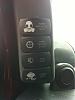
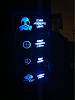
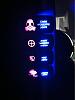
Just got mine and installed them last night. Not liking the blue. They're simply way too bright and a bit distracting (they are much brighter than the pic shows, imagine 4x brighter). Might just go with RED or go back to my original switches which were only white when on. But I'm glad I got horizontal etched rockers, easy to swap them.
JK Freak
Joined: Aug 2010
Posts: 519
Likes: 2
From: North Bend, Oregon
I agree with you about the blue being to bright at night, I'm actually toying with the idea of added some window tint to the back of the switches to tone them down some. I'm just not sure if i should tint the led light itself or the back of the switch covers. Any ideas or input from peeps would be sweet..
Augi
Augi