


Expedition Modded Jeeps - Let's see 'em!!

JK Newbie
Joined: Jan 2013
Posts: 66
Likes: 0
From: Los Angeles, CA

http://www.expeditionportal.com/adve...-days-3-4.html

JK Enthusiast
Joined: Sep 2012
Posts: 478
Likes: 0
From: Yukon, Canada
I've got a question that I didn't wanna start a new thread on since I believe some people in this thread might be able to help.
I was wondering if topo maps could be too detailed. I thought maybe you get to much distracting information in a large scale map.
What would you prefer for trail navigation if you had to choose between 1/25000 and 1/50000?
I was wondering if topo maps could be too detailed. I thought maybe you get to much distracting information in a large scale map.
What would you prefer for trail navigation if you had to choose between 1/25000 and 1/50000?

JK Newbie
Joined: May 2013
Posts: 18
Likes: 0
From: Brandon, ms
I have been reading this for a few months now with no input, but I should say this is by far one of the most interesting threads... Hope one day to get to the point some of you guys are....
BDS 2" suspension w/ Fox 2.0 shocks, MT classic 17 w/ 33" cooper discoveries.
BDS 2" suspension w/ Fox 2.0 shocks, MT classic 17 w/ 33" cooper discoveries.
JK Jedi Master


Joined: Mar 2007
Posts: 14,800
Likes: 374
From: Midwest City, OK
For "paper" maps, my preferred choice when available are the National Greographic Trails Illustrated maps. They are made of vinyl, are regularly updated, and have sufficient detail for 4WD activity in remote places. If those aren't available, then I use the USGS quad topos, which I believe are 1:24K. Another great resource (for the U.S.) are the state gazetteers. These have pretty much every road, Interstate, street, country, forest, etc, documented. They are a wonderful planning tool.
For electronic maps, I've settled on the Backcountry Navigator Android app. While it does offer some maps for sale, I've found that the free U.S. maps, when downloaded to a scale of "15" (setting I use when downloading the maps) provide sufficient detail that I can find and document waypoints, and easily track our route on the map. Rarely have I found that I wondered off a marked road/Jeep trail, which is pretty good considering that these maps are often two or three decades old. Interestingly, I've used these maps at Kinta, OK; K-Trail, OK; Big Bend; and the recent Moab Overland (Moab, White Rim, Capitol Reef, Grand Staircase-Escalante and Grand Canyon) and Colorado Campaign (Dry Cimarron Scenic Byway, Blanca Peak, San Isabel Forest, Engineer Pass/Mineral Creek) trips. With the exception of Kinta, virtually every trail/road we were on was on those maps. At Kinta, another driver with a Garmin GPS was giving directions and he kept leading us up dead ends that were supposed to go through. When we finally followed my 1970-era Backcountry Navigator map, it took us exactly where we wanted to be.
BTW: Backcountry Navigator is not available for iOS, and between it and Torque (and the fact that most iPads don't have built-in GPS), is good reason to use an Android device in your Jeep versus an Apple device.
For electronic maps, I've settled on the Backcountry Navigator Android app. While it does offer some maps for sale, I've found that the free U.S. maps, when downloaded to a scale of "15" (setting I use when downloading the maps) provide sufficient detail that I can find and document waypoints, and easily track our route on the map. Rarely have I found that I wondered off a marked road/Jeep trail, which is pretty good considering that these maps are often two or three decades old. Interestingly, I've used these maps at Kinta, OK; K-Trail, OK; Big Bend; and the recent Moab Overland (Moab, White Rim, Capitol Reef, Grand Staircase-Escalante and Grand Canyon) and Colorado Campaign (Dry Cimarron Scenic Byway, Blanca Peak, San Isabel Forest, Engineer Pass/Mineral Creek) trips. With the exception of Kinta, virtually every trail/road we were on was on those maps. At Kinta, another driver with a Garmin GPS was giving directions and he kept leading us up dead ends that were supposed to go through. When we finally followed my 1970-era Backcountry Navigator map, it took us exactly where we wanted to be.
BTW: Backcountry Navigator is not available for iOS, and between it and Torque (and the fact that most iPads don't have built-in GPS), is good reason to use an Android device in your Jeep versus an Apple device.
Last edited by Mark Doiron; Jul 30, 2013 at 01:34 AM. Reason: Added BTW remark.
JK Enthusiast
Joined: Sep 2012
Posts: 478
Likes: 0
From: Yukon, Canada
An example (I can zoom in a lot more from the device, this is just zoomed out enough to grab the screenshot of the trip): Then it gave me some neat stats at the end. 48.9km, 4:51 hours, Avg speed 10.1kph, gained 1754m, max altitude 1913m (6276ft), min grade, -18.15%, max grade 16.45% (no clue how those are different... we covered the same routes in and out).

JK Freak
Joined: Jan 2013
Posts: 620
Likes: 5
From: Zug/Switzerland
Thanks to everyone for the info and opinions on the maps.
Think I'm going with 1/25000.
You are right....details might be important and talking about digital maps, like septu said, I can zoom out if it is too detailed in a section.
I bought a satmap active 10 device on ebay two days ago. You have to buy SD-cards with the maps on it. And there you get to choose between the two scales mentioned.
They have map samples on their website like these:
1/25000
1/50000
I hope that thing is as good as I believe it to be
Think I'm going with 1/25000.
You are right....details might be important and talking about digital maps, like septu said, I can zoom out if it is too detailed in a section.
I bought a satmap active 10 device on ebay two days ago. You have to buy SD-cards with the maps on it. And there you get to choose between the two scales mentioned.
They have map samples on their website like these:
1/25000
1/50000
I hope that thing is as good as I believe it to be
JK Jedi Master
Joined: Mar 2007
Posts: 14,800
Likes: 374
From: Midwest City, OK
JK Freak
Joined: Apr 2012
Posts: 836
Likes: 0
From: NC
Glad you are enjoying this thread - it's a great resource for overland expeditions!!

JK Newbie
Joined: Apr 2013
Posts: 57
Likes: 5
From: El Paso
For "paper" maps, my preferred choice when available are the National Greographic Trails Illustrated maps. They are made of vinyl, are regularly updated, and have sufficient detail for 4WD activity in remote places. If those aren't available, then I use the USGS quad topos, which I believe are 1:24K. Another great resource (for the U.S.) are the state gazetteers. These have pretty much every road, Interstate, street, country, forest, etc, documented. They are a wonderful planning tool.
For electronic maps, I've settled on the Backcountry Navigator Android app. While it does offer some maps for sale, I've found that the free U.S. maps, when downloaded to a scale of "15" (setting I use when downloading the maps) provide sufficient detail that I can find and document waypoints, and easily track our route on the map. Rarely have I found that I wondered off a marked road/Jeep trail, which is pretty good considering that these maps are often two or three decades old. Interestingly, I've used these maps at Kinta, OK; K-Trail, OK; Big Bend; and the recent Moab Overland (Moab, White Rim, Capitol Reef, Grand Staircase-Escalante and Grand Canyon) and Colorado Campaign (Dry Cimarron Scenic Byway, Blanca Peak, San Isabel Forest, Engineer Pass/Mineral Creek) trips. With the exception of Kinta, virtually every trail/road we were on was on those maps. At Kinta, another driver with a Garmin GPS was giving directions and he kept leading us up dead ends that were supposed to go through. When we finally followed my 1970-era Backcountry Navigator map, it took us exactly where we wanted to be.
BTW: Backcountry Navigator is not available for iOS, and between it and Torque (and the fact that most iPads don't have built-in GPS), is good reason to use an Android device in your Jeep versus an Apple device.
For electronic maps, I've settled on the Backcountry Navigator Android app. While it does offer some maps for sale, I've found that the free U.S. maps, when downloaded to a scale of "15" (setting I use when downloading the maps) provide sufficient detail that I can find and document waypoints, and easily track our route on the map. Rarely have I found that I wondered off a marked road/Jeep trail, which is pretty good considering that these maps are often two or three decades old. Interestingly, I've used these maps at Kinta, OK; K-Trail, OK; Big Bend; and the recent Moab Overland (Moab, White Rim, Capitol Reef, Grand Staircase-Escalante and Grand Canyon) and Colorado Campaign (Dry Cimarron Scenic Byway, Blanca Peak, San Isabel Forest, Engineer Pass/Mineral Creek) trips. With the exception of Kinta, virtually every trail/road we were on was on those maps. At Kinta, another driver with a Garmin GPS was giving directions and he kept leading us up dead ends that were supposed to go through. When we finally followed my 1970-era Backcountry Navigator map, it took us exactly where we wanted to be.
BTW: Backcountry Navigator is not available for iOS, and between it and Torque (and the fact that most iPads don't have built-in GPS), is good reason to use an Android device in your Jeep versus an Apple device.

JK Enthusiast

Joined: Apr 2011
Posts: 165
Likes: 2
From: Temecula, CA
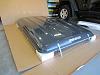
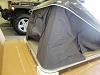
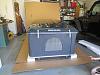
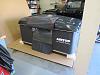
Big package arrived yesterday.
Finally got my new Autohome Maggiolina Air Top Roof Top Tent delivered yesterday. Feels like high quality built.
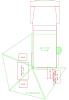
This tent is going to sit on a AEV JK Roof Rack which mounts thru the hardtop to the roll cage. Additionally I am also going to mount an Eezi-Awn Bat 270 Degree Awning to the drivers side. I will have to fabricate custom bracket to mount the awning to the JK roof rack. I got all the parts, so now I need to find the time to install it :-)
Here is a crude drawing for the top view of the Jeep with the RTT and Awning deployed:
This tent is going to sit on a AEV JK Roof Rack which mounts thru the hardtop to the roll cage. Additionally I am also going to mount an Eezi-Awn Bat 270 Degree Awning to the drivers side. I will have to fabricate custom bracket to mount the awning to the JK roof rack. I got all the parts, so now I need to find the time to install it :-)
Here is a crude drawing for the top view of the Jeep with the RTT and Awning deployed: